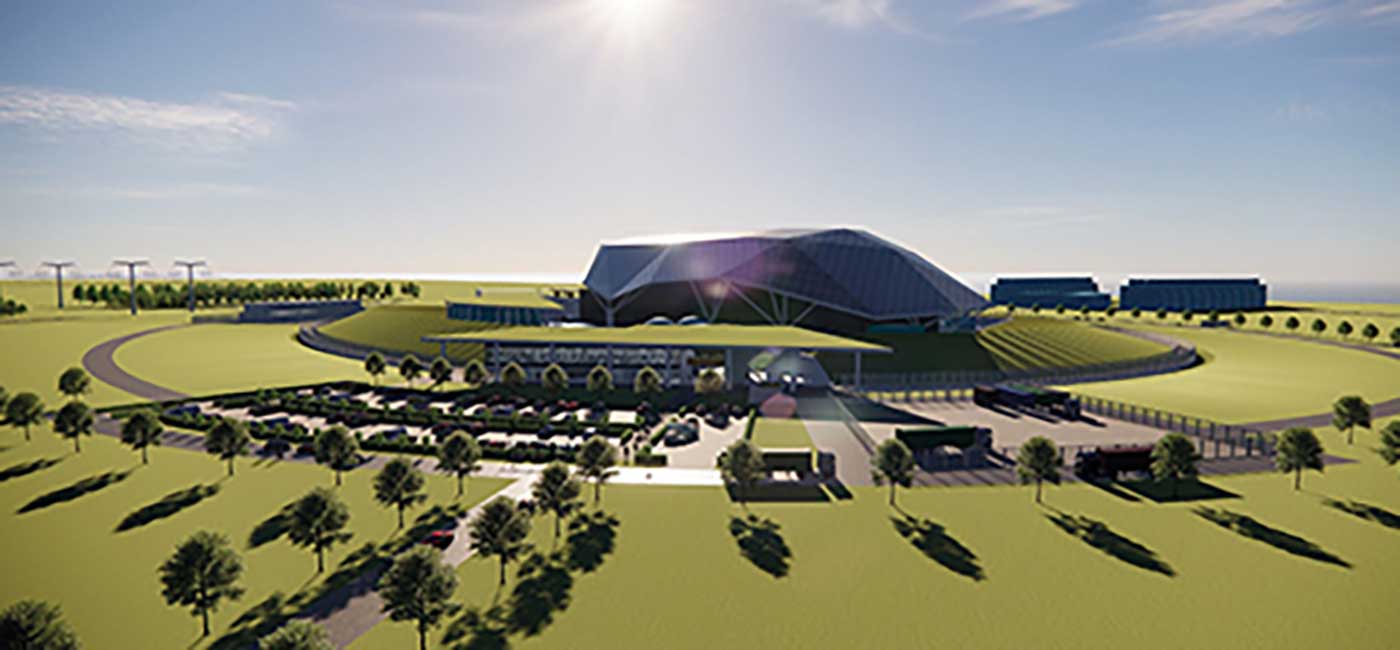

Engineering firm Rolls-Royce SMR said this week it is to begin detailed design work on the UK’s first three small modular nuclear reactors after signing a contract with Great British Energy – Nuclear, formally moving the programme into its delivery phase.
The agreement allows Rolls-Royce SMR to commence site-specific design for small modular reactors that will be manufactured off-site and assembled at Wylfa in north Wales, as well as to begin ordering long-lead components from the supply chain.
It follows the government’s selection of Rolls-Royce SMR as preferred technology partner in June 2025, and the confirmation in November 2025 that the project will be located at the former nuclear site on Anglesey.
Backed by £2.6bn in government funding and up to £599m from the National Wealth Fund, the programme is being positioned as both an energy security initiative and a driver of advanced manufacturing and industrial automation.
At a time when the Iran War is pushing up global oil and gas prices, politicians have been quick to point out that the reactors would be able to generate at least 1.4GWe – enough to power around three million homes for more than 60 years.
Energy Secretary Ed Miliband said the programme would “create a generation of good jobs, driving growth and providing clean, homegrown power for decades to come”.
However, despite the announcement, the project is by no means a certainty. It remains subject to a final investment decision, expected by 2030 and is also subject to a number of local planning and regulatory hurdles.
Moreover, despite the scale of political and financial backing, small modular reactors remain an emerging technology. No SMR has yet been deployed at commercial scale in a Western market, and questions remain over whether projected gains in cost efficiency, construction speed and automation can be fully realised outside of controlled or first-of-a-kind projects.
Automation News looked at four ways the UK’s first SMR project could reshape the country’s industrial automation landscape if it reaches completion.
-
Shift from on-site construction to factory production models
The SMR approach replaces traditional nuclear construction, which is heavily reliant on on-site assembly, with a model based on factory-built modules produced in controlled environments. The aim is to improve consistency, reduce construction risk, and enable greater use of automated manufacturing systems.
In principle, this moves nuclear delivery closer to aerospace-style production, where repeatable processes and factory conditions support higher levels of automation and quality control. However, the extent to which this model can be replicated at scale across multiple sites remains untested.
With parallel commitments in the UK and Czech Republic, Rolls-Royce SMR is seeking to establish a repeatable production model, although industry observers note that sustained efficiency gains will depend on successful serial deployment.
Tufan Erginbilgic, chief executive of Rolls-Royce, said the agreement provides “crucial contractual certainty in our domestic market that will unlock the opportunity to deploy a global fleet of Rolls-Royce SMRs”.
He added: “Rolls-Royce SMR now has multiple commitments in Europe and is well placed to become a market leader globally. As activity ramps up in the UK and in the Czech Republic, these projects are already generating returns.”
2. Increased use of robotics and precision automation
SMR components require extremely tight tolerances, making them well suited to robotic fabrication, automated welding, and machine-led inspection systems.
The standardised design is intended to support serial production, allowing identical manufacturing processes to be repeated across multiple units.
Moreover, SMRs also offer opportunities when operating for automated analytical capabilities to minimise onsite lab testing, reduce waste, the footprint of the site and capital and operational costs.
Chris Cholerton, chief executive of Rolls-Royce SMR, said the model would “give greater cost and schedule certainty with a standardised, factory-built approach”.
Industry participants expect the approach to accelerate the use of industrial robotics in heavy engineering, particularly in quality assurance and component traceability. However, analysts caution that the real-world productivity gains from automation in highly regulated nuclear manufacturing environments remain uncertain.
3. Digitally integrated supply chains and engineering workflows
The programme is expected to drive deeper integration of digital tools across the nuclear supply chain. More than £350m in contracts have already been awarded to UK suppliers, forming a distributed manufacturing network reliant on real-time coordination and digital tracking systems.
Simon Roddy, chief executive of Great British Energy – Nuclear, described the agreement as “a landmark moment for the nuclear industry”, adding that it brings “a significant long-term investment to the UK industrial supply chain”.
Alongside physical production, digital design, simulation and regulatory modelling are being embedded earlier in the delivery process, linking engineering decisions more closely with manufacturing and compliance requirements. While this is expected to improve coordination, it also introduces complexity in synchronising large-scale digital and physical systems across multiple suppliers.
4. Blurring of industrial policy, energy strategy and automation investment
The project reflects a broader shift in UK industrial policy, where energy infrastructure is increasingly being used as a vehicle for developing domestic manufacturing capability and advanced engineering skills.
Chancellor Rachel Reeves said: “This investment, along with vital financing from the National Wealth Fund, will strengthen our energy security, create skilled jobs and help to build a new generation of homegrown nuclear technology that will power our economy for decades to come.”