
An unexpected calling
Borgne’s journey with Schneider started via an unusual channel. It all began with a radio. While at university studying civil engineering, she agreed to do a radio interview. At the time, she was one of just six women in a cohort of over 100. After the interview was over, she thought nothing of it. However, five months later, she received a call. It just so happened that a senior executive at Schneider Electric was listening and wanted to meet Borgne.
After spending the day at Schneider and hearing how passionately that executive spoke about the company, she was invited to join Schneider. That was 25 years ago. Today, Borgne leads the company’s global Water & Environment business, driving the digital transformation. However, when you speak to most people about water, they wouldn’t normally associate it with automation.

Water’s hidden footprint
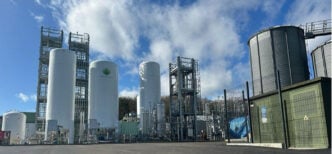
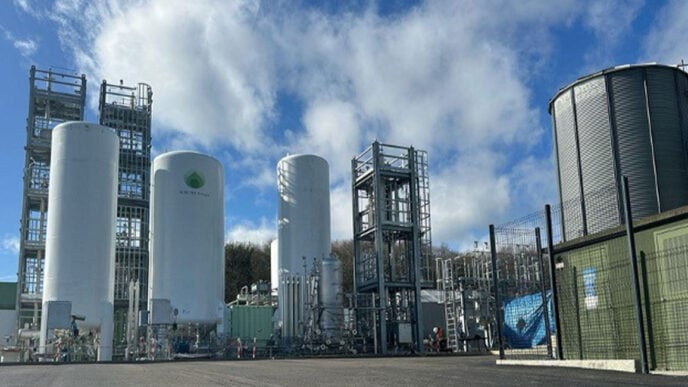
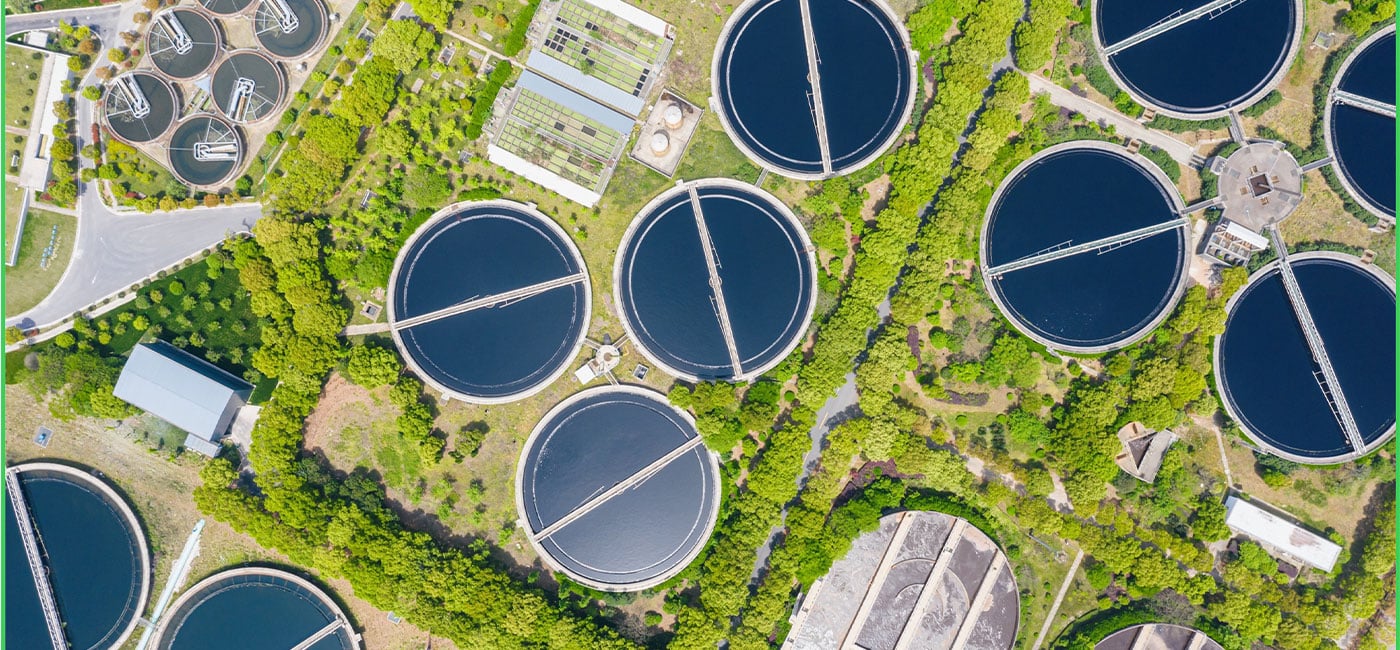
Walk through a modern water treatment plant, and you will find very few people. The process runs in near-automatic mode, with operators supervising rather than operating. Automation governs how the plant responds to conditions, energy consumption, and carbon output.
Moving water requires enormous amounts of energy, and with energy comes carbon. “The carbon footprint of the water sector is the same as that of the aviation sector,” Borgne says, as she points out that by 2030, the projected gap between global demand for fresh water and available supply is expected to reach 40%. Technology – the right application of it – will be central to closing that gap. That is where smart water comes in.
The data behind smart water
Smart water takes the vast volumes of data produced by a water system – process data, weather forecasts, and adjacent system signals – and turns them into insight. “AI can identify patterns that one would not have thought about,” Borgne says. “And those patterns are providing an extra step of efficiency that is absolutely worth taking.”
When considering water in this way, it is central to many operations, and for manufacturers, food and beverage producers, pharmaceutical companies, and energy operators, it is as critical an input as the electricity that powers their facilities.
Borgne is passionate about the industry she works in, yet the opportunity only arose because of her curiosity about the opportunity Schneider presented to her in her early career. This act of serendipity is not lost on her, and what she now advocates for professionally is, in effect, the embodiment of that moment – which is building industries where talented women do not need a lucky radio signal to be heard.
Expanding industries need diverse voices
Borgne is an active advocate for women in STEM, and for the past 12 years, she has been part of a women in tech network in France that sends female engineers into primary schools, secondary schools, and universities to talk about their work. Since its founding, the network has spoken in front of 25,000 young women, receiving positive feedback and showing students that women can be engineers.
“Do not let anyone tell you this is not for you,” she says. “If you are interested in understanding how things are made and how you could make them better [or] optimise things, and if you are fascinated when you see a machine filling 200 pasta boxes a minute, then don’t let anyone tell you this isn’t for you.”
The problem, Borgne says, is rarely that girls do not know these careers exist. “In most of my conversations, they know about this path, but they have labelled it as boys only. The challenge is to remove the label rather than present the path.”
The strength in the balance
Her advocacy has also shaped how she leads. Early in her career, Borgne held a fixed idea of what a good leader looked like and tried to emulate it. However, the first time she led a team, she realised that its strength came not from any single profile, but from the diverse balance of each voice.
“I completely gave up on any [ideal profile] methodology,” she says. “Now it’s: this is what you bring to the table, and we are going to value you for that.”
In meetings, she has largely abandoned roundtable discussions, which tend to amplify the same voices. Instead, she uses structured techniques – written responses, simultaneous input – that give every voice a fair start.
The stakes of getting this right, she argues, are as much commercial as they are moral. For a technology company whose competitive edge depends on innovation, diversity of thought is not a nicety; it is the mechanism for growth.
“As a diverse team, we came up with ideas that none of us individually would have had,” she says. “They were stronger because of this progressive, collaborative development.”
Without it, innovation slows, markets go underserved, and opportunities are missed. “It’s not enough to have representation of diversity. If you don’t hear those diverse voices, you lose the benefit of diversity entirely.”
Sideways can be valuable
When speaking about her early career, Borgne wishes someone had told her that the moves which looked sideways on paper often carried the most growth. Speaking from her own non-linear career, Borgne says that the path was rarely obvious.
“Careers are not linear, and there are a lot of ways to evolve. What matters most are the learning opportunities – and you can find those moving in a lot of different directions.”
She also understands that those moments of doubt – when you feel like an imposter stepping into an unfamiliar role – are actually very normal and not a warning sign. “If I had known it wasn’t only me, it would have made a few of those lonely moments a lot easier,” she says.
Purpose as a pipeline
In the water industry, Borgne notes that she has encountered more women in senior positions than in any other industry she has served. Veolia, one of her largest customers, has a female CEO and multiple women on its executive committee, and she has a theory about why: “There is a purpose around the environment that seems to resonate differently with women,” she says.
“When you can combine a challenging and fascinating technical job with a sector that has a clear positive impact on society, it seems more attractive.”
While she views this as a welcome and positive effect for the water sector, it also makes her reflect on the industries that are missing out. “There is a lot of purpose in other industries too,” she says. “But [the engineering] industry overall is not valued for its true impact on society. People still picture the 19th century.”
Come to a modern plant, she says, and that old-fashioned image dissolves. The environment is clean, the technology is sophisticated, and the problems being solved matter. The challenge is that too few people – and too few young women – have ever been inside one.
That, as much as anything, is what Borgne is trying to change: not just the pipeline, but the picture.
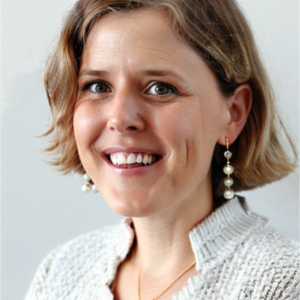
Sophie Borgne, Schneider Electric’s Water & Environment Segment President, is making the case that industry is shaping our future, and the teams that support this change need to look very different.
This article originally appeared in the April 2026 magazine issue of Automation News.