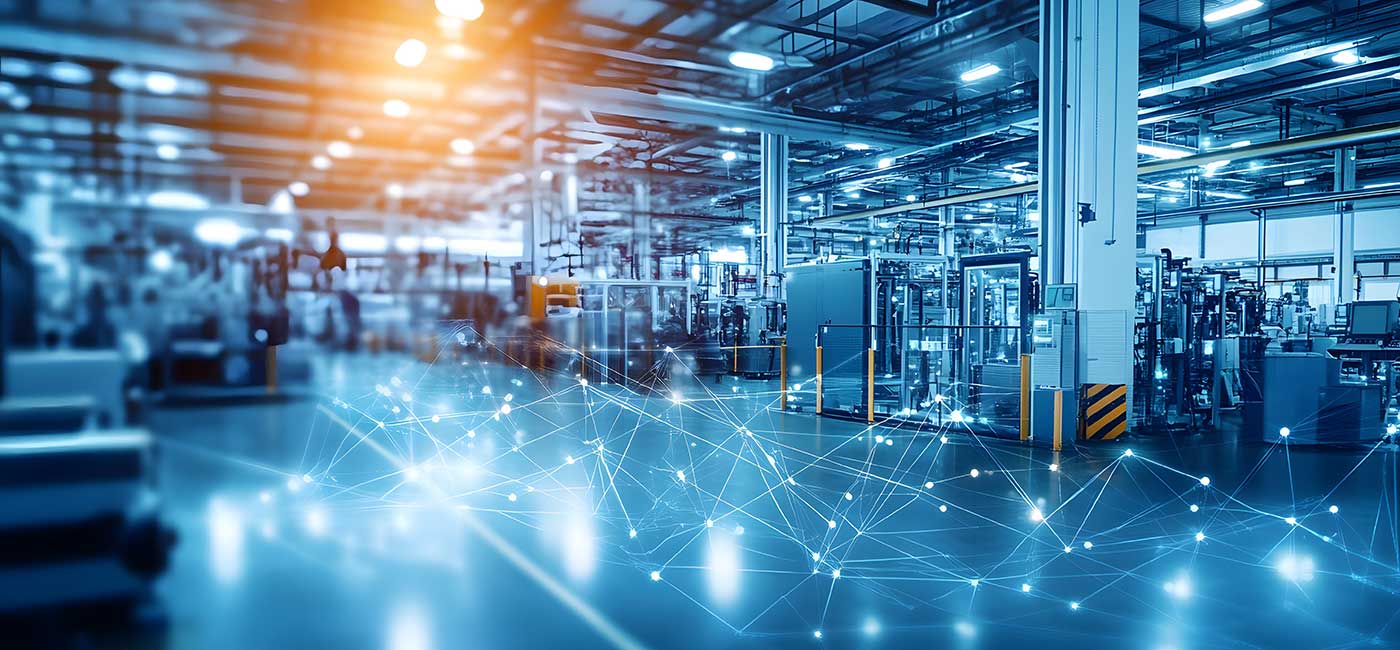
For many UK manufacturers, the biggest digital challenge is making sense of the enormous amounts of data that is collected. Production environments are increasingly data-rich, yet critical information still lives in two very separate worlds, and too often OT and IT environments are monitored, secured, and managed in isolation.
This divide is more than a technical inconvenience; it is a strategic risk embedded in the very fabric of industrial operations. This year alone, downtime was predicted to have cost UK and European manufacturers over £80 billion. Is the issue with the programmable logic controller (PLC)? A sensor? Network latency? A misconfigured server? In high-volume industries like food and beverage, pharmaceuticals, and consumer packaged goods, every minute spent troubleshooting can quickly translate into thousands of pounds in lost output, wasted materials, and delayed deliveries.
The problem lies in the lack of shared visibility. Manufacturers typically rely on separate platforms, teams, and processes to monitor IT and OT. This fragmentation makes it difficult to form a complete picture of system health, performance, and risk. As factories become more connected and production more flexible, this blind spot becomes harder to justify.
Why IT/OT convergence can not wait
Manufacturing is under increasing pressure to operate with greater flexibility, efficiency and resilience, as customer expectations shift towards shorter lead times, consistently high product quality and more personalised product ranges. At the same time, the sector is dealing with widening skills gaps and an expanding cyber threat landscape, while production environments become progressively more interconnected through industrial IoT and edge computing. Together, these forces are reshaping what “normal” looks like on the factory floor and raising the bar for operational visibility and control.
In this context, the traditional separation between IT and OT is becoming much harder to sustain. As machinery, production systems and enterprise platforms become more tightly connected, the reliability of one layer is now inseparable from the performance of the other. Real-time monitoring relies on stable networks, predictive maintenance depends on consistent, trustworthy data, and operational decision-making is only as strong as the infrastructure that supports it. When these environments are managed in isolation, manufacturers are left reacting to issues rather than anticipating them, limiting their ability to operate with the speed and agility modern production demands.
This is why IT/OT convergence is now an operational necessity. The objective is not to replace established systems, but to connect them in a way that gives teams a single, coherent view of performance, risk and system health across the entire production environment, enabling faster diagnosis, better collaboration and more confident decision-making.
The role of industrial Edge architecture
One of the most important enablers of this shift is the rise of industrial Edge computing. By processing data close to machines and production lines, Edge platforms reduce latency, improve real-time responsiveness, and limit the need to push all data to central data centres or the Cloud.
However, Edge infrastructure on its own does not solve the visibility problem. Without unified monitoring, manufacturers risk creating a new layer of complexity rather than simplification. Edge devices, controllers, gateways, networks, and enterprise systems all need to be observed in a coordinated way if organisations are to trust their operational picture.
This is why partnerships between industrial platform providers and monitoring specialists are becoming more important. In the case of Siemens and Paessler’s cooperation, the focus is on enabling unified monitoring capabilities to operate directly at the industrial edge, bringing IT and OT visibility closer to the machines themselves. The strategic value lies not in individual products, but in the ability to bridge environments that previously operated in isolation.
Moving from reactive firefighting to proactive operations
The operational impact of unified IT/OT visibility becomes clear when looking at day-to-day manufacturing realities. Traditionally, many factories operate in a reactive mode, responding to failures only after they occur. Investigations are manual, time-consuming, and often rely on tribal knowledge rather than shared data.
When IT and OT systems are monitored through a single operational lens, this dynamic begins to shift. Teams can spot anomalies earlier, identify performance trends, and resolve issues faster. Root cause analysis becomes data-driven rather than assumption-based, and collaboration between teams becomes more natural because everyone is working from the same information.
Early implementations of unified monitoring approaches have already demonstrated tangible results, including significantly faster root-cause identification, reduced unplanned downtime, and measurable improvements in overall equipment effectiveness (OEE). In high-volume, 24/7 production environments, even marginal gains can translate into additional production capacity and improved service levels for customers.
Building more resilient and adaptive industrial operations
Unified IT/OT monitoring is not just a technical upgrade, it represents a shift in how manufacturers think about resilience and adaptability. As production systems become more software-defined and data-driven, the organisations that succeed will be those that can see, understand, and act on operational data in real time.
The future of manufacturing will be defined less by the number of connected devices, and more by how effectively organisations can manage the complexity that connectivity creates. Bridging the divide between IT and OT is therefore not a project with an end date, but an ongoing capability that supports continuous improvement.
By establishing shared visibility across machines, networks, and applications, manufacturers can move away from firefighting and towards optimisation. The result is not only greater efficiency, but more robust, flexible, and future-ready industrial operations.
Author Biography:

Daniel Sukowski is Global Business Development Industry & OT at Paessler. In this role, he leads strategy and outreach to industrial customers, particularly in IIoT and OT/IT integration. He frequently authors thought leadership articles and speaks at industry events on topics including condition monitoring and automated warehouse oversight and IT/OT convergence and cybersecurity best practices in industrial networks.