
A Cambridge University spin-out is rolling out an AI system that can detect, diagnose, and correct manufacturing errors in real time, with more than 300 factories across the UK and Europe queuing up to adopt the technology.
The company, Matta, founded by researchers from Cambridge University’s Institute for Manufacturing, calls its approach “factory sentience” — industrial AI that understands how manufacturing processes work and why things go wrong.
One of a number of new stat-ups attempting to use AI to speed up manufacturing processes and make them more efficient, Matta said it was in the process of installing its tech in around 300 factories in the UK and Europe, with two new factory integrations taking place each month.
Current applications range from warships and aerospace components to waterproof jackets, high-end loudspeakers, and consumer packaging.
“We build AI foundation models that understand how manufacturing works and why things can go wrong so you can fix them,” Dr Doug Brion, Matta co-founder told journalists at a media demonstration today. “We take in all kinds of data — vision, process, sensor — and push this through large models that can detect anomalies, measure, and even correct errors in real time.”
Matter’s technology replaces traditional quality control inspection methods which Brion said were often still done manually by a skilled worker “like Keith, who’s spent 40 years licking his thumb to check for scratches on a pipe”
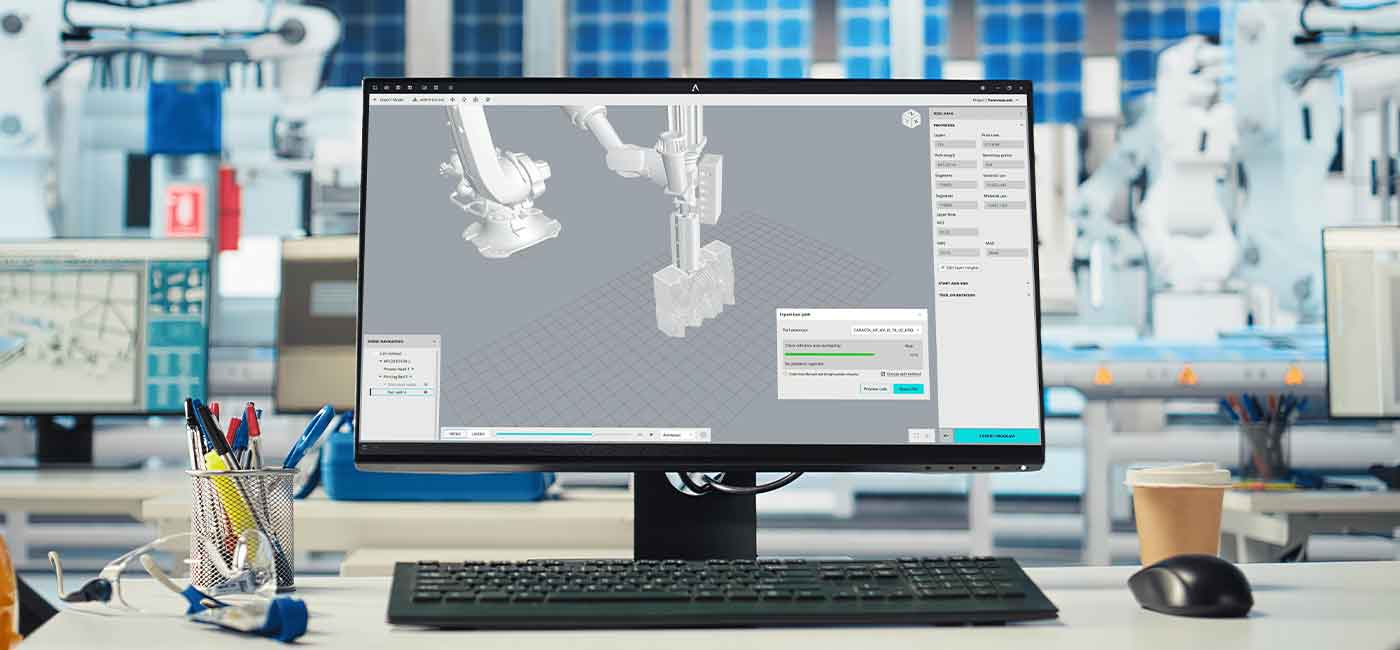
Instead, Matta deploys AI-driven computer vision, installing cameras connected to an AI model which learns locally what a ‘good’ part looks like, identifying defects under changing lighting and environmental conditions, all running on a small on-site computer.

While many companies have added an AI badge to their offerings, Matter maintains that few can deliver factory-ready systems built on state-of-the-art research. “You can’t just give ChatGPT a video of a production line and expect it to understand why a weld failed,” said Brion. “Everything we use is built in-house — from the models to the hardware integration — so customers don’t have to think about it.”
The company’s systems have already reduced measurement times dramatically. At speaker manufacturers Bowers & Wilkins, for instance, manual loudspeaker measurements that once took 20 minutes now take just ten seconds under camera inspection.
Matter’s roadmap follows three stages: detection, correction, and prediction. The first enables automated defect spotting; the second allows machines to self-adjust in real time; and within 18 months the company expects to move into prediction, anticipating failures before they occur and feeding those insights back into design tools such as CAD.
Matter’s founders stress that their success comes from close engagement with manufacturers. “We spend half our lives on the factory floor,” one said. “My worst month was also my best — 16 factories in 20 working days.”
Another key differentiator, they argue, is the firm’s focus on practical deployment. “There’s this weird gap between people with AI backgrounds and manufacturing backgrounds — and they rarely meet,” Brion said. “If you’re going to make any real impact, the factory floor is where it’s at.”