

For all its strengths, the UK aerospace sector has a gap that is becoming increasingly difficult to ignore.
By most measures, it is a genuine success story. The sector supports more than 100,000 jobs, generates £34 billion in annual turnover and plays a central role in some of the most advanced engineering programmes in the world. Yet that only tells part of the story. The period after an aircraft enters service has received far less attention.
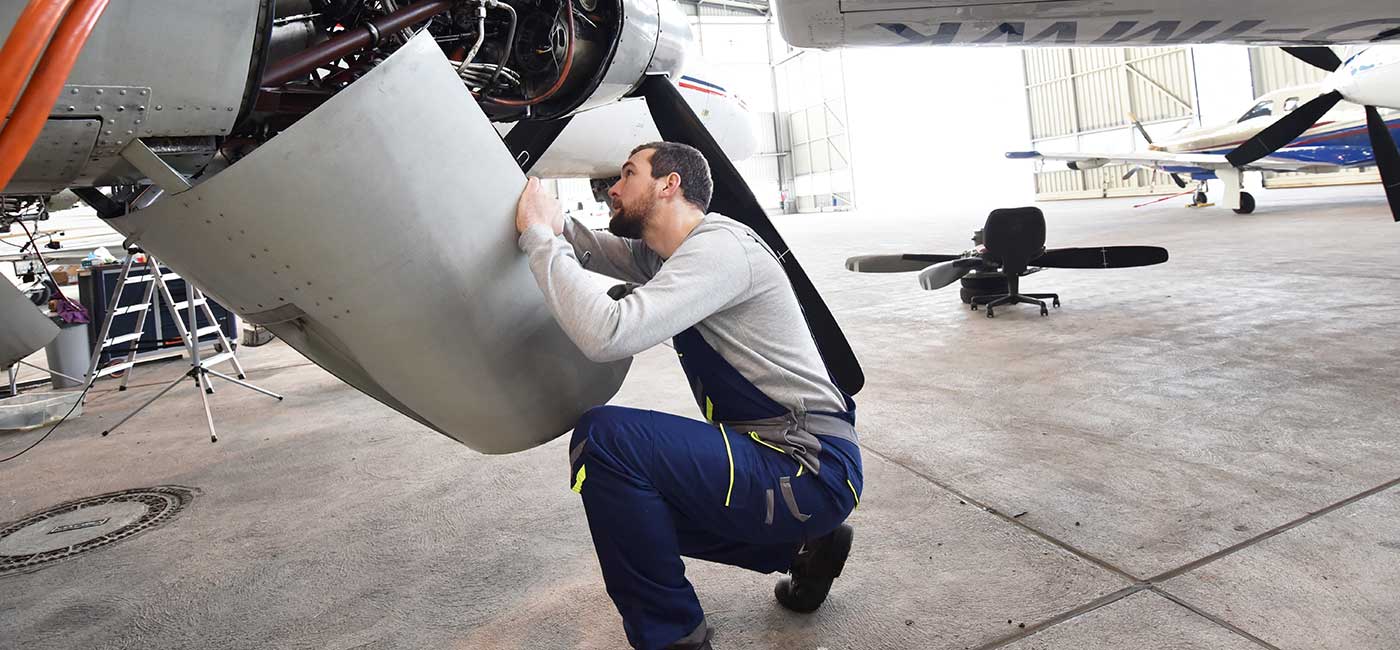
Keeping aircraft in operation over decades through maintenance, repair and overhaul (MRO) is a major industrial activity. Globally, the market now matches, and in some areas exceeds, the value of original manufacturing. Yet this is also where the UK is losing ground.
The UK holds around 13% of global aerospace original equipment supply chains, but its share of MRO is closer to 3%. That gap points to a lack of strategic focus, with real economic consequences in lost value and missed jobs.
The wider industrial context makes this issue even more urgent. With no major new aircraft platforms expected until the late 2030s, today’s global fleet will remain in service for longer, increasing the need for sustained, high-quality maintenance.
Demand for MRO has been building for some time. Ageing fleets, higher production rates, delays to new aircraft deliveries and technical challenges with newer engine types have all contributed.
The global MRO market is now worth around $127 billion and continues to expand, with some segments growing significantly faster. Companies are responding, with many planning to double capacity and some expecting even more rapid growth. As demand increases, it is likely to be captured wherever the strongest technology development, industrial-scale pilot lines and funding are concentrated.
Singapore provides a clear example. It built its aerospace capability through MRO initially, with limited original equipment manufacturing to begin with, and that early focus paid off. Singapore now accounts for more than 10% of the global MRO market – more than three times the UK’s share. That MRO-led foundation has since supported growth in original equipment manufacturing, with both now expanding in parallel. Singapore’s position reflects consistent policy, long-term investment and a clear focus on attracting international business.
A similar pattern can be seen elsewhere. France, the United States and the Netherlands have all prioritised MRO, aligning policy, funding and innovation support to create conditions that encourage companies to invest and grow.
The UK has taken a different approach. There is no coherent national strategy for MRO, and the impact is visible in long-term performance. Between 2010 and 2021, UK MRO productivity declined significantly, even as revenues held broadly steady. Over the same period, targeted investment through the Aerospace Technology Institute supported clear productivity improvements in original equipment manufacturing.
The contrast is stark. Capability is not the issue. Strong regional clusters already exist across the UK, but that capability is at risk without a coordinated national strategy to support it.
In the West of Scotland, the MRO cluster around Prestwick supports around 5,000 jobs and generates approximately £575 million in turnover, with ambitions to grow substantially as global demand increases. The area has built a strong international reputation for engineering quality over decades, anchored by a skilled workforce and a dense network of specialist MRO and aerospace companies that has made the region a recognised centre of excellence.
Wales offers a similar base, with around 6,000 MRO roles and major facilities at Nantgarw and Cardiff. These are established strengths rather than emerging ones, but they remain fragmented. What is missing is a framework that brings them together and supports growth at scale.
At the same time, advances in technology are reshaping the opportunity. MRO is arguably the part of aerospace with the greatest need for digital transformation, and the greatest opportunity to apply technologies such as condition monitoring and data-led maintenance – although progress is inevitably shaped by the sector’s stringent certification requirements.
These developments also point to where the opportunity lies for the future. Globally, work is underway to research, develop and apply technologies that could allow data generated through MRO to inform design choices from the outset – a shift often described as maintenance-driven design. But this remains at an early stage. Many companies are still working to get their data into a usable digital format, while substantial development, including verification, validation and certification, is needed before such approaches can be adopted at scale.
Realising this potential to change how aircraft are engineered and supported throughout their lifecycle will require sustained investment in research and development now.
The UK is well placed to play a leading role, given its combination of design expertise and an established MRO base. That opportunity extends to physical infrastructure itself, with companies already investing in new facilities. There is a live opportunity to build the intelligent hangars of the future now, embedding digital and data capability into MRO estates from the ground up rather than retrofitting it later. Whether this potential is realised, however, will depend on the decisions taken now.
The growing need for manufacturing skills adds another sense of urgency. Boeing estimates that 710,000 new aircraft maintenance engineers will be needed globally over the next two decades, yet developing that workforce will be a long-term effort. Early investment in skills programmes would allow the UK to position itself as a centre for training and retention, but delays risk seeing that opportunity move elsewhere.
There are, however, encouraging signs of progress at a regional level. In Ayrshire, for example, plans are already in place for a dedicated skills and technology centre focused on MRO as part of the Ayrshire Growth Deal, with an expected opening later this decade. It demonstrates what targeted investment can achieve. However, while it is a positive step, it is not enough on its own – regional progress needs to be supported by a clear national strategy.
The NMIS-led white paper published earlier this year sets out a practical way forward. Developed with support from industry leaders, it highlights the importance of strengthening collaboration across industry, government, academia and the wider innovation ecosystem to unlock the UK’s full MRO potential. By aligning investment, developing future skills, accelerating the research, development and application of new technologies, and better connecting existing regional strengths, the UK can create the conditions for long-term growth and competitiveness.
Ultimately, the next few years will shape how the MRO market develops. Decisions on investment, innovation and skills will determine where growth is captured over the coming decades. The UK already has the foundations to succeed – the question is whether it chooses to build on them.