
San Fransico robotics startup, MicroFactory, has raised $1.5 million in pre-seed funding from backers giving the company a post-money cap of $30 million.
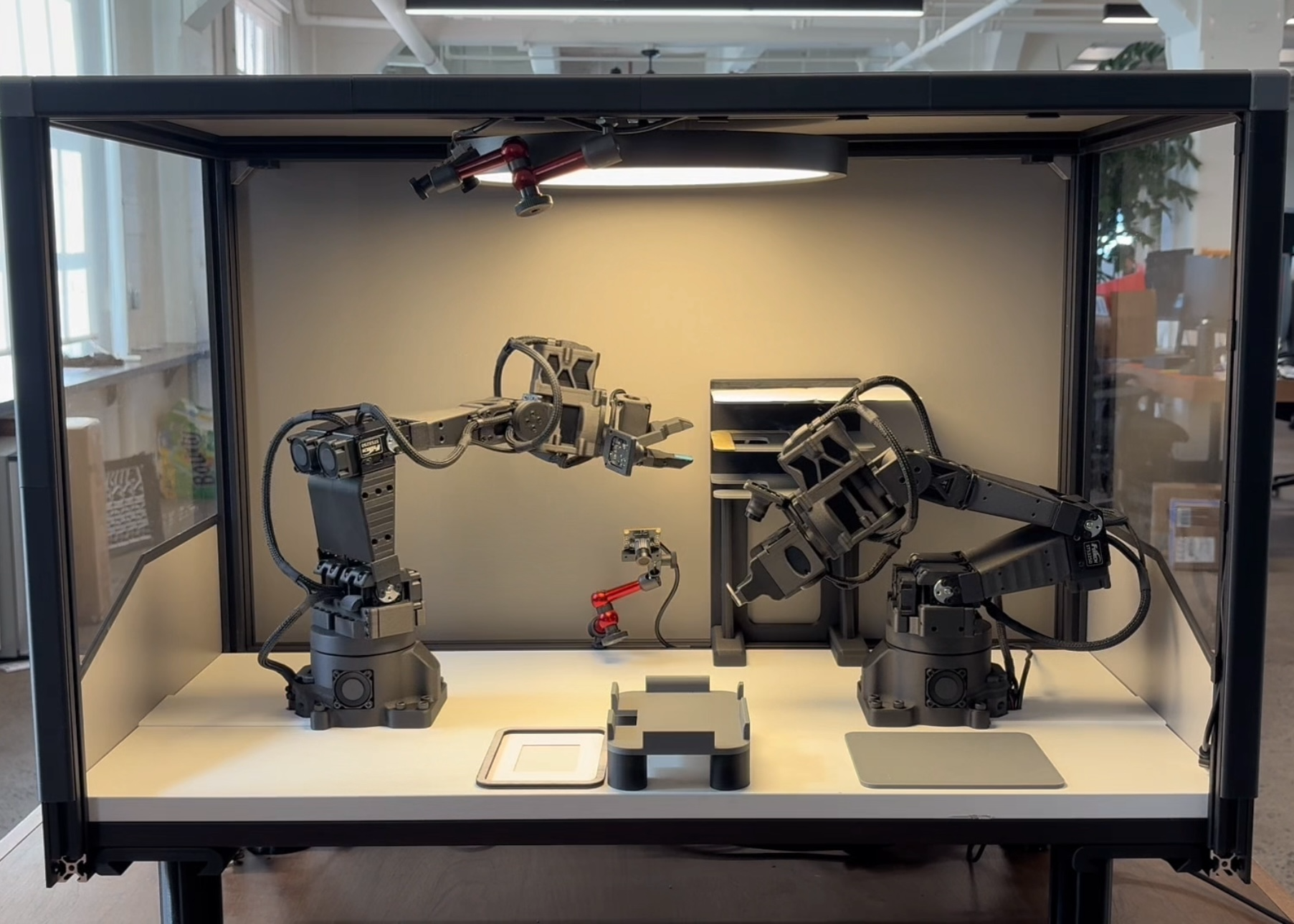
The company says it is using the funds for its flagship product: an AI-powered general-purpose robotic system enclosed in a compact, box-shaped frame with two robotic arms and interchangeable tools. Designed to fit on a desktop and priced at around $5,000, MicroFactory says the robot is already seeing paid reservations from over 100 customers in industries ranging from electronics assembly and textiles to food processing and laboratory automation.
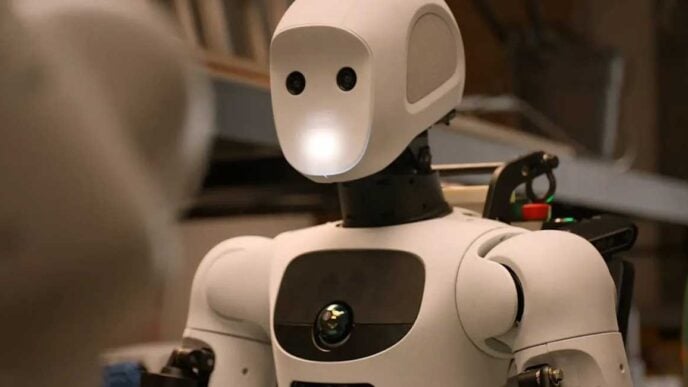
Unlike humanoids, MicroFactory’s robot is 10x simpler and cheaper to manufacture – requiring no legs, batteries, or complex human-like fingers. The enclosed box design is claimed to provide stable lighting and camera positioning, making training easier, data more transferable, and the system physically safer for both home and workplace use.
“You don’t need a humanoid robot to automate tabletop work,” explained Igor Kulakov, co-founder and CEO of MicroFactory. “Our robot design allows us to automate tasks with the current state of robotic AI models and hardware. To prove it we created a demo of assembling a real product for our client, which had previously been assembled by an offshore factory. This design also helps the robot to be affordable and safe.”
MicroFactory robots learn tasks through human demonstration, not complex programming.
Core capabilities include: Precision soldering and screwing, pick-and-place and cable routing, peeling adhesive films or plastic layers, and light-duty food processing and packaging.
MicroFactory deliberately started with electronics assembly because the robot can also build other robots – laying the foundation for fully automated production lines located in the US. By focusing on small and mid-sized businesses, the company expects to create a flywheel of diverse training data that makes its robots smarter and faster to deploy over time.
The first commercial units are expected to ship in early 2026. Long term, MicroFactory envisions deploying 100 million robots globally, automating the bulk of manual labour across industries, and eventually driving hardware costs below $1,000 per unit.