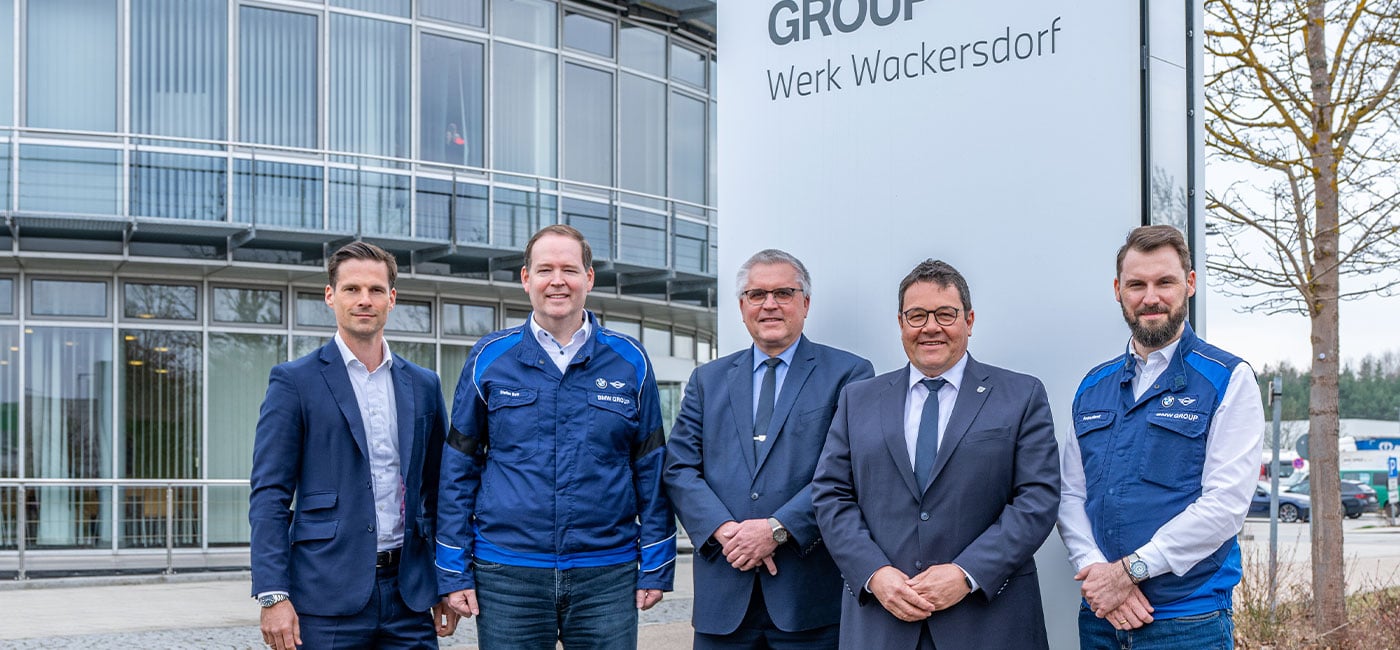

BMW has offered a sneak preview of the advanced automation systems inside its radically revamped Munich plant as production of its Neue Klasse electric vehicle ramps up from 2026.
The €650 million overhaul of the 104-year-old site marks one of the most significant upgrades in the company’s history, combining new buildings, re-engineered production processes, and deep integration of artificial intelligence and digital systems. At the centre of the transformation is a new three-storey assembly facility for the BMW i3, designed from the ground up around automation, data, and flexibility.
Automation News had a look at some of the new systems being implemented:
1. AI-driven assembly and self-monitoring vehicles
According to BMW, the company has incorporated AI into the assembly process. Each vehicle on the production line transmits the status of up to 20,000 features in real time to BMW’s production system.
Camera systems and sensors continuously monitor assembly quality, with AI analysing the data and providing immediate feedback to workers. This enables inline quality control without interrupting production and eliminates the need for certain traditional testing systems.
The result is a shift towards self-monitoring production, where both the vehicle and the line validate quality in real time, reducing errors and increasing throughput.

2. Smart Transport Robots and automated logistics
Logistics at the Munich plant has also undergone a major transformation, particularly to accommodate its multi-storey layout in a dense urban environment.
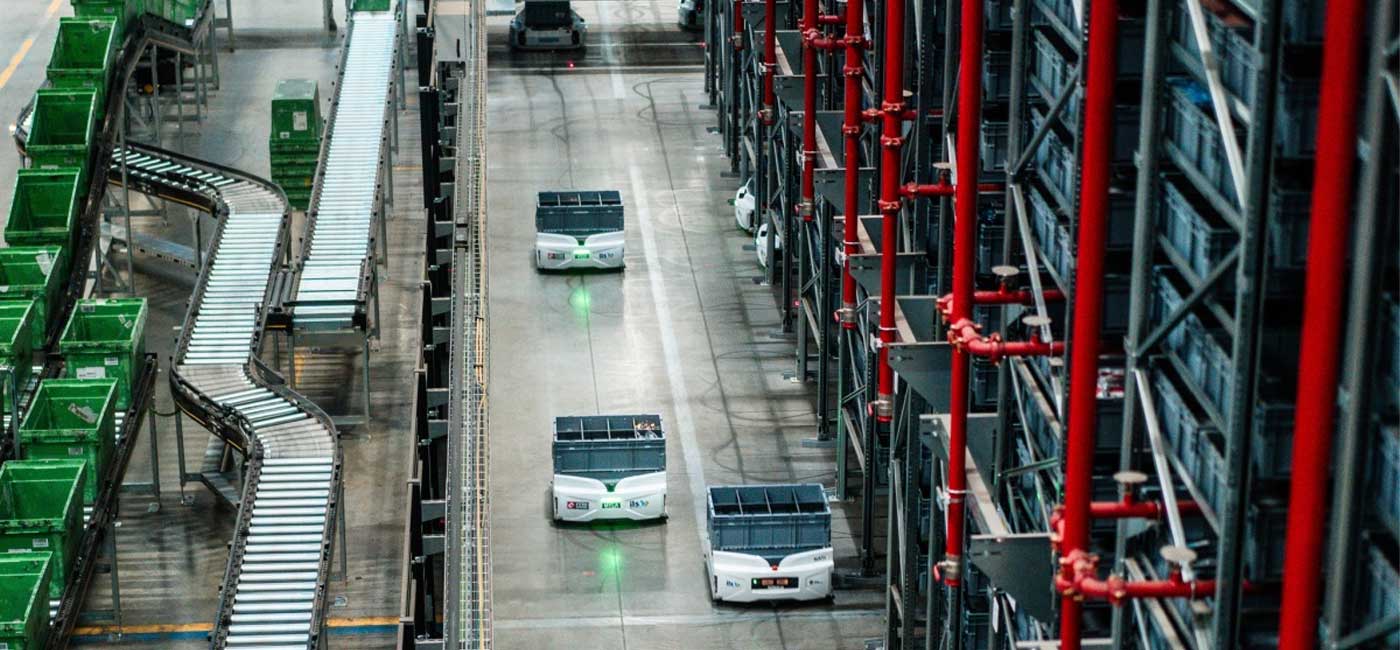
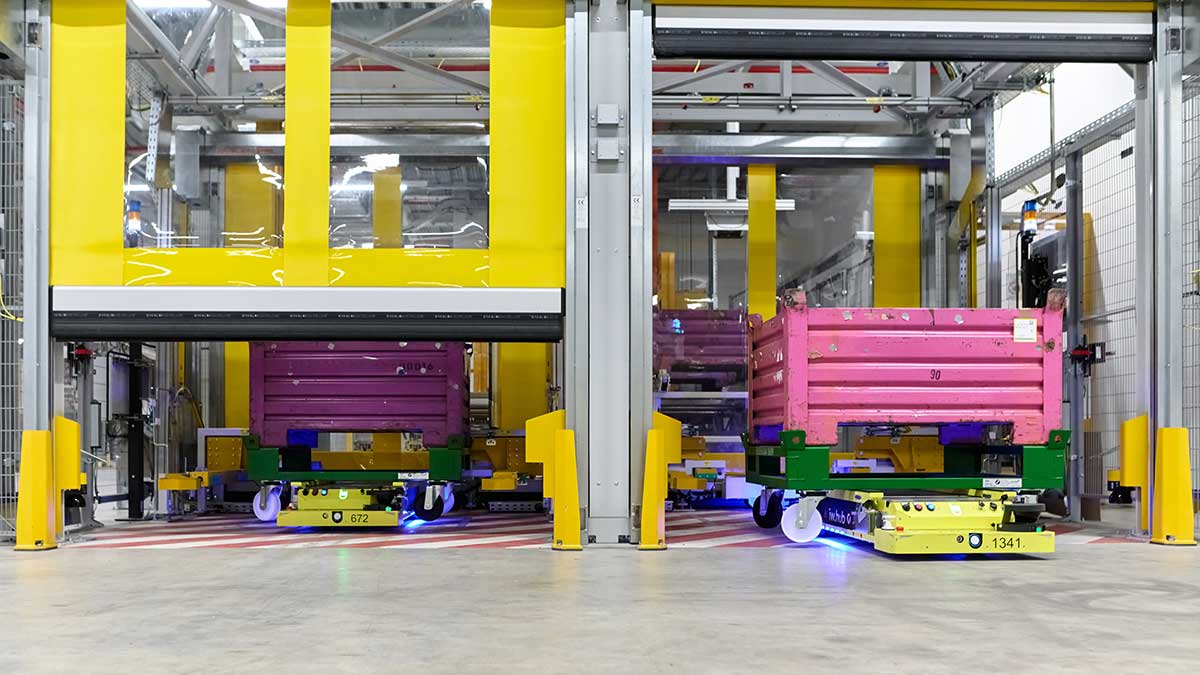
Smart Transport Robots (STRs) now handle the autonomous delivery of parts from ground-level unloading zones to assembly workstations across multiple floors. These robots ensure components arrive exactly when needed, supporting “just-in-sequence” production.
By automating around 60% of internal transport tasks, BMW reduces manual handling, shortens delivery times, and improves precision in material flow — all critical for high-volume EV production.
3. Hydrogen-powered intralogistics
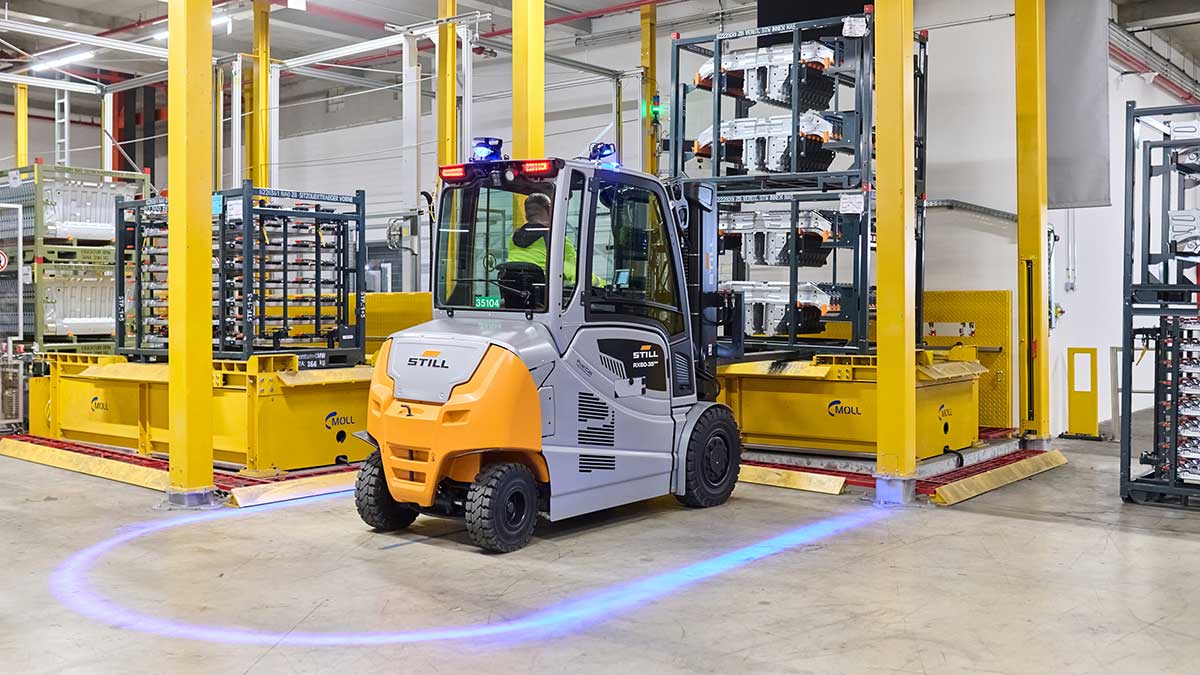
In a first for the plant, BMW has introduced 125 hydrogen-powered forklifts. Unlike battery-electric alternatives, these vehicles can be refuelled in around three minutes, significantly reducing downtime.
The use of hydrogen eliminates the need for extensive charging infrastructure while maintaining zero local emissions. For a high-throughput facility, this translates into higher equipment availability and more flexible logistics operations.
4. Fully digital seat manufacturing
Munich is unique within BMW’s global network in producing seats in-house — and the process is now heavily automated.
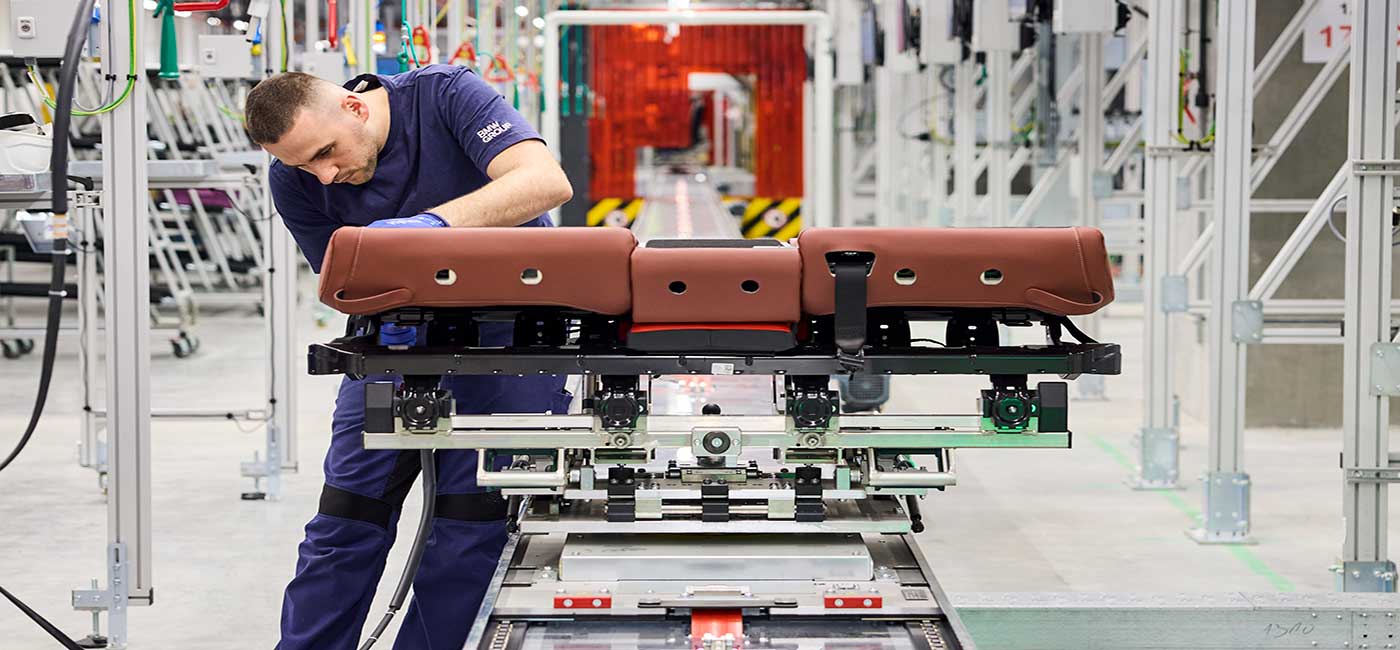
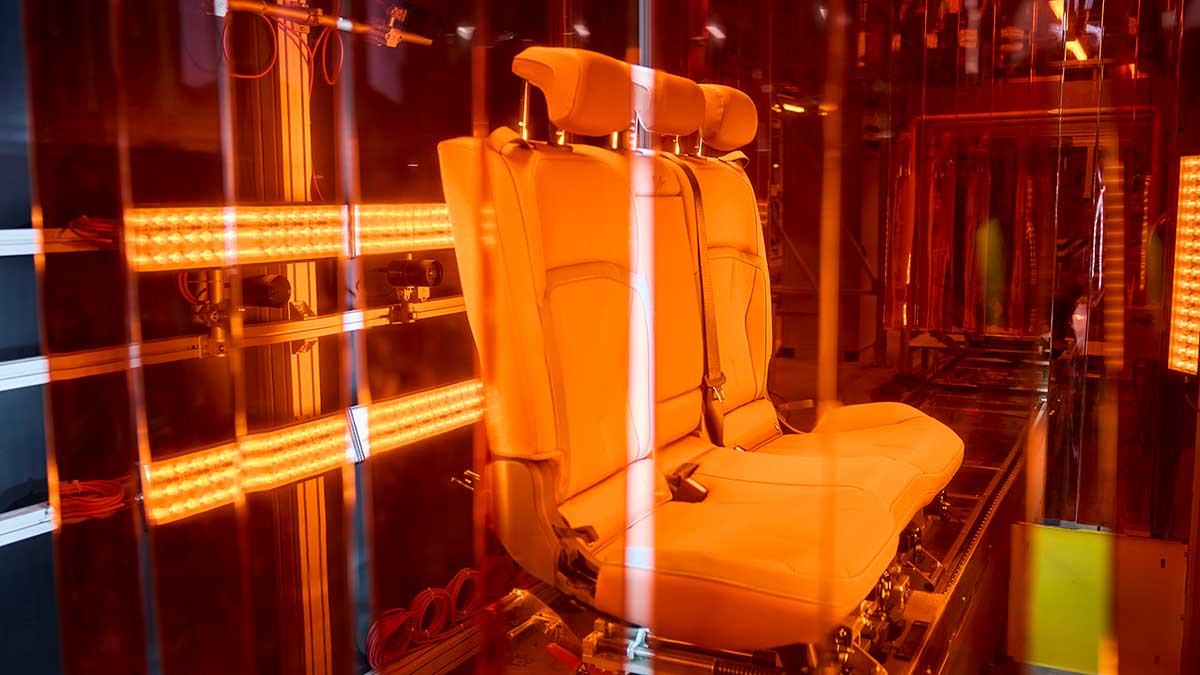
Seats are manufactured in sync with vehicle assembly and delivered directly to the line. Each unit undergoes AI-assisted inspection at 21 camera stations, checking 127 features and generating full 360-degree documentation.
Robotic systems also perform functional safety checks, such as testing belt buckles. The integration of cloud-based software and data analytics allows continuous optimisation of production quality and efficiency.
5. Modular vehicle architecture and simplified wiring
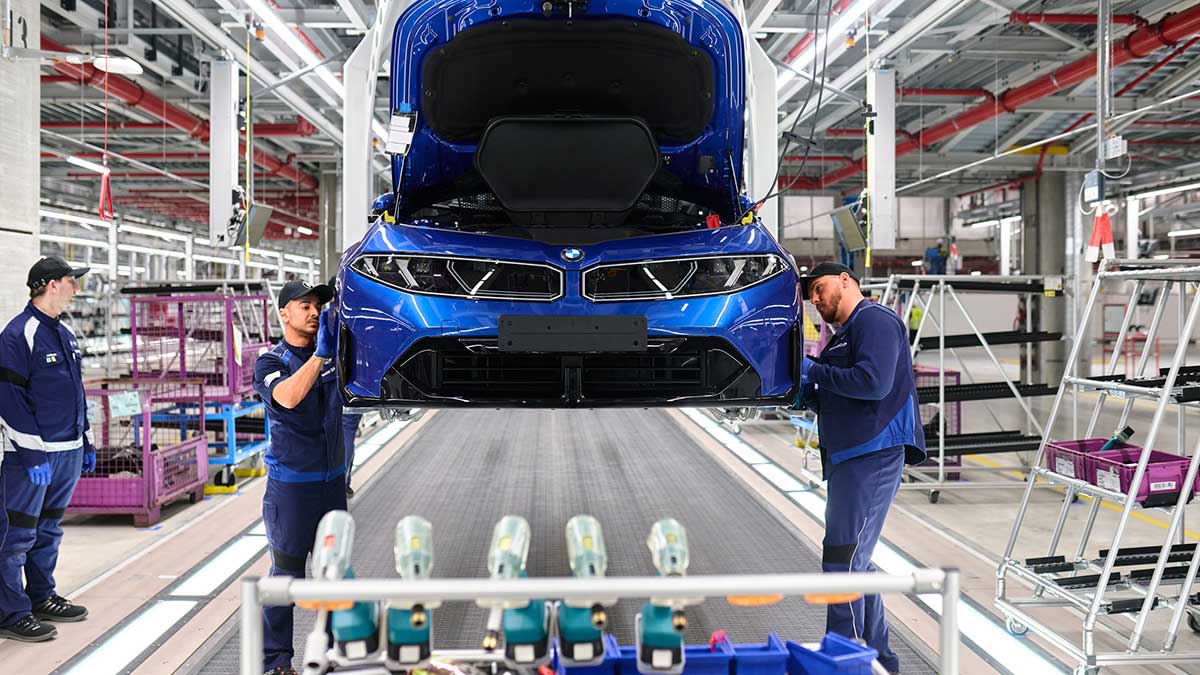
Automation at Munich is also enabled by product design. The Neue Klasse platform introduces a zonal wiring architecture that reduces cable length by 600 metres and cuts weight by 30%.
By dividing the vehicle into four electronic zones, installation becomes simpler and more ergonomic, reducing assembly time and error rates. Fewer components and standardised modules also make the process more automation-friendly.
This demonstrates how design for manufacturing plays a critical role in unlocking automation potential.
6. Intelligent logistics control and predictive systems
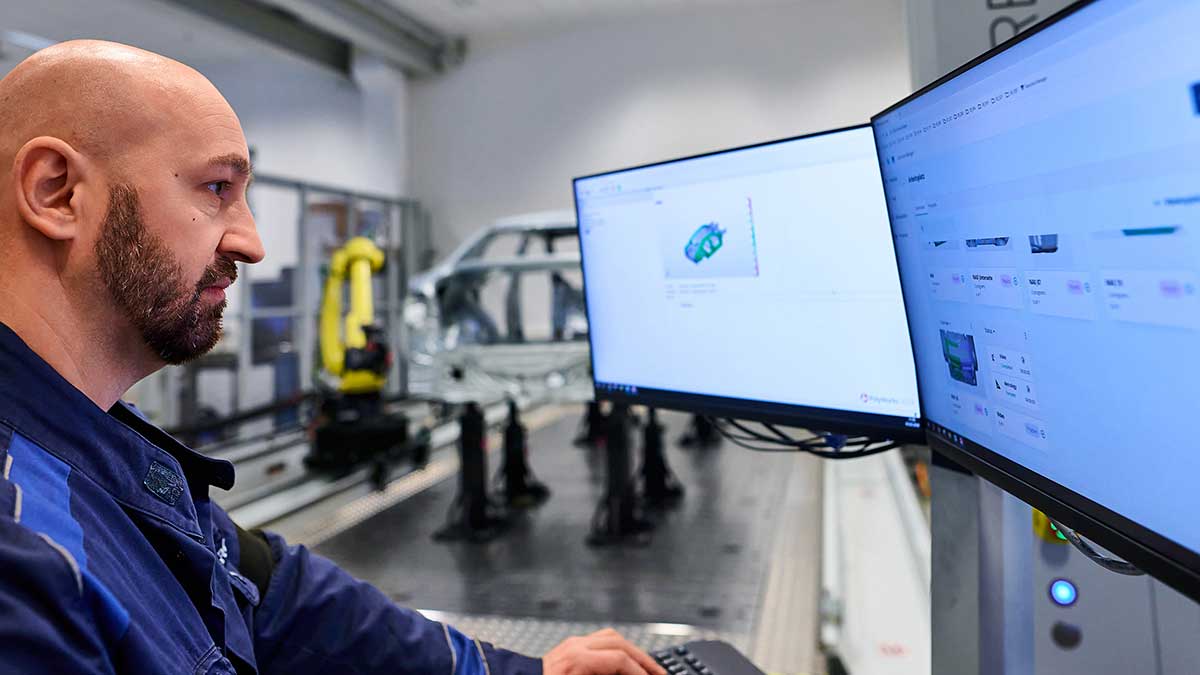
Overseeing the entire material flow is a centralised Logistics Control Room, which uses real-time and historical data to optimise operations.
The system tracks parts from arrival to installation, predicts potential shortages, and adjusts supply accordingly. This level of visibility ensures that production remains stable even under fluctuating demand or supply chain disruption.
A digitally integrated factory
Moreover, the carmaker says it expects its Munich plant to serve as a showcase for its iFACTORY strategy — a production philosophy focused on efficiency, sustainability, and digitalisation across every stage of manufacturing.
“We have been making rigorous preparations. With the BMW iFACTORY we have devised a consistent, strategic framework for our production,” said Milan Nedeljković, Member of the Board of Management of BMW AG, Production. “We have paved the way for the upcoming start-ups in all our plants and have invested heavily in technologies, digitalisation and AI.”
Blueprint for the future
The transformation comes at a critical moment for the German automotive industry. Intensifying competition from China, trade pressures such as US tariffs, and shifting domestic policies are all placing strain on manufacturers. At the same time, the transition to electric vehicles is fundamentally changing production economics.
Analysts point out that EVs are inherently less complex to manufacture, with fewer moving parts and simplified drivetrains. This reduces the number of production steps and the overall industrial value per vehicle — and, by extension, the number of workers required.
“With their high level of expertise, enthusiasm and tremendous dedication, our employees have shown that world-class industrial production is possible even under the toughest conditions,” said Plant manager Peter Weber. “We have rethought the entire value stream from supplier to finished customer vehicle. We have looked at every single process in detail and made optimisations. Now our plant is even more efficient, more flexible and even more digitised than ever before. We are thereby safeguarding the future viability of the plant.”