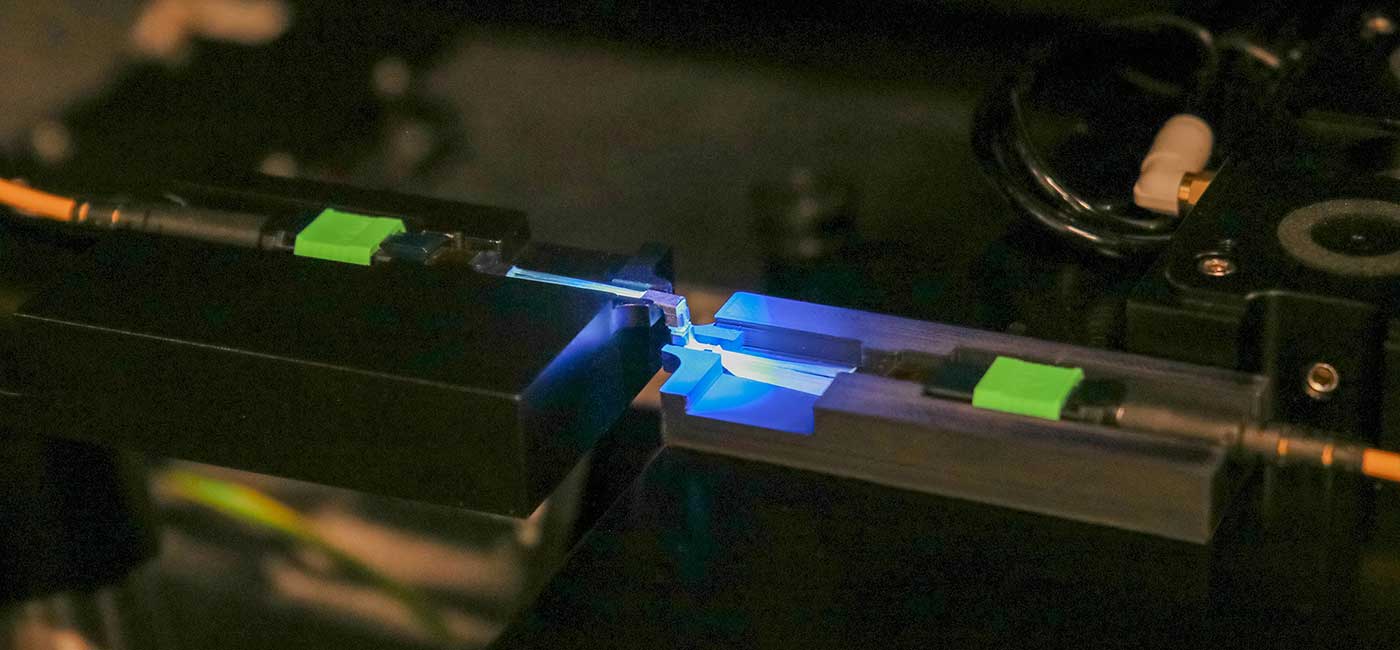
Space Forge has taken a significant step towards commercial in-space manufacturing after successfully generating plasma aboard its ForgeStar-1 satellite, a development that could reshape how advanced semiconductor materials are produced for electronics and automation applications.
In a post on X on 31 December, showing pictures of the process taking place, the Cardiff-based company said that the demonstration, completed in low Earth orbit (LEO), confirms that the extreme conditions required for gas-phase crystal growth can be created and controlled on an autonomous, free-flying commercial spacecraft.
Space Forge says this makes ForgeStar-1 the first commercial semiconductor manufacturing tool to operate in space, extending research previously limited to the International Space Station.
The milestone builds on the company’s earlier regulatory achievement as the first and only organisation in the UK and Europe licensed to conduct in-space manufacturing.
“Generating plasma on orbit represents a fundamental shift,” said Joshua Western, Chief Executive Officer and Co-founder of Space Forge, in a statement. “It proves that the essential environment for advanced crystal growth can be achieved on a dedicated, commercial satellite – opening the door to a completely new manufacturing frontier.”
Space Forge is planning to manufacture wide- and ultra-wide bandgap materials including gallium nitride (GaN), silicon carbide (SiC), aluminium nitride (AIN), and diamond.
These materials are increasingly important for power electronics, industrial automation, high-frequency communications, quantum technologies and defence systems, where higher efficiency, higher operating temperatures and greater reliability are critical. On Earth, production is constrained by defect formation, impurity incorporation and thermal instability during crystal growth.
According to the company, microgravity eliminates convection, providing optimal conditions for semiconductor production, and allowing atoms to form their highly ordered three-dimensional structures and to align with near-perfect precision. Moreover, the ultra-high-quality vacuum and stable thermal environment in orbit reduce contamination and defects.
Space Forge says that this combination has the potential to deliver semiconductor crystals several orders of magnitude cleaner than those produced using terrestrial processes, with direct implications for device performance and lifetime in demanding industrial environments.
ForgeStar-1’s plasma strike marks the start of a broader experimental programme. The satellite will now carry out a series of parameter sweeps to map plasma behaviour in microgravity, generating data that will feed into the design of larger, more capable orbital manufacturing platforms. The current satellite was launched on a SpaceX rocket in the summer and has been operated from Space Forge’s mission control centre in Cardiff.
As the mission progresses, ForgeStar-1 will enter a phase of natural orbital decay, with its trajectory monitored using onboard systems and external support from the Science and Technology Facilities Council. The mission will conclude with a controlled atmospheric re-entry, which Space Forge describes as a world-first test of safe satellite demise, designed to underpin future reusable and returnable manufacturing missions.
In the longer term, the company plans to combine orbital crystal growth with terrestrial processing. Space-grown semiconductor seeds would be returned to Earth and scaled at the Centre for Integrative Semiconductor Materials, creating a hybrid manufacturing model aimed at complementing existing supply chains. For electronics and automation manufacturers, the approach could offer access to materials with performance, efficiency and resilience beyond what is currently achievable with Earth-based production alone.