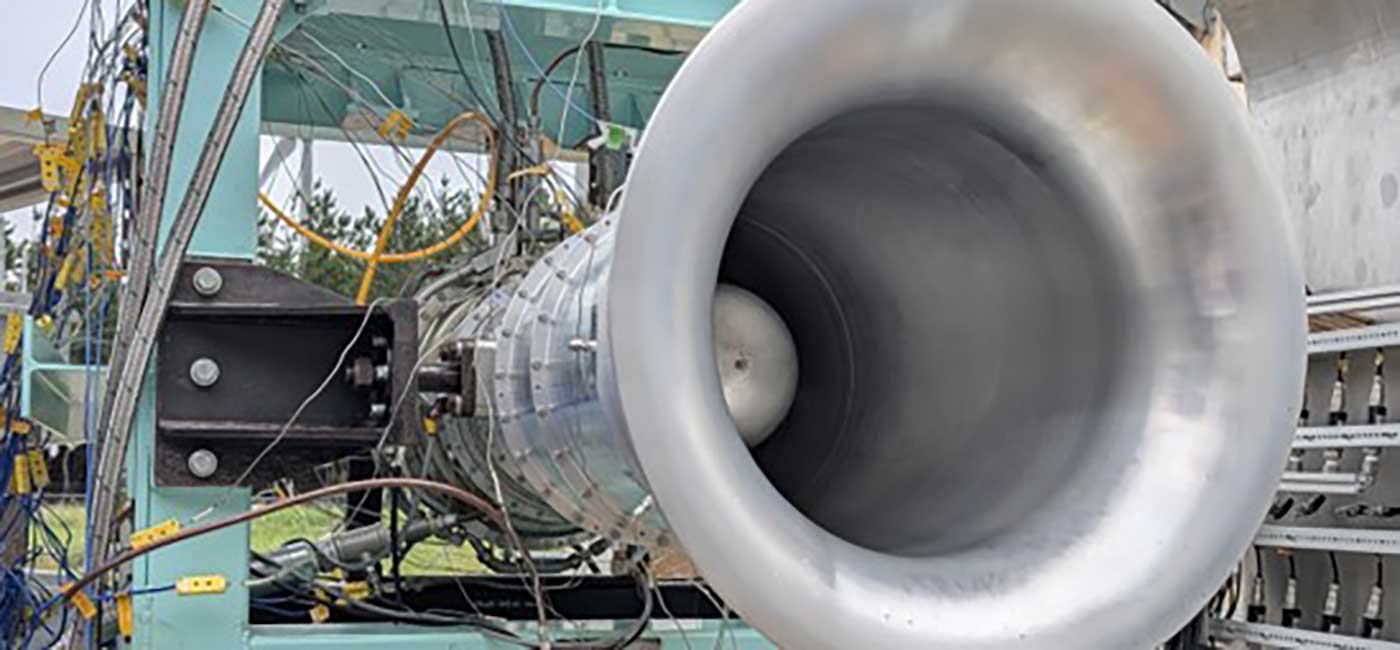

Kawasaki Heavy Industries has completed Japan’s first operational test of a small aircraft engine running on 100% hydrogen, using combustion technology developed for power-generation gas turbines to limit nitrogen oxide (NOx) emissions.
The test, conducted at the Japan Aerospace Exploration Agency’s Noshiro Rocket Testing Center in Akita Prefecture, demonstrated stable combustion and thrust generation across the engine’s operating range, including ignition, acceleration, cruise-equivalent conditions, deceleration and shutdown.
The engine was fitted with a newly developed hydrogen combustor based on Kawasaki’s proprietary micromix technology. Originally developed and commercialised for gas turbines used in power generation, the technology distributes combustion across numerous small flames to prevent localised high temperatures that contribute to NOx formation.
Kawasaki said the results indicated the potential to achieve one of the world’s lowest NOx emission levels while meeting increasingly stringent aircraft engine emissions regulations. The company did not disclose numerical emissions measurements or comparative test results.
Hydrogen combustion offers a potential route to reducing aviation’s carbon emissions, but it presents engineering challenges, including controlling NOx formation at high combustion temperatures. Hydrogen’s overall climate benefits also depend on how the fuel is produced.
The test forms part of a project to develop core technologies for hydrogen-fuelled aircraft, selected for support under Japan’s Green Innovation Fund through the New Energy and Industrial Technology Development Organization (NEDO).
Kawasaki has previously tested a small hydrogen-fuelled aircraft engine and demonstrated a liquefied hydrogen storage tank. The latest results will inform further development of the combustion and fuel-system technologies needed for hydrogen-powered flight.
The project runs from 2021 to 2030. Kawasaki plans to conduct integrated ground tests to assess a system incorporating the aircraft, engine, fuel tanks and associated technologies.
The company is developing hydrogen technologies as part of its wider strategy to reduce emissions from aviation and contribute to Japan’s target of achieving carbon neutrality by 2050.