
CERN has turned to KNF’s diaphragm pump technology to safeguard the purity of gas mixtures used in some of the world’s most exacting particle-physics experiments, underscoring the importance of contamination-free systems in the hunt for subatomic insights.
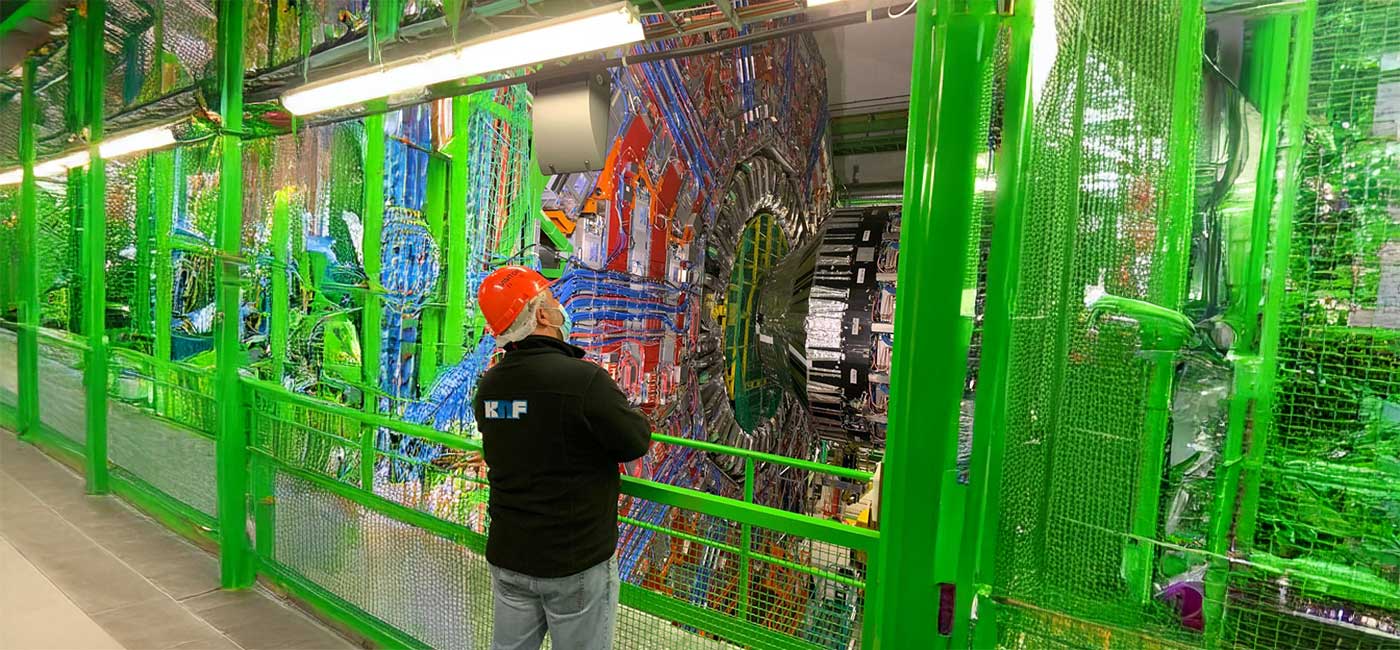
The European laboratory, which straddles the Franco-Swiss border, operates a series of circular and linear accelerators, including the Large Hadron Collider 100 metres underground. These machines have enabled several landmark scientific advances, including the observation of the Higgs boson and the isolation of antimatter.
To record the fleeting traces left when particles collide at close to the speed of light, detectors rely on carefully calibrated gas mixtures. As charged particles pass through these gases, they generate tiny trails of ionisation that can be amplified and measured with high precision. Any impurity risks distorting the signals on which physicists depend.
Around 30 gas systems feed the detectors used in LHC experiments. Each system must deliver a stable mixture of noble gases including argon, xenon, and helium, alongside compounds such as tetrafluoromethane, tetrafluoroethane, sulphur hexafluoride, isobutane, and carbon dioxide. Maintaining the integrity of these mixtures has become a critical operational requirement.
CERN has, over several decades, come to rely on KNF’s diaphragm pump technology. The pumps circulate and purify the gas mixtures, and their contamination-free operation has made them central to the functioning of detectors such as the Compact Muon Solenoid.
Longstanding collaboration between KNF engineers and CERN’s Gas Team has led to a high degree of customisation. When the CMS experiment required new pumps, CERN selected two tailored KNF models, with a third held in reserve. The laboratory also participated directly in the recent redesign of the N 0150 and N 1200 process pumps, contributing operational feedback that allowed KNF to extend diaphragm service life.
CERN’s confidence in the technology was underlined by a subsequent order for 18 additional pumps, each capable of a flow rate of roughly 170 l/min, installed across particle-accelerator facilities in 2022.
The partnership highlights how cutting-edge physics often depends on quiet, highly specialised industrial components, and how decades-long cooperation between research institutions and manufacturers continues to shape the tools of modern science.