One surprising thing about this week’s Consumer Electronics Show in Las Vegas was that a huge amount of the show had very little to do with consumers at all.
Many of the headline-grabbing prototypes, big announcements, and suavely choreographed keynote speeches at this year’s show were centred around the rapidly growing industrial automation market, signalling a sea change in a sector often relegated to the background in such gatherings.
Industry leaders pointed to a brave new world where artificial intelligence, advanced robotics, and digitalisation are converging to reshape manufacturing and industrial operations.
“Just as electricity once revolutionised the world, industry is shifting toward elements where AI powers products, factories, buildings, grids, and transportation. Industrial AI is no longer a feature; it’s a force that will reshape the next century,” Siemens President and CEO Roland Busch said in his keynote speech.
Here are the four big trends we spotted from the show:
1. From concept to production-ready automation

One of the most telling themes from CES was the move from conceptual demos to production-ready solutions. In previous years, humanoid robots and collaborative arms were fascinating to watch but remained largely proof-of-concept attractions. At CES 2026, companies signalled a shift towards deployable, industrial-grade automation.
Hyundai Motor Group’s expansive AI robotics strategy was one of the standout moments. The automaker, better known for cars than cobots, unveiled an ambition to integrate humanoid robots into industrial environments, underscoring a move where robots are designed to handle repetitive, hazardous, or physically demanding tasks rather than simply replacing human workers.
Further evidence of this trend came from multiple exhibitors focusing on robotics that align more directly with factory and warehouse work — from autonomous mobile platforms and palletising systems to advanced motion systems that promise to relieve bottlenecks in material handling and logistics.
2. The rise of industrial AI

Long touted as the next big thing since connectivity and automation, AI finally took centre stage in industrial discussions. But this time, the focus was not on buzzword-driven gimmicks, but on AI as an embedded, end-to-end layer of industrial technology.
One of the most talked-about moments of the show was the joint appearance of NVIDIA founder Jensen Huang and Siemens President and CEO Roland Busch. The pair announced an ambitious plan to build what they called the Industrial Metaverse, a real-time, all-encompassing AI-native solution which they claim will seamlessly integrate design, engineering, and physical execution. In practical terms, this could mean factories with real-time digital avatars that optimise operations, anticipate faults, and refine production processes with minimal human intervention.
A key part of this was an announcement by F&B producer PepsiCo that it had agreed a multi-year collaboration with Siemens and NVIDIA to transform plant and supply chain operations through advanced digital twin technology and AI.
“The scale and complexity of PepsiCo’s business, from farm to shelf, is massive — and we are embedding AI throughout our operations to better meet the increasing demands of our consumers and customers,” said Ramon Laguarta, Chairman and CEO of PepsiCo. “Our work with Siemens and NVIDIA will help accelerate our continued journey of becoming a future-fit company, operating with agility and foresight.”
3. The humanoids are here
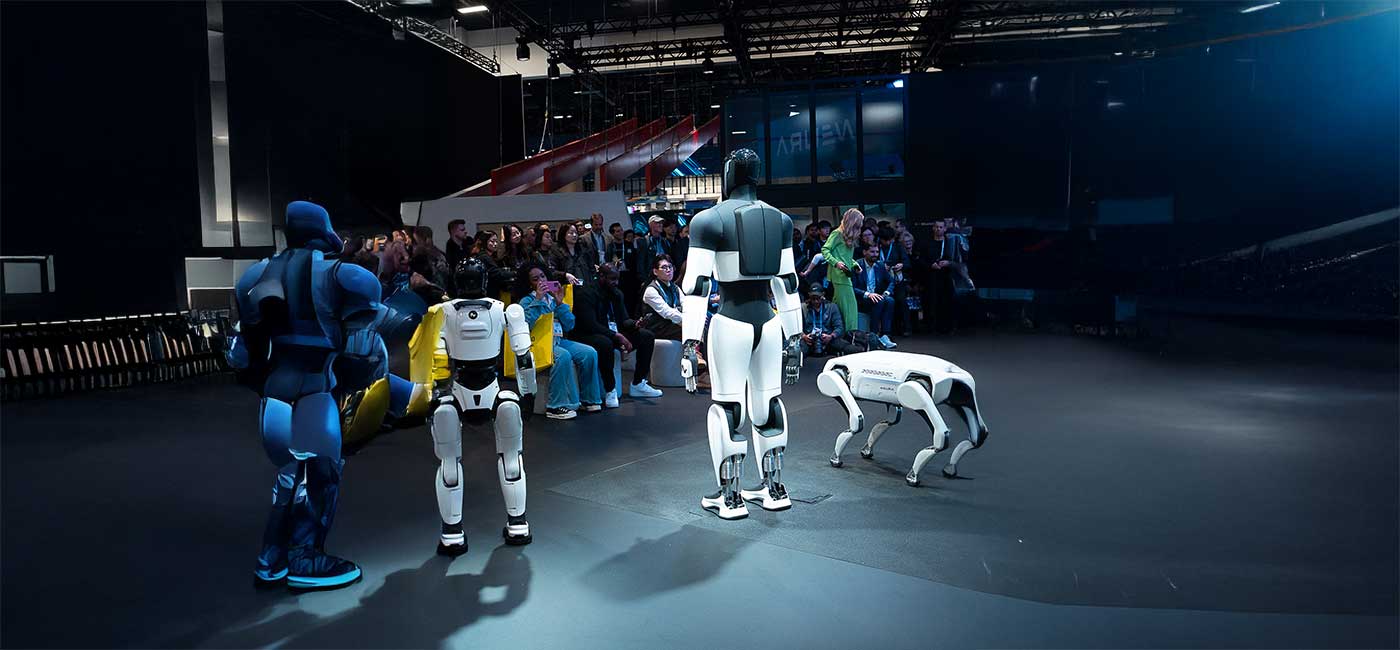
Robots featured heavily in this year’s show, especially humanoid ones. Machines that once looked like sci-fi curiosities are now being positioned as tools for logistics, assembly, and inspection tasks in environments where conventional machines struggle.
As well as Atlas, the humanoid robot displayed prominently by Hyundai and Boston Dynamics, rival Unitree showcased its humanoid line up, including its H2 humanoid model, which has been designed specifically for industrial applications.
German robotics specialist NEURA Robotics also unveiled its third-generation 4NE1 humanoid, aimed at both industrial automation and domestic help at the show.
EngineAI was also at the show demonstrating its T800, equipped with a fully integrated, high-torque joint module architecture capable of delivering up to 450 N•m of peak torque and 14,000 W of instantaneous joint peak power.
And it wasn’t just the industrial robots themselves on display. Exhibitors like Schaeffler highlighted innovations in planetary gear actuators designed for humanoid robots, autonomous material-handling platforms, and precision motion components that increase productivity while reducing energy consumption.
4. The shift to Edge AI
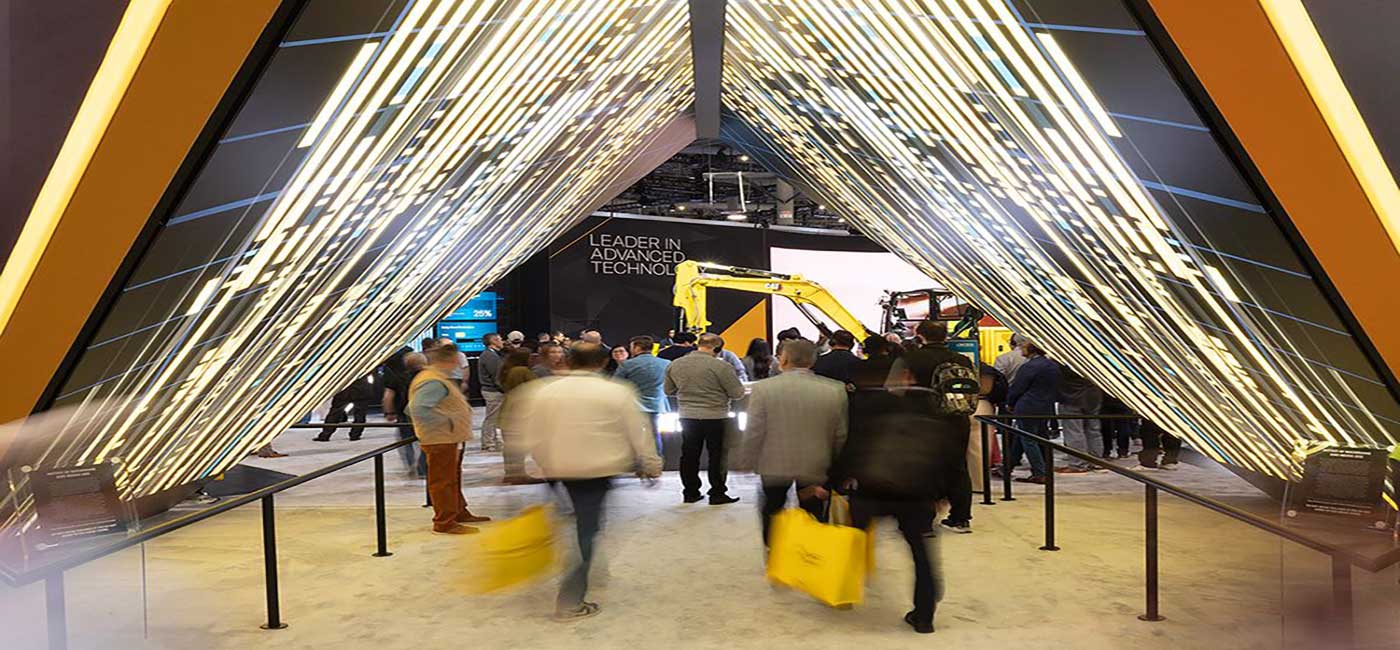
CES 2026 also highlighted a shift towards Edge AI — processing intelligence closer to the machine, rather than sending all data to a central Cloud.
A key example of this was the announcement by heavy equipment manufacturer Caterpillar that it had expanded a collaboration with NVIDIA via its Jetson Thor Edge AI platform to enable real-time AI inference on its construction, mining, and power equipment.
To prove it, in his key note speech, Joe Creed, CEO of Caterpillar, lifted the arm of a Cat 306 CR mini excavator via a voice activated in-cab AI assistant.
NVIDIA said its Riva software framework handles speech, using NeMo speech models. Qwen3 4B, served locally via vLLM, interprets requests and generates responses with low latency, with no Cloud link required.
“As AI moves beyond data to reshape the physical world, it is unlocking new opportunities for innovation — from job sites and factory floors to offices,” Creed said.