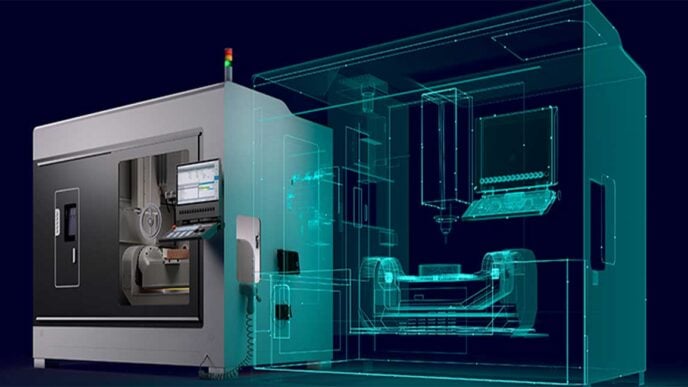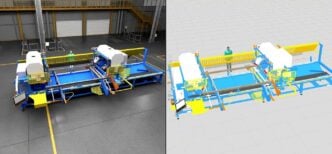
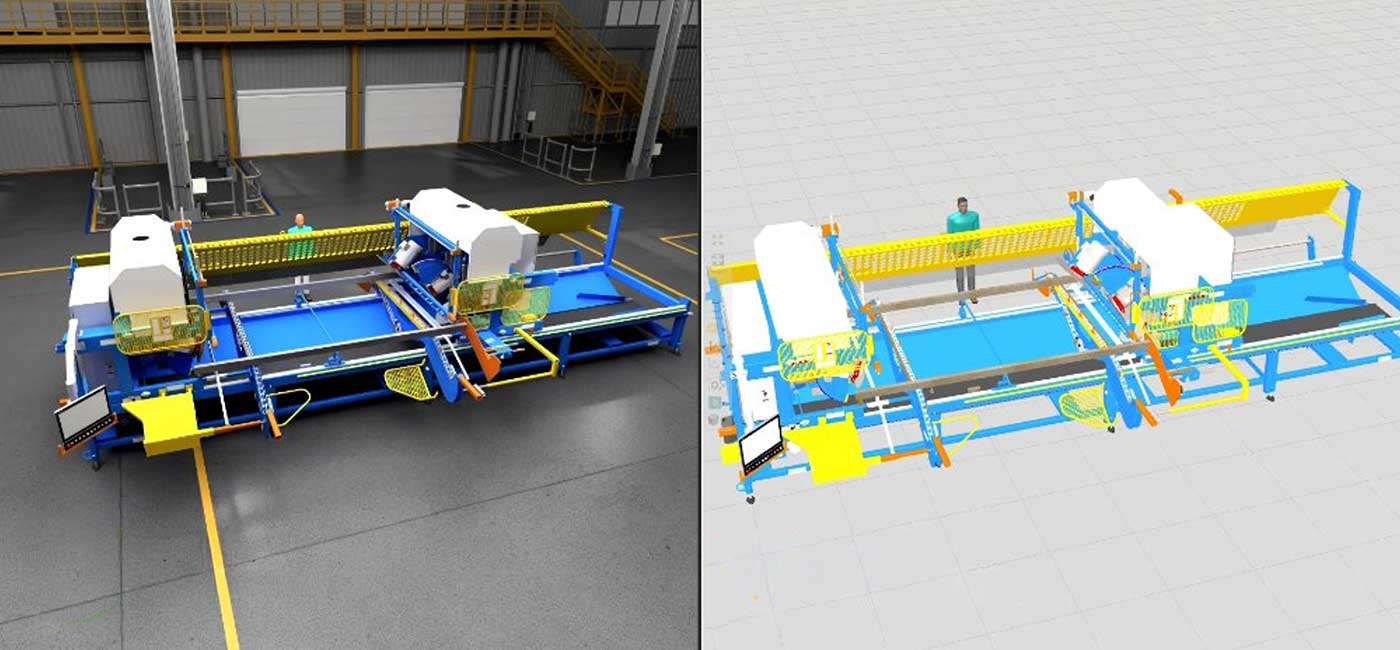

Visual Components has launched FactoryLens, a new viewport that brings NVIDIA’s Omniverse libraries and OpenUSD into its manufacturing simulation platform, allowing manufacturers to turn existing factory layouts into more realistic digital twins.
The Finnish software company said the tool is designed to extend existing simulation workflows rather than require engineers to recreate factory models in separate visualisation software.
FactoryLens uses NVIDIA RTX technology for real-time rendering, adding photorealistic materials and appearances to factory and warehouse simulations built in Visual Components. NVIDIA PhysX provides the underlying physics simulation.
Visual Components’ platform includes more than 4,000 components, covering industrial robots, machines, conveyors, autonomous mobile robots and forklifts. FactoryLens allows users to visualise these existing layouts in real time, produce video and export configurations using Universal Scene Description (OpenUSD).
The company said this could make simulation more useful for validating factory designs against real-world conditions, before equipment or processes are deployed on the factory floor.
“FactoryLens is our first step in bringing NVIDIA Omniverse libraries into Visual Components,” said Mika Anttila, Chief Technology Officer and Co-Founder of Visual Components. “Manufacturers can see how their factories will really look and behave before they build them, while keeping the productivity and ease of use our customers already know.”
The companies see the integration as a foundation for wider digital twin and physical AI applications. These could include vision-based virtual commissioning, synthetic data generation and the training and evaluation of AI models and policies.
Mustafa Kamal, business development director at Visual Components, said the combination of NVIDIA’s libraries with its existing simulation software could make it easier to build realistic digital twins.
For NVIDIA, the integration reflects a growing use of simulation to test production environments and physical AI systems before changes are made to physical facilities.
“Manufacturers are increasingly using simulation to design, test, and optimise complex production environments and physical AI systems before making changes on the factory floor,” said Vikram Natarajan, General Manager for Omniverse at NVIDIA.
The integration also brings OpenUSD into Visual Components’ roadmap, with the companies pointing to potential future applications around collaboration, data exchange, interoperability, version control and multi-user workflows.
Visual Components said FactoryLens represents the next stage of its collaboration with NVIDIA and its broader move towards digital twins that connect factory simulation with more detailed visualisation and physical AI workflows.
The company plans to demonstrate FactoryLens at NVIDIA GTC Berlin in October alongside KUKA Group.