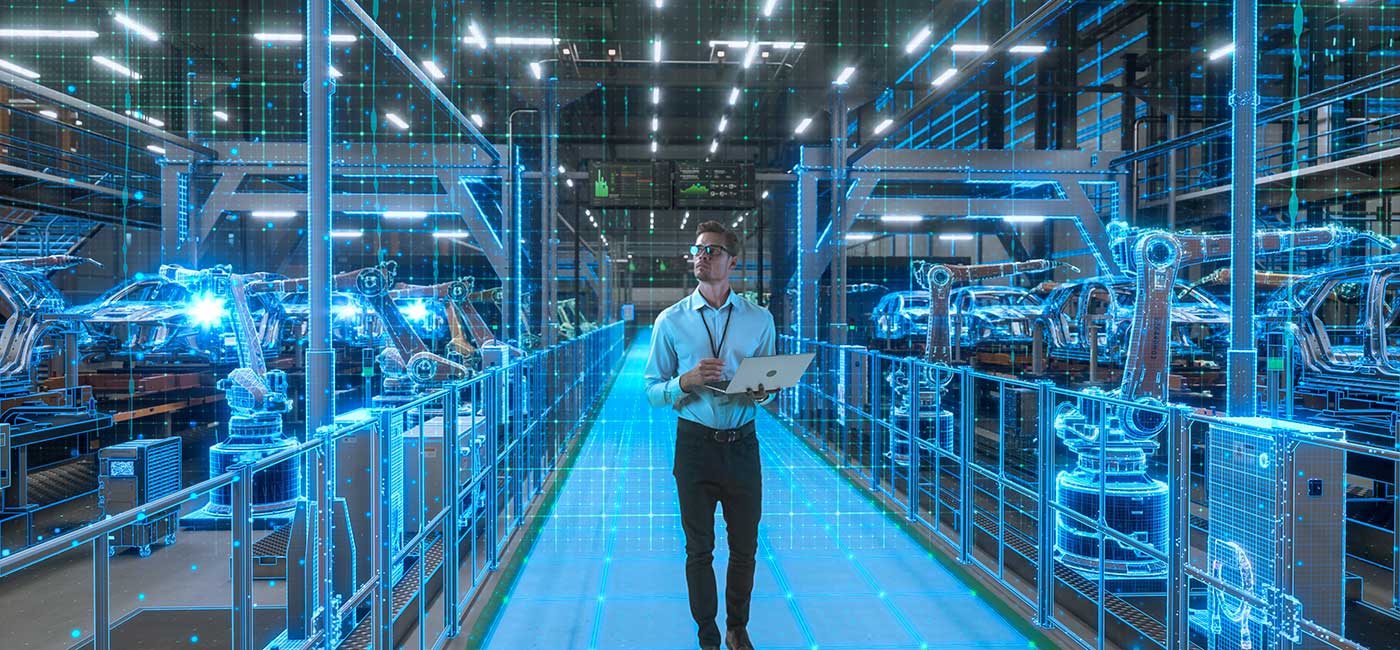

Digital twins are moving beyond simulation to play a more active role in automated manufacturing, improving uptime, throughput and process stability on the factory floor. They are now embedded in real-time control systems, shaping how machines respond and adapt. Here, Ross Turnbull, Director of Business Development at custom IC design and supply specialist Swindon Silicon Systems, explains why a digital twin’s effectiveness matters for automation performance and how the right signal acquisition architecture helps deliver it.
Across modern factories, automation systems rely on continuous streams of sensor inputs including vibration, torque, pressure, temperature, current and positional data. These signals coordinate machines, predict maintenance needs and stabilise production quality.
When data is stable and precisely synchronised, automation systems can react confidently and continuously. If signals arrive late, drift out of sync or vary in quality, control loops become more cautious, predictive models lose precision and machines often operate with wider margins than necessary.
The challenge is maintaining that consistency across diverse equipment, vendors and legacy infrastructure. Many factories combine modern robotics platforms, older PLC-controlled machinery and third-party monitoring tools that operate on different update cycles and data standards, creating integration gaps before information even reaches higher-level control, analytics or digital twin platforms.
Legacy PLC systems, modern robotics platforms and third-party monitoring tools often operate on different update cycles and data standards. Without careful alignment at the Edge, inconsistencies accumulate before data even reaches analytics or AI systems.
This challenge is reflected across the industry, with “43 per cent of organisations identifying data quality as a key challenge to achieving accurate implementation”, citing data integration, interoperability and data quality as leading barriers to digital twin deployment.
For automation engineers and system integrators, this shifts the challenge from simply acquiring data to ensuring that signals across machines, sensors and control systems are precisely time-aligned and consistent. In practice, this means dealing with mismatched update rates, communication delays and data inconsistencies across mixed-vendor environments.
Robotics, vision and closed-loop control in practice
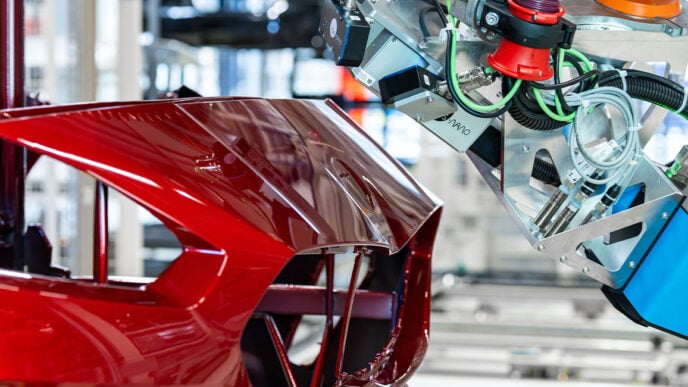
The impact of data quality becomes most visible in high-speed automation environments. In robotics, machine vision systems guide pick-and-place operations, inspection and assembly tasks. These systems rely on tightly synchronised imaging and sensor inputs, where even small timing inconsistencies can reduce positioning accuracy or force systems to operate with wider safety margins.
In closed-loop control systems, torque, vibration and current signals are used to adjust machine behaviour dynamically. If those inputs are inconsistent or poorly aligned, the system becomes less responsive, fine adjustments become less reliable and throughput suffers. As automation becomes more adaptive, the quality of data acquisition increasingly defines how confidently machines can react in real time.
The shift to real-time edge decision making
Automation is increasingly moving decision-making closer to the machine. Edge processing is reducing latency by enabling local control within production cells and individual machines rather than relying solely on centralised systems.
This shift increases the importance of time-aligned, high-fidelity data at the source. In real-time control systems, even small inconsistencies in sampling or timing introduce latency, jitter and uncertainty into control loops. The design of the acquisition layer, including how signals are conditioned, synchronised and digitised, has become a system-level concern rather than a component-level detail. For automation engineers, this directly affects how quickly and confidently systems can respond to changing conditions on the factory floor.
The result is a direct link between data integrity and automation performance. Faster decision-making only delivers value if the inputs are stable and consistent.
Why signal quality defines automation outcomes
As automation systems become more dependent on real-time feedback, the performance of the entire system is increasingly defined at the signal level. If sensor data is unstable or misaligned, the impact is not immediate failure but gradual degradation in performance. Predictive maintenance becomes less precise, machine vision requires broader tolerances and control systems lose confidence in fine adjustments.
This is reflected in broader smart manufacturing rollouts: in Deloitte’s 2025 Smart Manufacturing and Operations Survey, manufacturers reported improvements of up to 20 per cent in both production output and employee productivity following smart manufacturing implementation.
Improving data quality at the source directly supports higher uptime, improved throughput and more stable process control across production environments.
Enabling reliable data at the Edge
To support these demands, manufacturers are adopting more integrated approaches to data acquisition that reduce latency and improve synchronisation at the point of capture. This helps ensure that data entering automation systems already reflects the physical behaviour of the machine with greater accuracy.
One way manufacturers are addressing this is through more application-specific data acquisition hardware. Specialist mixed-signal ASIC approaches allow signal conditioning, filtering and conversion to be aligned more closely with the timing, bandwidth and noise requirements of the application. For automation engineers, the benefit is not the chip in isolation, but a more stable and reliable signal path feeding control systems, digital twins and edge analytics.
This leads to more reliable control behaviour, faster response in closed-loop systems and reduced variability in machine performance. Robotic systems can operate with tighter tolerances, machine vision can make more precise decisions and predictive maintenance models can identify faults earlier with greater confidence. In mixed-vendor environments, it also helps create more consistent inputs before data reaches higher-level software layers.
Precision at the point of capture
A digital twin cannot improve automation performance if the data feeding it is inconsistent. As factories move toward real-time, edge-driven control systems, accuracy must be established at the point where physical signals become digital information.
To support truly autonomous manufacturing, precision must be embedded at the source of the signal, ensuring that what automation systems act on is a faithful, real-time representation of the factory floor. When that foundation is in place, digital twins, control systems and edge analytics can all operate with greater speed, stability and confidence.
Author biography:

Dr. Ross Turnbull is the Director of Business Development and Product Engineering with Swindon Silicon Systems, a specialist in the design and supply of mixed signal ASICs for the industrial and automotive markets. He is an experienced engineer with a demonstrated history of working in the semiconductors industry. Skilled in Circuit Design, Electronics, Matlab, Semiconductors, and Application-Specific Integrated Circuits (ASIC).