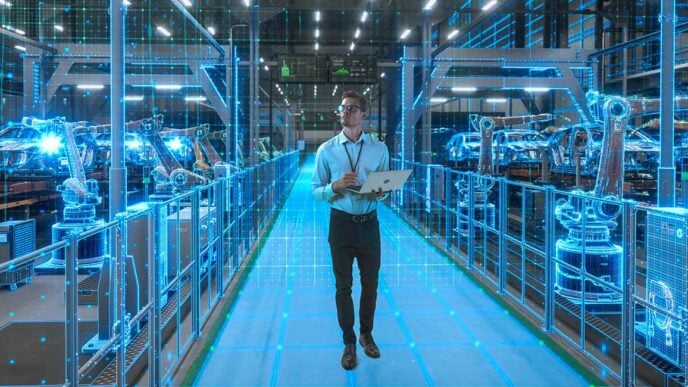
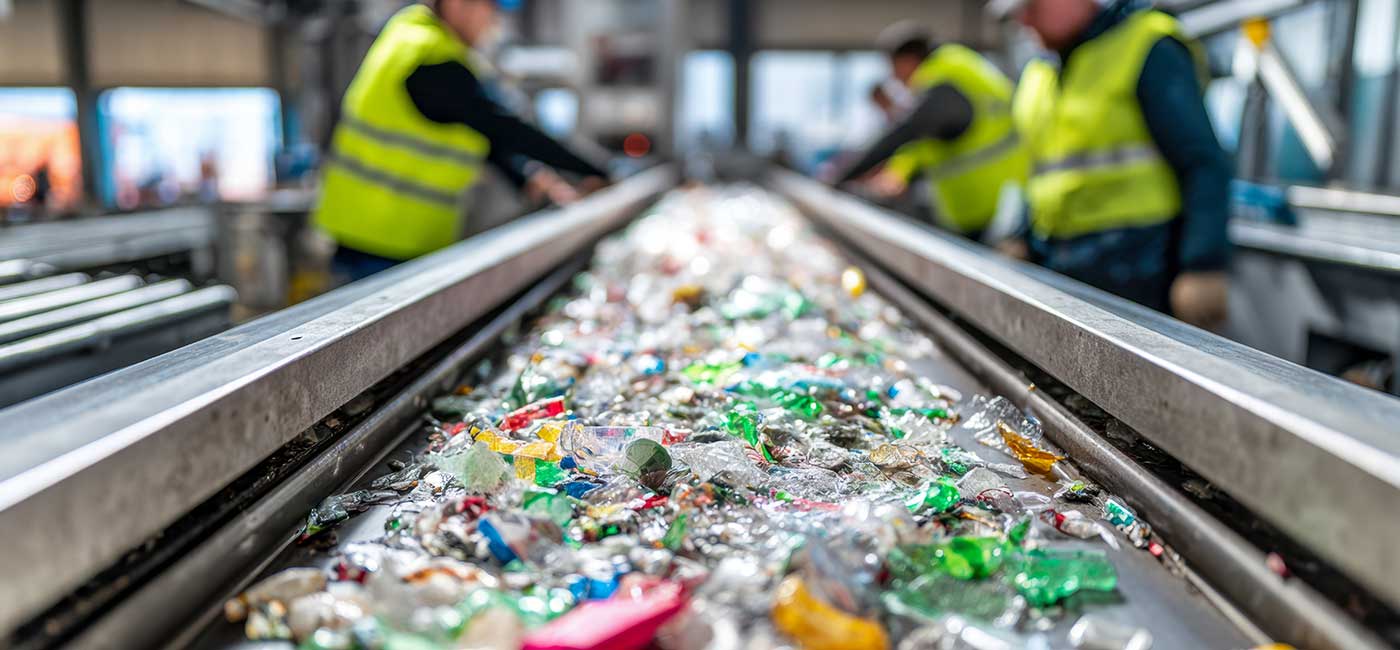

Material Recovery Facilities (MRFs) are becoming increasingly automated as operators seek to improve throughput, material purity, and operational efficiency, writes Thomas Maider, Engineering Consultant at Synergie Environ.
Advances in artificial intelligence, machine vision, robotics, and industrial control systems are enabling facilities to move beyond traditional mechanical and manual sorting processes. As a result, AI is emerging as a key technology in the digital transformation of waste and recycling operations.
The Rise of AI in MRFs
We are increasingly seeing AI being introduced and used as a tool in all sectors. It can be a very helpful and powerful tool for organisations when used to improve the efficiency, accuracy and decision-making of operations.
In the MRF industry, AI typically refers to machine learning and computer vision systems integrated into sorting lines. These systems use high resolution cameras, sensors and trained algorithms to identify materials in real time as they move along conveyors.
With global waste already at over 2 billion tonnes a year and expected to rise to 3.8 billion tonnes by 2050 , implementing AI in this way helps address any labour shortages and provides a secondary check to ensure recyclable material is identified and sorted.
Traditional optical sorters rely on fixed parameters like colour and near-infrared signatures, whereas AI is continuously learning from data. This continuous improvement allows for improved accuracy, adapting to new packaging formats, contaminated materials and changing waste compositions.
How AI works inside a modern MRF
1. Material identification: thousands of images per second can be analysed using AI-powered vision systems and can identify individual items based on their shape, texture, branding and material type. This allows for differentiation between materials that appear similar for traditional sensors like food-grade and non-food plastics to ensure proper separation and processing of materials.
2. Intelligent decision-making: once AI systems have identified the material, it will make a decision on whether an item should be recovered, rejected or re sorted. AI can make and process these decisions in milliseconds, continuously refining the system as it learns from errors and operator feedback.
3. Integration with electrical and mechanical systems: AI is part of a system and does not operate in isolation. The systems are normally integrated with: Conveyor drives and variable speed motors; Pneumatic and robotic actuators; PLCs and SCADA systems; Power distribution and control panels. By integrating systems, electrical resilience can be included, ensuring system redundancy, which is particularly useful in facilities with a high throughput.
4. Performance monitoring and predictive maintenance: AI also supports condition monitoring by analysing equipment performance, energy consumption and fault patterns. This enables predictive maintenance, reducing unplanned downtime and improving asset life.
Why AI matters to the electrical designers
The implementation of AI at MRFs introduces new considerations for electrical designers, contractors and operators. As facilities become more automated and data-driven, teams need to be prepared for:
• Higher power usage from an increase in equipment like sensors and servers. This will require well-planned electrical infrastructure.
• An increased demand of reliable data networks with additional electrical setup for smooth running. Electrical and communication systems must be designed in tandem to ensure consistent performance.
• Backup power systems become more important, especially when AI is controlling key parts of the process as downtime could impact the site’s operations.
• Control systems are becoming more advanced, combining traditional controls with modern IT systems.
As AI-driven MRFs become more intelligent, electrical systems must be designed with flexibility and scalability in mind to support future upgrades and the ever-increasing demand.
How AI will change the MRF industry
1. Improved recovery rates: AI can significantly increase the purity of materials processed, aiding facilities in meeting stricter recycling targets set out by the government and local councils. This can help reduce potential penalties from contamination.
2. Reduced reliance on manual sorting: incorporating AI in MRFs does not entirely remove the need for manual picking, however, it will reduce the process from being so dependent on intensive manual labour which will improve health and safety onsite and address workforce shortages. The waste and recycling sector has one of the highest injury rates in the UK, with the fatal injury rate more than nine times higher than the average across all industries. By reducing the amount of manual handling and working with moving equipment, AI can help improve safety conditions on site. It can also support ongoing labour shortages by reducing the number of workers needed on picking lines. While this may lead to fewer manual roles, it also creates opportunities to redeploy workers into more skilled positions, such as operating and maintaining automated systems, improving both safety and long-term workforce resilience.
3. Adaptability to changing waste streams: packaging formats can evolve rapidly. AI systems can be retrained much faster than mechanical upgrades can be implemented, helping to ensure change is implemented quickly.
4. Data-driven facility design: AI generates large amounts of operational data, which can be used to inform decisions like line layout, electrical load management and future expansion. However, this change also presents challenges like handling and processing large volumes of data, requiring increased computing power and more digital infrastructure. There are also growing concerns around data security, with operators needing to ensure that systems are protected against cyber threats and that sensitive operational data is managed safely.
5. Support for net zero goals: having higher recovery rates as a result of introducing AI will also lead to optimised energy use, both of which will contribute directly to carbon reduction targets, aligning MRFs with wider sustainability strategies and the UN Sustainable Development Goals (SDG).
The future of AI
AI is becoming a much more utilised tool across all sectors and industries, including Material Recovery Facilities. It is finding its way into the core of modern plants, from electrical infrastructure to operational strategy, to become an integral part of the design of facilities.
Its wide range of uses and benefits, like system efficiency, suggest that moving beyond traditional delivery into artificially intelligent and data-driven systems is becoming increasingly inevitable. As AI is continually adopted in the industry, collaboration between waste operators, engineers, and technology providers will be essential to support a smart waste infrastructure to harness the benefits it can provide.
Author biography:

Thomas Maider is an Engineering Consultant at Synergie Environ, working across the renewable, decarbonisation, and energy efficiency sectors.