
The manufacturing sector stands at the crossroads of innovation and tradition, compelled by global market pressures, rapid technological change, and the promise of Industry 4.0. In today’s competitive landscape, digital transformation is not a choice, but a necessity for manufacturers seeking to maintain operational excellence, optimise costs, and unlock new value from every layer of their business.
At a recent industry gathering focused on manufacturing digital transformation, thought leaders from Turck Banner and Accenture delved into the evolving manufacturing landscape and the real-world challenges faced by the sector when it comes to Industry 4.0.
One of the most significant shifts in modern manufacturing is the move from fragmented, experimental technology deployments to holistic and scalable digital strategies. In the past, organisations often pursued small-scale trials – proofs of concept and pilot programmes – aimed at exploring the possibilities of emerging technologies. However, such initiatives rarely translated into lasting value unless they were expanded beyond isolated sites or assets. Today’s thriving manufacturers recognise that the benefits of digitalisation, such as improved productivity and greater visibility across the value chain, only materialise when successful digital initiatives are embedded into the fabric of the entire organisation.
Jonathan Parr, Managing Director, Manufacturing & Operations, Accenture said: “Too many organisations get stuck running pilots and proof-of-concept projects; real value comes only when you move beyond these small-scale efforts and focus on scaling, which requires a clear, strategic approach.”
Central to this evolution is the growing sophistication of data collection and integration. Manufacturing environments have long been characterised by isolated silos – shop floors where machinery and control systems generate valuable data that is often difficult to access, contextualise, or utilise. Traditionally, production data passed through various layers of equipment and software before finally reaching enterprise systems. This complex hierarchy, while necessary historically, leads to inefficiencies and missed opportunities for real-time insights.
The latest approaches in digital transformation challenge this by introducing new architectures that enable direct, streamlined transmission of data from the plant floor to the Cloud. Modern hardware and software solutions are now capable of bypassing some of the traditional layers, simplifying deployment particularly for legacy or ‘brownfield’ environments. Rather than requiring expensive overhauls or total system replacements, these solutions focus on integrating existing machines and devices – sometimes through techniques like digital shadowing or creating parallel data networks. Such adaptability allows organisations to incrementally modernise their capabilities, maximising the value of prior investments while building toward a more connected future.
Daniel Winter, Manufacturing & Supply Chain System Manager, Accenture said: “We’re increasingly able to send raw data directly from the shop floor to the Cloud, bypassing the complexity of traditional control layers. This is a major advantage, especially for brownfield sites where new designs aren’t always possible.”
A key benefit of this direct data strategy is the rapid generation of actionable intelligence. When manufacturing data can be easily surfaced, contextualised, and analysed, it empowers management to make informed decisions – whether for predictive maintenance, energy optimisation, or overall process improvement. Advanced analytics, often powered by artificial intelligence, further enriches this data, moving insights from isolated insights to holistic organisational learning.
Tony Coghlan, Managing Director, Turck Banner said: “As a manufacturer, we’re going beyond just hardware – we’re becoming system integrators and providers, working closely with customers and IT departments to design and fully deploy solutions tailored to their needs.”
Turck Banner is an automation specialist that provides sensors, connectivity solutions, and control equipment for industrial environments. It focuses on instrumentation for detecting, measuring, and monitoring processes, and supplies components used in factory automation, material handling, and machine safety.
“Our aim is to be a true one-stop shop for customers, delivering scalable integration that ensures their information remains secure and their system works seamlessly with both new and existing equipment,” said Coghlan.
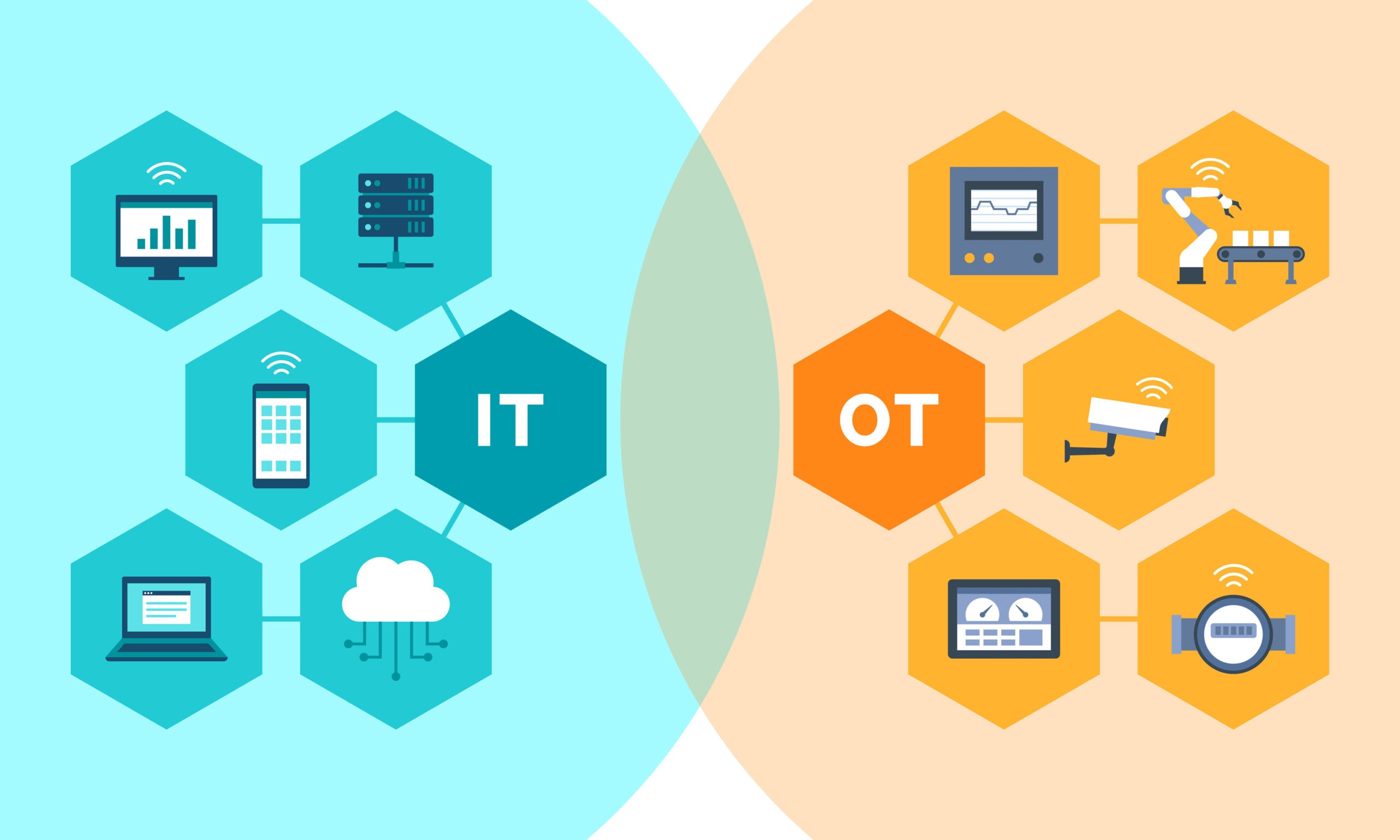
Security must be front and centre as manufacturers pursue greater connectivity. The increasing integration of operational technology (OT) and information technology (IT) brings with it the need for robust cybersecurity strategies. This includes strong encryption, network segmentation, secure protocols, and careful system design to minimise vulnerabilities at every level. More organisations are embedding cybersecurity expertise with both IT and OT backgrounds directly into project teams, ensuring security considerations are integral from initial design through to full-scale deployment.
“Principles for IT and OT security must remain front and centre in every deployment, covering everything from encryption and network segregation to protocols and system design,” remarked Winter.
The human dimension presents perhaps the most persistent challenge. A well-documented digital skills gap hampers many manufacturers as they strive to implement and sustain new technologies. The rapid evolution of tools and practices demands ongoing training for existing employees and an ever more agile workforce. Concurrently, the sector is contending with the loss of institutional knowledge as experienced workers retire. Digital transformation presents an opportunity to capture and institutionalise this expertise through knowledge management systems and AI-driven learning tools, ensuring that critical insights are not lost and that new personnel have the resources to quickly acquire skills.
In parallel, economic pressures – ranging from labour shortages to volatile input costs – are intensifying scrutiny of capital expenditures.
“Many of our manufacturing clients face significant challenges, from skilled labour shortages to rising costs of goods and living; these pressures are making it much harder to maintain healthy profit margins,” noted Parr.
Every investment in technology must be carefully justified, with a clear path to return on investment. Digital tools are being deployed not just to optimise production lines, but to improve yield, reduce waste, manage energy consumption, and ultimately enhance the bottom line across every aspect of the enterprise.
Manufacturers now also confront a strategic dilemma: whether to prioritise new equipment, invest in automation and AI, or focus on process refinement. The solution will differ for each enterprise, shaped by industry, legacy infrastructure, and broader supply chain considerations. Nevertheless, the trend is clear: those who embrace flexible, integrated, and secure digital ecosystems position themselves to weather economic storms, respond to shifting consumer demands, and seize opportunities for growth.