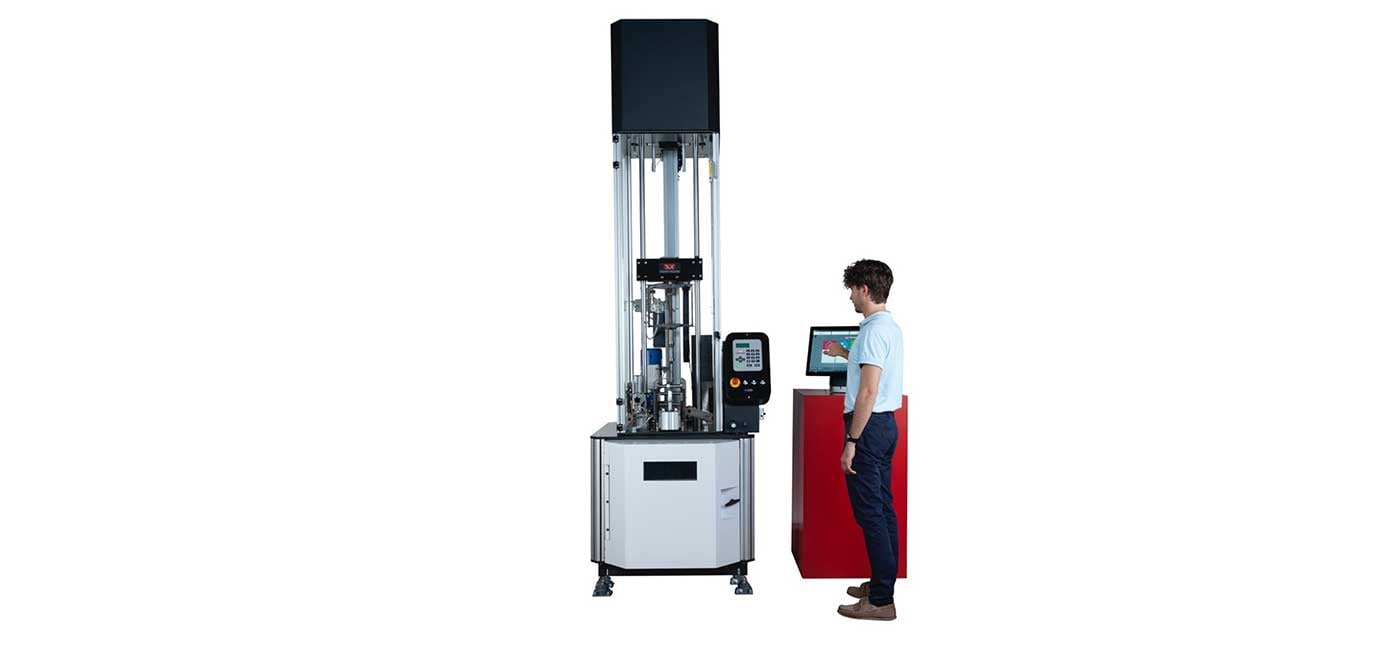

Instron, the materials testing instrumentation manufacturer, has overhauled the way it builds drop tower impact testing systems, introducing an in-line production model that it says has already halved customer lead times for standard units.
The shift marks a move away from the traditional cellular approach, in which each tower was assembled from start to finish within a single workstation. That method required operators to shuttle tools and components between tasks, often switching rapidly between complex stages. The new in-line arrangement instead advances products through defined steps, allowing staff to remain focused on specific operations and reducing unnecessary handling.
The redesign is part of Instron’s wider Operational Excellence programme, aimed at streamlining manufacturing, enhancing product quality, and improving delivery times. The company has reconfigured plant layouts as part of the effort. Its drop tower lines now occupy 336 of the site’s 800 square metres, increasing the proportion of space dedicated to production from 10 to 25 %, and creating room for pre-assembly.
By reorganising the line and coordinating engineering and operations teams, Instron has created what it describes as a more people-oriented workflow. Operators can now complete, and test, about 80 % of each system before customer orders arrive, which the company says is helping to stabilise schedules and improve safety.
Comprehensive assessments of the new system are due at the end of the year, but early results indicate sharply reduced lead times. “We have already recorded a significant decrease – around 50 % – for the standard drop tower,” said Leonardo Petrelli, Engineering Manager. He added that continued operator feedback would be used to refine the line further, with the aim of driving additional reductions.
Instron, which supplies equipment for structural and materials testing worldwide, said the changes support its long-term plan to expand capacity while maintaining consistent product performance.