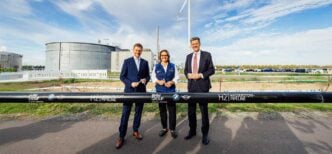
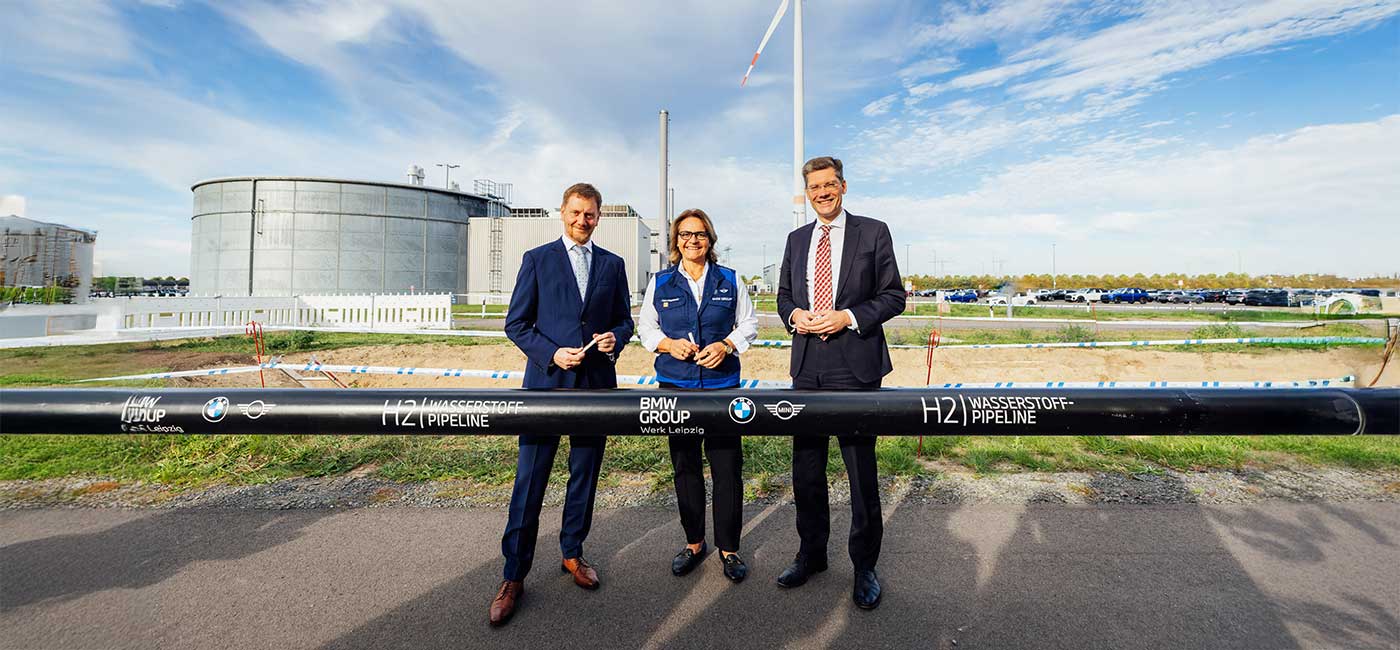

BMW is beginning construction of a roughly 2km hydrogen pipeline linking its Leipzig vehicle plant directly to Germany’s emerging hydrogen network, with commissioning planned for the first half of 2028.
The connection would make Leipzig the first vehicle manufacturing plant worldwide to have a direct connection to a hydrogen grid, according to BMW.
The project is being co-financed by the European Regional Development Fund and the Free State of Saxony. It is being developed with ONTRAS Gastransport, which is responsible for the region’s hydrogen network, and MITNETZ GAS, which will build the pipeline and associated gas pressure regulation and metering station.
The project was formally launched in Leipzig today, with Saxony’s Prime Minister Michael Kretschmer and Christian Hirte, Parliamentary State Secretary to Germany’s Federal Transport Minister, attending the event.
“BMW has been demonstrating for years how hydrogen can be used in industrial production,” said Kretschmer. “The new pipeline will establish Leipzig as a key hub for the hydrogen economy and make it one of the first industrial sites in Saxony to be connected to the core hydrogen network.”
BMW has already been using hydrogen at the Leipzig plant for more than a decade. Since 2013, the site has used hydrogen-powered fuel-cell vehicles for intralogistics and now operates more than 230 forklifts and tug trains, which BMW describes as Europe’s largest hydrogen-powered intralogistics fleet.
Since 2022, hydrogen has also been used in the plant’s paint shop, where 11 dual-fuel furnaces can operate on either natural gas or hydrogen.
The planned pipeline will allow the paint shop to use hydrogen more extensively for energy-intensive, high-temperature processes such as paint drying, potentially replacing natural gas in these applications.
“This pipeline will enable us to power our paint shop with hydrogen to a far greater extent than ever before,” said Petra Peterhänsel, Plant Director at BMW Group Plant Leipzig. “It marks an important milestone and lays the foundation for greater energy resilience. It also offers significant potential to further decarbonise production.”
BMW is positioning the Leipzig project as part of a broader site-specific approach to energy management rather than a single technology strategy. The company says energy systems at individual plants will be shaped by local infrastructure, energy availability and costs.
It is also developing digital energy management systems, including virtual power plants designed to coordinate energy generation, consumption and storage. The aim is to allow production sites to adjust energy use more flexibly while supporting grid stability.