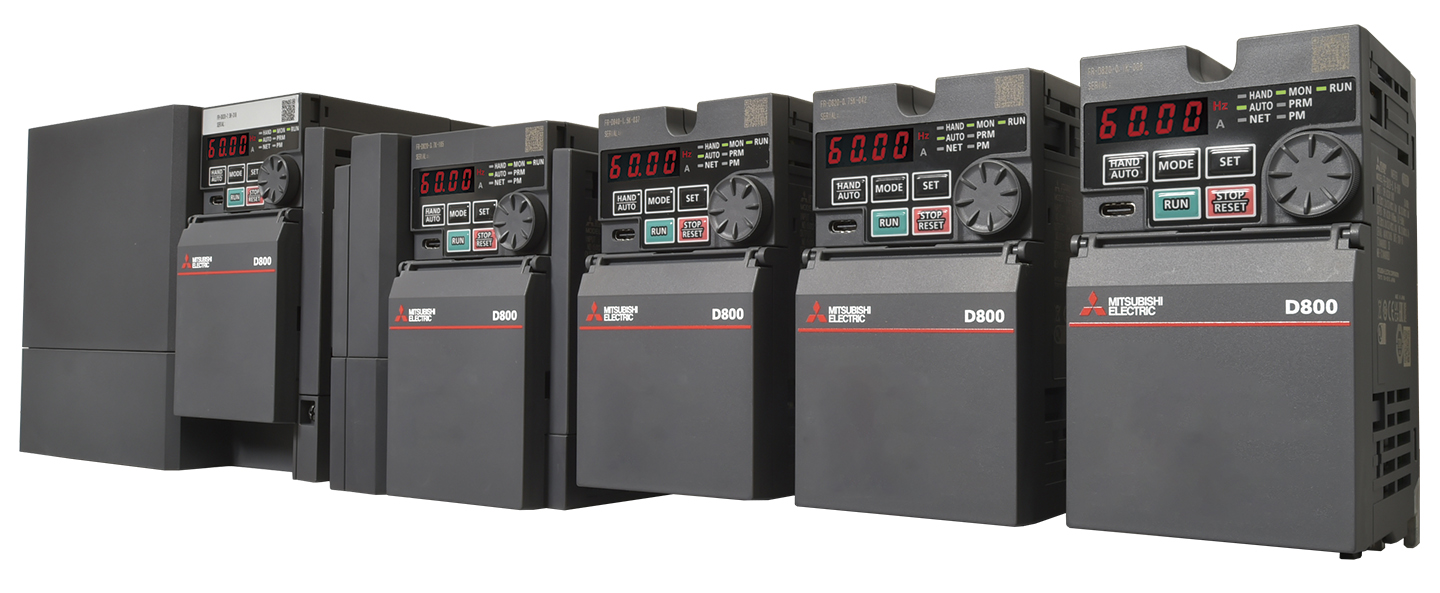

Mitsubishi Electric has unveiled a new generation of industrial inverters designed to deliver higher efficiency, easier installation, and more intuitive operation for manufacturers seeking to modernise their automation systems.
The FR-D800 series, which will be available globally from March 2025, are up to 37% smaller than their predecessors, cutting enclosure size requirements and installation costs.
The series also introduces a USB Type-C interface that allows engineers to configure parameters directly from a PC without powering up the inverter—reducing setup time and simplifying maintenance.
“Energy efficiency, simplicity, and reliability are essential for modern automation,” said Shotaro Marumoto, Inverter Development Section Leader at Mitsubishi Electric. “With the FR-D800, we’ve created a product that both new and experienced users can adopt with confidence, while helping businesses meet their sustainability goals.”
The compact devices are targeted at a wide range of industrial uses, including conveyors, pumps, textile machinery, and food processing equipment. Selected variants are built for harsher environments, meeting IEC 60721-3-3:1994 3C2/3S2 standards for circuit board protection.
The FR-D800 series can drive both induction and permanent magnet (PM) motors, removing the need for multiple inverter types. Integrated support for Ethernet-based industrial networks—such as CC-Link IE TSN, Modbus/TCP, and EtherNet/IP—enables seamless integration into existing digital manufacturing setups.
Mitsubishi Electric said the new inverters are designed to reduce energy consumption through advanced synchronous motor control and lower standby power use, contributing to lower CO₂ emissions and reduced operating costs. Preventive maintenance functions, including lifetime diagnostics for capacitors and fans, and current-based anomaly detection, aim to minimise downtime and extend operational life.
The company’s Factory Automation Business Group said the launch reinforces Mitsubishi Electric’s strategy of supporting “smarter and greener production environments” across global industries.