

The engineering sector is continuing to invest in digital transformation projects, but new data show that limited training provision could be hindering the sector’s capability.
The findings, part of the ‘Automation & AI Readiness Report’ by business communications provider Esendex, analysed automation and AI job listings and training course availability using Reed data across 17 key industries to create a readiness index score out of 1,600.
Engineering scored 368.7 out of 1,600 overall in readiness for automation and AI, driven largely by its strong automation and AI adoption.
Automation-related vacancies made up 42% of the sector’s overall digital skills vacancies at the time of analysis, with over 180 open vacancies for ‘automation controls engineer’ and 36 openings for ‘robotic process automation’ roles.
Although 97% of engineering firms reportedly now use AI and machine learning, AI job opportunities were concentrated in other areas with fewer vacancies available for roles such as ‘python engineer/developer’ (82), ‘machine learning’ (4), and ‘AI developer’ (1).
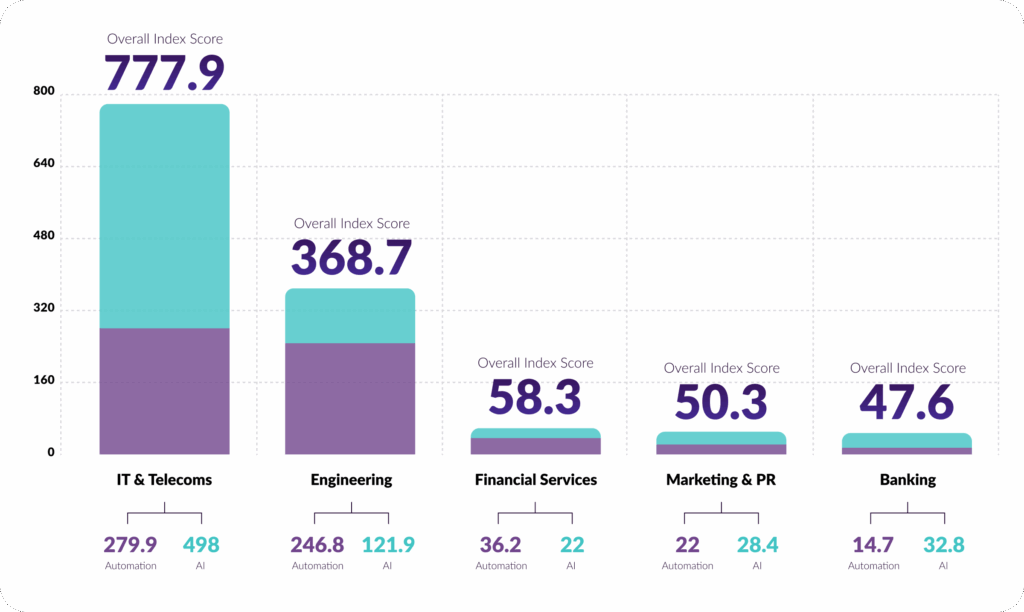
The sector also had 1,872 automation or AI-related training courses available, the second highest out of all industries analysed.
However, only 30% of these courses focused on automation skills, highlighting a mismatch between the skills employers need and the training opportunities available.
While engineering is performing well compared with most other sectors, digital transformation remains uneven across the UK economy.
Crucially, out of the 17 industries analysed on the Automation & AI Readiness Index, ten sectors scored below 50 out of a possible 1,600, including construction, retail, and energy.
With most of these sectors employing large parts of the UK workforce, this could leave millions of jobs unprepared or unsupported for the next wave of digital transformation, and may result in innovation becoming concentrated in only a handful of sectors.
Richard Hanscott, CEO of Esendex, said: “The engineering sector is making impressive progress in automation, but the data shows a growing skills gap between technology and readiness. As demand for automation and AI integration rises sharply, most industries simply aren’t moving quickly enough to future-proof their teams and implement the infrastructure necessary.
“The findings from our ‘Automation & AI Readiness Report’ make this even more evident, with a clear divide emerging. While a handful of sectors are making bold moves toward digital capability, the majority, particularly labour-intensive sectors, are at risk of being left behind. This isn’t down to a lack of ambition, but a severe lack of readiness, investment, and skills planning.
“The real threat isn’t just lost productivity, but of being outpaced by competitors who are already automating smarter, communicating faster, and scaling more efficiently. With solutions like automated SMS software helping to shape the way firms engage and serve customers, the opportunity is clear. But if UK businesses don’t bridge the skills gap now, they may find themselves stuck on legacy systems while their competitors race ahead.”