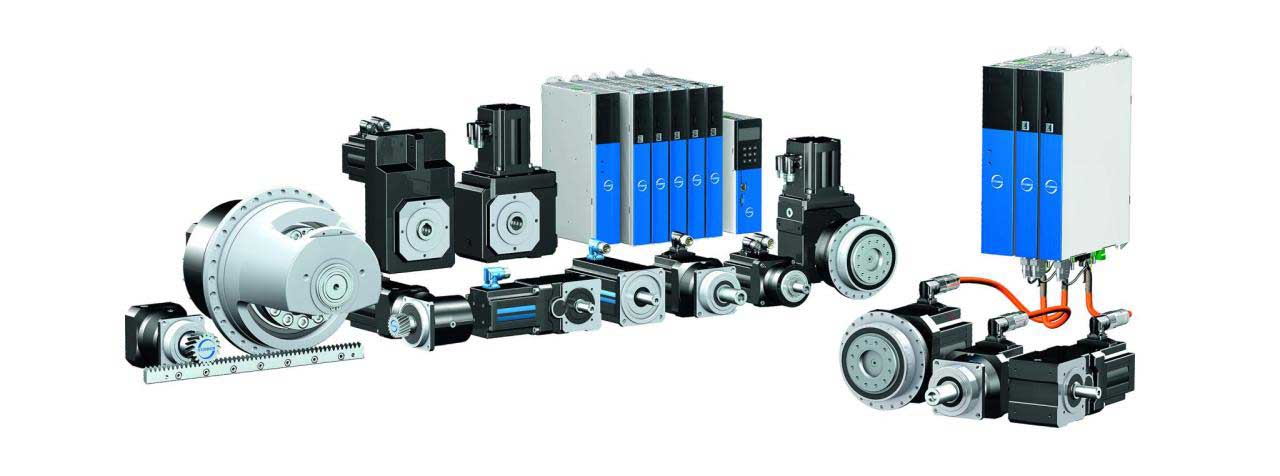

German drive specialist Stöber is expanding its predictive maintenance capabilities, aiming to increase efficiency and reduce breakdowns across industrial applications.
The family-owned company is rolling out a phased approach that combines analytical modelling with active sensor data and, ultimately, artificial intelligence.
Stöber’s predictive maintenance strategy is structured in three stages. The first stage relies on model-based analysis, using analytical calculations to estimate the life performance of a geared motor. A life performance indicator, expressed as a value between 0 and 100%, is displayed via the drive controller software. If the indicator exceeds 90%, the system recommends replacement, a process that requires no external sensors or additional wiring.
The second stage, currently in the prototype phase, adds active measurement through an integrated acceleration sensor, developed in collaboration with Dr. Johannes Heidenhain. This allows for targeted monitoring of critical components such as bearings and gears, with frequency analyses used to identify early signs of damage.
Looking ahead, Stöber plans to integrate artificial intelligence into its predictive maintenance systems to create what Lang describes as a “smart drive train” capable of recognising its own condition and providing real-time field data.
As part of this evolution, Stöber is launching the LoadMatrixAnalyzer, which draws on a database of over 80,000 gearbox and motor combinations. The tool allows customers to compare load matrices, generate standardised reports, and visualise torque and speed over time in three dimensions. Users can also assess whether specific load ranges exceed permissible limits and track changes in component performance over time.
Tim Lang, Head of System & Test at Stöber, said the company is seeking to move beyond conventional condition monitoring to true condition-based servicing. “Predictability is becoming increasingly important for users who want higher availability, lower maintenance costs, and longer life cycles,” Lang said. He added that the company’s focus is on answering questions such as, “How likely is it that the geared motor will fail soon?” and “When is the ideal time to service or replace it?”
Lang emphasised that the LoadMatrixAnalyzer is more than an auxiliary tool. “It is a stand-alone piece of software that can be continuously updated and developed,” he said. The company plans to extend its AI-supported maintenance solutions in the coming months.