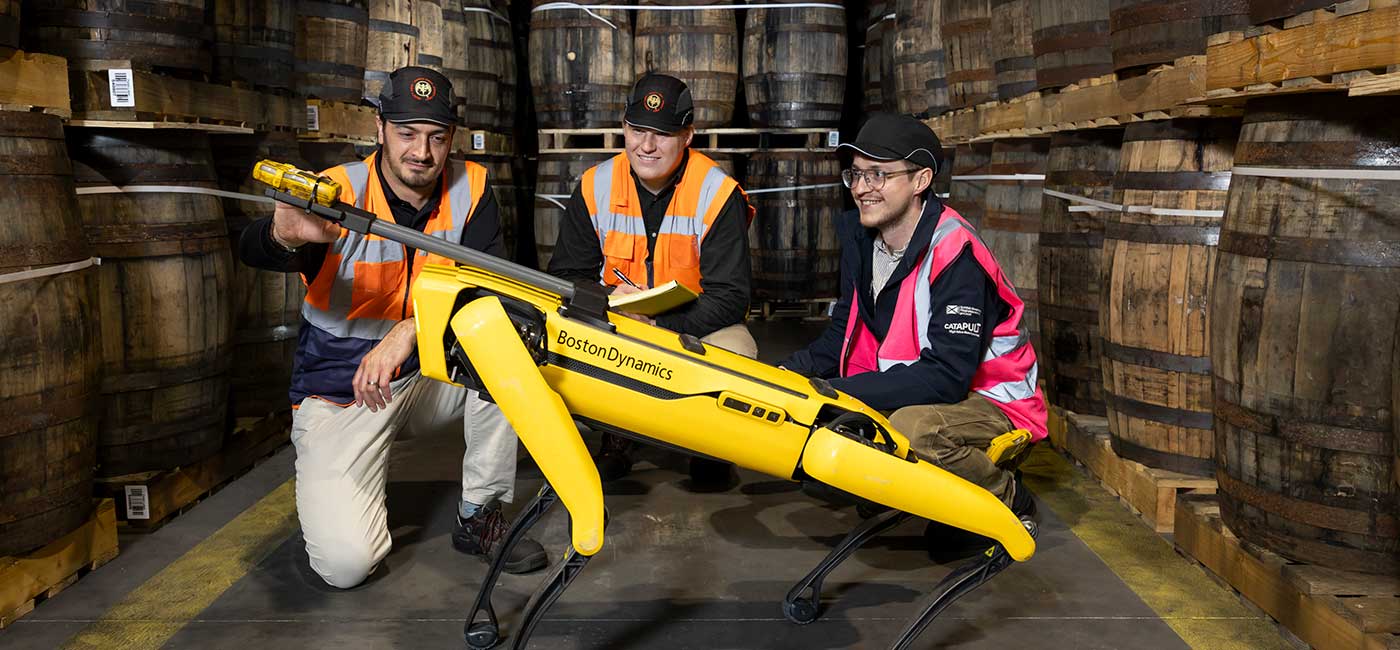
Smaller manufacturers are increasingly turning to robotics amid broader factory automation trends, adopting advanced systems to meet growing demand, improve precision, and remain competitive. The shift reflects not only rising labour and quality pressures, but also the growing accessibility and flexibility of modern robotic systems.
For smaller manufacturers, the spread of flexible, software-driven robotics is reshaping investment decisions. Technologies once associated with global logistics groups and carmakers are increasingly influencing how mid-sized industrial businesses design their factories and compete for future growth.
More than 4.7mn industrial robots were in operation globally in 2024, according to the International Federation of Robotics. The total is rising by more than 500,000 units a year, around twice the rate of a decade ago, as automation spreads beyond traditional high-volume manufacturing.
In fact, in its 2025 white paper, the World Economic Forum reported that robotics is moving from “high-volume, low-variation” environments towards “high-variation, low-volume” settings, where production runs are shorter and product specifications change more frequently. This shift has widened the appeal of automation for smaller and more dynamic manufacturers.
The growing flexibility of robotic systems is most visible at scale. Amazon now operates more than a million robots across over 300 fulfilment centres worldwide, using AI-enabled systems that allow autonomous mobile robots to navigate around moving obstacles such as people, while robotic sorting arms can identify and handle millions of different items. While the scale is far removed from that of a mid-sized UK factory, the underlying technologies are increasingly filtering down into industrial equipment designed for smaller operations.
This broader sense of momentum was on display at the CES 2026 show in Las Vegas. Zachary Jackowski, Vice President and General Manager of Atlas at Boston Dynamics, said the industry was approaching a turning point. “I’ve been designing, programming and building robots for my entire career and I’ve never been more excited about what’s next than I am now,” he said. “We’re on the cusp of a transformational shift that will be as impactful as the smartphone.”
At the same time, cutting-edge manufacturing technologies have become more accessible. Increased processing power, combined with cloud-based software and digital integration tools, has reduced the need for large upfront investment in fixed hardware stacks. This has brought advanced robotics, CNC programming, and inspection software within reach of companies operating with more modest capital budgets.
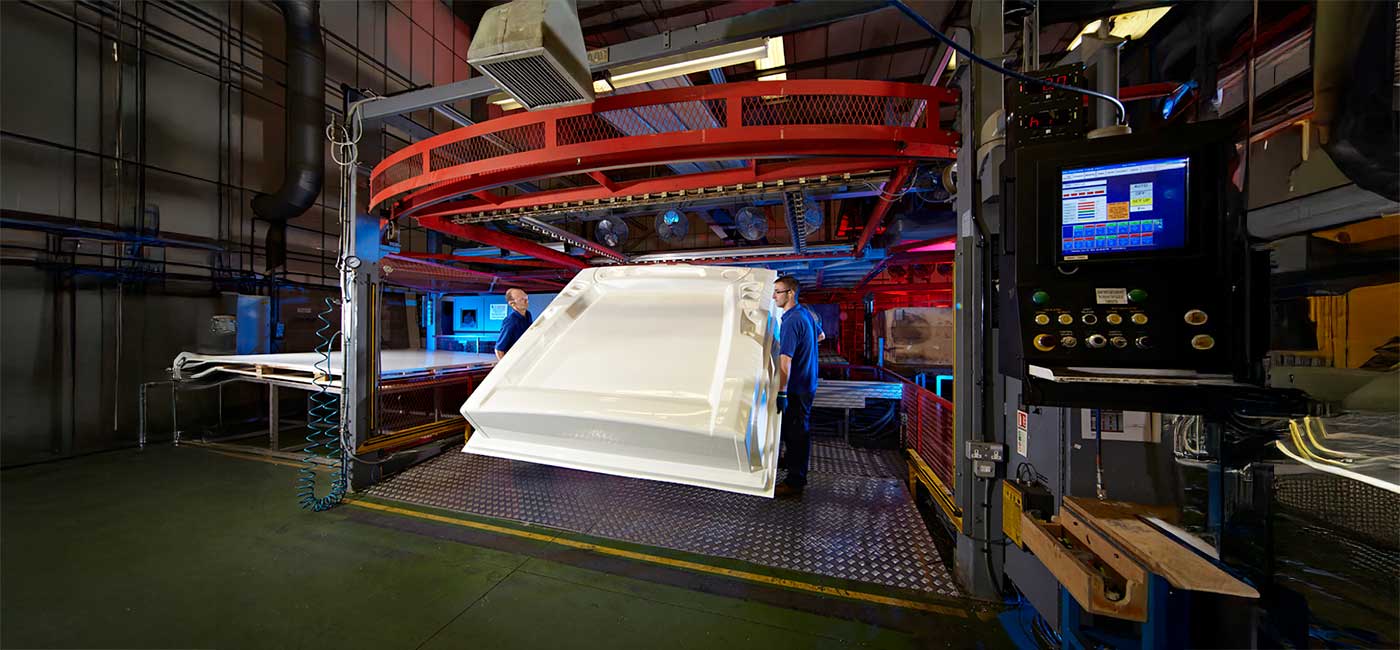
Droitwich-based Big Bear Plastics illustrates how these trends are converging. The vacuum forming and compression moulding specialist has installed a large cutting robot, a twin-headed waterjet, and new CNC machines over the past eighteen months, including Biesse and Geiss systems, to increase throughput and improve consistency on complex components.
Managing Director Emma Hockley said the decision to invest was driven by the need to satisfy rising demand while maintaining repeatable quality. “We needed to deliver high-quality, repeatable parts, increase production speed, and ensure we have modern, reliable plant,” she said.

“We identified a robot as the most suitable and efficient means of trimming the periphery of a very large assembly. It is specifically used for this job within a dedicated production cell, and has proven to be the correct choice of equipment for the job.”
Before the latest upgrades, Big Bear already operated a large number of rotary-style mould machines, presses, and 5-axis CNC trimming machines. The new robot was introduced to handle the trimming of very large assemblies within a dedicated production cell, a task the company identified as better suited to automated rather than manual processes.
Alongside the hardware, Big Bear has invested in software to integrate design and manufacturing more closely. TEBIS programming software allows CNC machines to be programmed directly from CAD models, while the latest Biesse CNC incorporates MSP software to measure finished parts accurately against CAD data.
Hockley said the combination of advanced trimming equipment with large-format moulding machines had strengthened the company’s competitive position, particularly on large or high-volume programmes. “The new trimming equipment, combined with the size and style of our mould machines, allows us to offer very competitive pricing,” she said.
She added that understanding what equipment was available on the open market that correlated with the company’s specifications and best met its needs was the biggest challenge in getting the new equipment. The challenge was overcome by developing partnerships with experts to help navigate the “plethora of information available.”