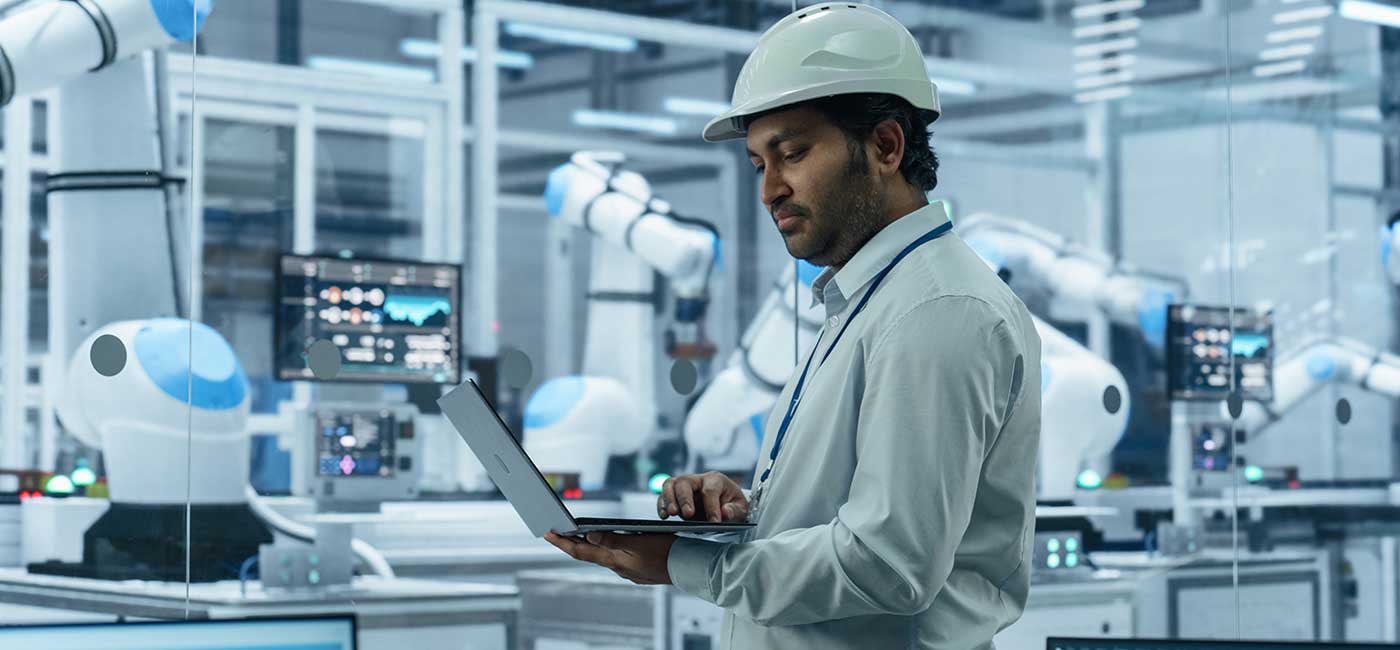

Machines rarely fail without leaving some indication first. Vibration can change. Temperature can climb. Current draw can shift. Cycle time can gradually move away from its normal range. Connected equipment gives manufacturers a way to capture those changes while production is still running. The value comes later – when the information reaches maintenance teams, production engineers, or automated systems early enough to influence what happens next.
That opportunity is growing in India as manufacturers invest in automation, robotics, and Industry 4.0 technologies. MarkNtel Advisors’ research puts the Indian Industrial Internet of Things (IIoT) market at $12.78bn in 2026, rising to $15.67 billion in 2027 and around $37.57 billion by 2033, representing a 15.69% CAGR during 2027–2033. Rising technology intensity in manufacturing, increasing automation, and the need for real-time visibility across industrial operations are key drivers of this growth. Manufacturing accounted for 31% of the Indian IIoT market in 2026, making it the largest end-user industry in the country.
But the Indian opportunity is not simply about installing more connected equipment. Manufacturers are also having to integrate newer digital systems with an existing industrial base, making the ability to extract and act on machine data an important part of the transition.
India’s factories are becoming sources of machine data
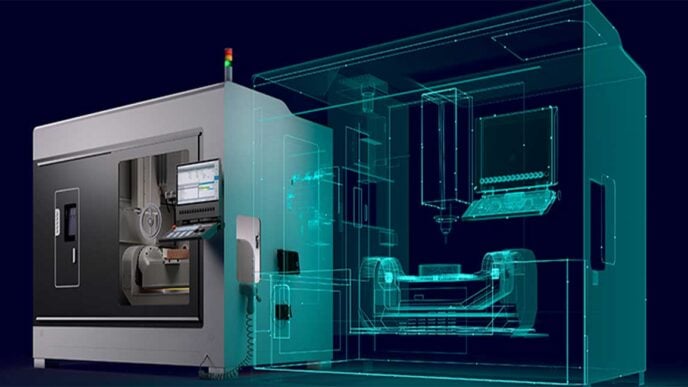
The basic proposition behind IIoT is straightforward. Equipment that was previously isolated can become a continuous source of information about its condition and performance. Sensors can capture vibration, temperature, pressure, current, and energy consumption. RFID systems can track assets and materials, while industrial robots, distributed control systems, condition-monitoring equipment, and cameras can add further information about what is happening across the plant.
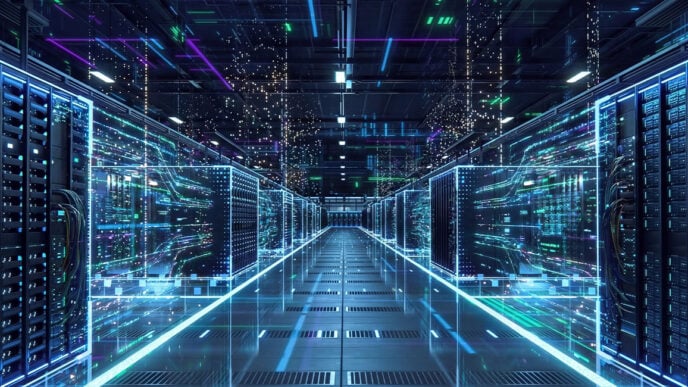
That data can move through industrial networks using technologies such as Ethernet, Modbus, and Profinet, alongside wireless connectivity including Wi-Fi, Zigbee, and cellular networks. The important shift is from occasional observation to continuous visibility. Maintenance engineers can monitor changes in machine condition, while production teams can gain a clearer view of asset performance across the factory. The more important question is what the factory does when that information changes.
Predictive maintenance puts machine data to work
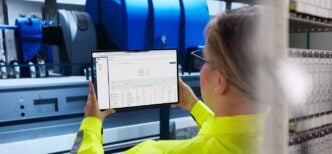
One of the clearest applications is predictive maintenance. Machines often provide measurable signs that their condition is changing before a failure occurs. Vibration analysis can identify changes in rotating equipment, thermography can highlight abnormal heat, while ultrasound and oil analysis can reveal mechanical problems, wear or contamination.
The process is relatively simple in principle: capture the data, compare it with expected behaviour, identify anomalies, prioritise problems and decide what action is required.
Tata Steel, for example, has used data and connected technologies to focus maintenance attention on equipment associated with a disproportionate share of unplanned delays. The company has identified roughly 20% of equipment as being associated with around 80% of unplanned delays across its Jamshedpur and Kalinganagar operations and mines. Its connected workforce also tracks maintenance jobs from identification through to completion.
The benefit is not the sensor itself. It is the opportunity to intervene before a developing fault becomes an unplanned production stoppage.
Production visibility extends across the factory
The same principle applies beyond maintenance. Machine-level data can be combined with plant-level information through manufacturing execution systems (MES) and supervisory control and data acquisition (SCADA) platforms, connecting individual machine performance with broader production information. Panasonic India provides one example. The company has used connected sensors and devices to improve shop-floor visibility, alongside QR-based tracking, resource monitoring and automated notifications.
According to the company’s reported results, efficiency increased from 45% to 75%, while chassis production increased from around 180–190 frames to 230–240 frames. The wider point is that connected equipment can make production information available closer to the point where decisions are made. Instead of discovering a problem after a production run, operators and engineers can potentially see it developing while the process is still underway.
Machine data is becoming a tool for quality
The applications extend into quality control. Machine vision systems can inspect products at speeds and levels of consistency that would be difficult to achieve through manual inspection. Process data can also reveal changes that affect quality before they become obvious in the finished product.
Tata Steel, for instance, has used video analytics to identify surface defects on cold-rolled products and to analyse ferrous content in ore. This illustrates the progression from knowing whether a machine is running, to understanding how it is running and using that information to influence the quality of what it produces.
The difficult part starts before automation
The technology can make this progression sound straightforward. The reality is more complicated. Many factories contain equipment from different generations and manufacturers, using different communication protocols and producing data in different formats. New connected machines may have modern interfaces and built-in analytics, while older equipment may require additional sensors, gateways or other forms of retrofit.
This makes interoperability and standardisation important parts of the IIoT equation. It also means the economics of connected manufacturing cannot be separated from the existing factory. A manufacturer replacing an old machine with a new connected asset has one set of options. A manufacturer looking to connect hundreds of existing machines faces different costs and technical challenges.
Edge processing can help by allowing data to be analysed closer to the machine rather than sending everything to a central system. But manufacturers still need to decide which information is worth collecting, where it should be processed, and how it should be integrated with existing operational systems. The workforce is another part of the equation. Connected systems change what maintenance and production teams need to know, creating demand for skills that sit between industrial engineering, data and automation.
When does automation become cheaper than people?
The economics of automation also vary between markets. Where labour costs are lower, as in India, the case for IIoT may be driven less by replacing workers and more by improving uptime, asset utilisation and output. Not every task needs to be fully automated. Routine monitoring and anomaly detection are obvious candidates for software and machine-based systems, while more complex diagnosis, intervention and repair may continue to require human expertise.
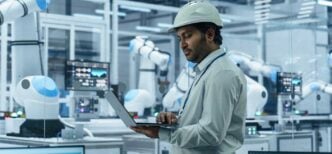
The role of IIoT is therefore not necessarily to remove people from the process. In many cases, it can give engineers better information and allow them to concentrate their time on problems that require judgement. Panasonic’s experience also points to the importance of workforce training as connected production systems become more widespread.
From machine readings to action
The next stage of industrial IoT is less about generating more data and more about making existing data useful. A temperature reading has limited value on its own. A temperature trend compared with normal machine behaviour, linked to production conditions, and delivered to the right person at the right time can support a maintenance decision.
The same principle applies to production and quality. Machine data becomes more valuable when it can be combined with information from other parts of the factory and used to identify a problem, recommend an intervention or, where appropriate, trigger a defined response automatically. For Indian manufacturers, the opportunity is therefore not simply to connect more equipment. It is to create a reliable flow of information across a manufacturing environment that may contain both the newest connected systems and machines that have been operating for years.
That makes IIoT as much an integration challenge as a connectivity challenge. The manufacturers that can turn data from new and existing equipment into timely decisions can use it to strengthen maintenance, production visibility, and quality as India’s manufacturing sector continues to modernise.