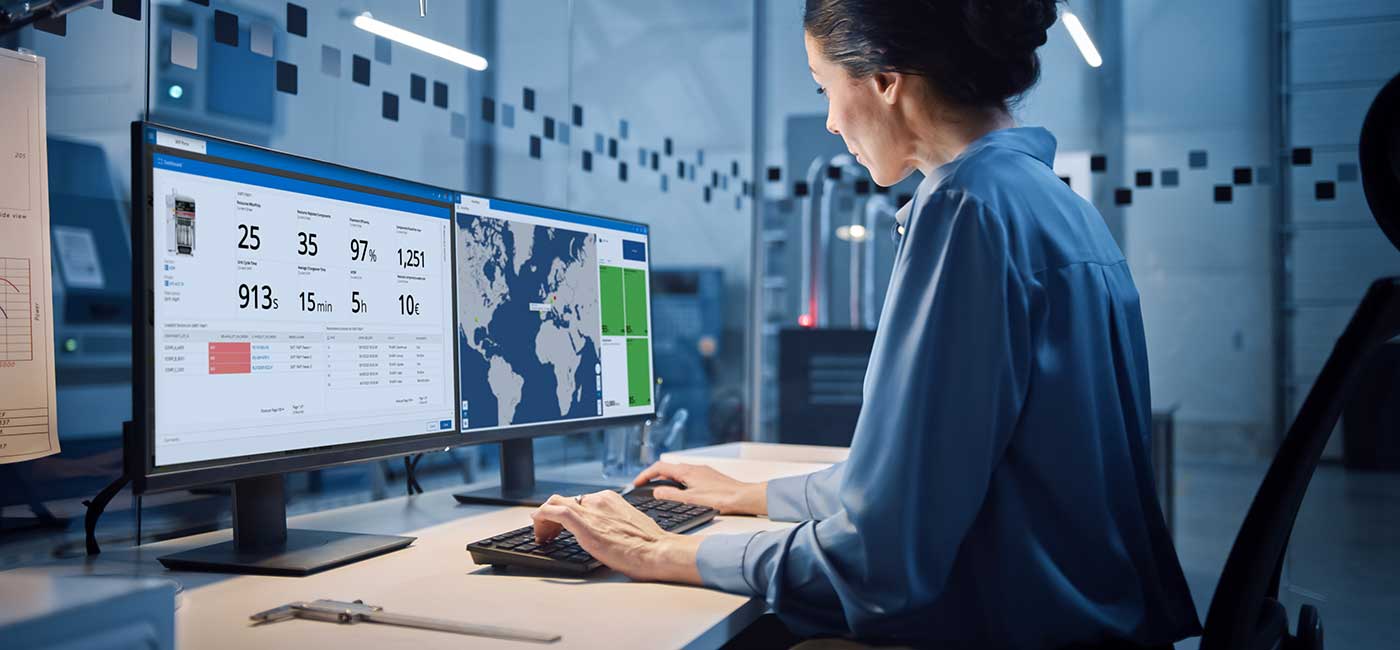

Last month, Critical Manufacturing attended productronica and SEMICON Europa to showcase how manufacturers can leverage data, automation, and AI to achieve more connected, intelligent, and adaptive production environments.
On show was the company’s Manufacturing Operations Platform, a unified system that seamlessly connects machines, materials, and people to enable real-time visibility and decision-making across the factory floor. Through a live demonstration, visitors saw how data from SMT and semiconductor environments is contextualised and analysed to drive performance and prevent issues before they occur.
At the SEMICON Europa stand, the team presented C-Alice, the company’s AI-powered visual inspection tool that integrates image analytics with process data to help engineers enhance performance and precision in real time.
I spoke with Hugo Leite, Industry Manager for Electronics/SMT, Critical Manufacturing to learn more.
Critical Manufacturing has long championed the idea of the ‘connected factory’. How would you define the next stage in that journey toward intelligent and adaptive manufacturing?
The connected factory was an important milestone, but it solved only part of the challenge. It gave us data flow, not decision flow. We connected machines, systems, and processes, but the factory still lacked the ability to interpret that data, anticipate what would happen next, or adapt on its own.
The next stage is the transition to intelligent and adaptive manufacturing, where factories move from simply reporting events to predicting, deciding, and optimising in real time. This shift is driven by three key evolutions: the ability to move from visibility to foresight, from manual decision-making to augmented intelligence, and from rigid automation to operations that continuously learn and adjust.
To make this possible, manufacturers need consistent contextualised data, integrated systems, scalable analytics, and closed-loop architectures that connect insight to action. With these capabilities in place, the factory becomes a system that not only connects information but understands it and responds dynamically as conditions change.
How do you see the balance evolving between automation, data-driven decision-making, and human expertise on the factory floor?
The balance is shifting toward a model where automation handles execution, data, and AI handle analysis, and people focus on higher-value decisions. Each of these elements keeps its role, but the interaction between them becomes much more dynamic.
Automation will continue to execute tasks with speed and consistency, but it will be guided increasingly by real-time insights rather than static rules. Data-driven systems will take on more of the monitoring, correlation, and prediction work that is impossible for humans to perform at scale. As a result, operators and engineers will spend less time reacting to problems and more time validating recommendations, fine-tuning processes, and shaping continuous improvement.
Human expertise remains central, but it shifts to areas where judgment, creativity, and contextual understanding are essential. AI becomes a partner: it surfaces the right information at the right time, provides explanations, and reduces the cognitive load on the shopfloor. The factories that succeed will be those that treat this as a collaboration model rather than a replacement model, combining the consistency of automation, the intelligence of data-driven systems, and the experience of their teams.
What are the key challenges manufacturers face when trying to integrate AI and data analytics into legacy production environments?
The main challenges arise because legacy environments were never designed for data-centric or learning-based systems which makes integrating AI and advanced analytics challenging from the start.
The main issues fall into four areas:
1. Data quality, structure, and context
Legacy machines often provide limited or inconsistent data, with missing timestamps, product identifiers, or process context. Without proper contextualisation, both AI models and analytics pipelines struggle to generate reliable insights. Most effort ends up in data engineering rather than actual modelling.
2. Integration and interoperability
Older equipment and systems typically operate in isolation. Advanced analytics requires a unified data model built from time-series signals, events, and quality results. Without standard interfaces or middleware, insights cannot be pushed back into production in a closed loop.
3. Architectural readiness
Running analytics or AI at line speed demands scalable storage, continuous data pipelines, and in some cases edge inference. Legacy infrastructures rarely support real-time streaming or integration between MES, equipment, and AI services.
4. Organisational readiness
Even with the right data and systems, manufacturers need governance, transparency, and cross-functional alignment. Engineers must understand and trust how models behave before letting AI influence production decisions.
In short, the challenge is less about AI itself and more about preparing the data foundation, integration architecture, and organisational processes required for analytics and AI to operate reliably in real manufacturing environments.
Where do you see the most immediate impact of AI across manufacturing operations today?
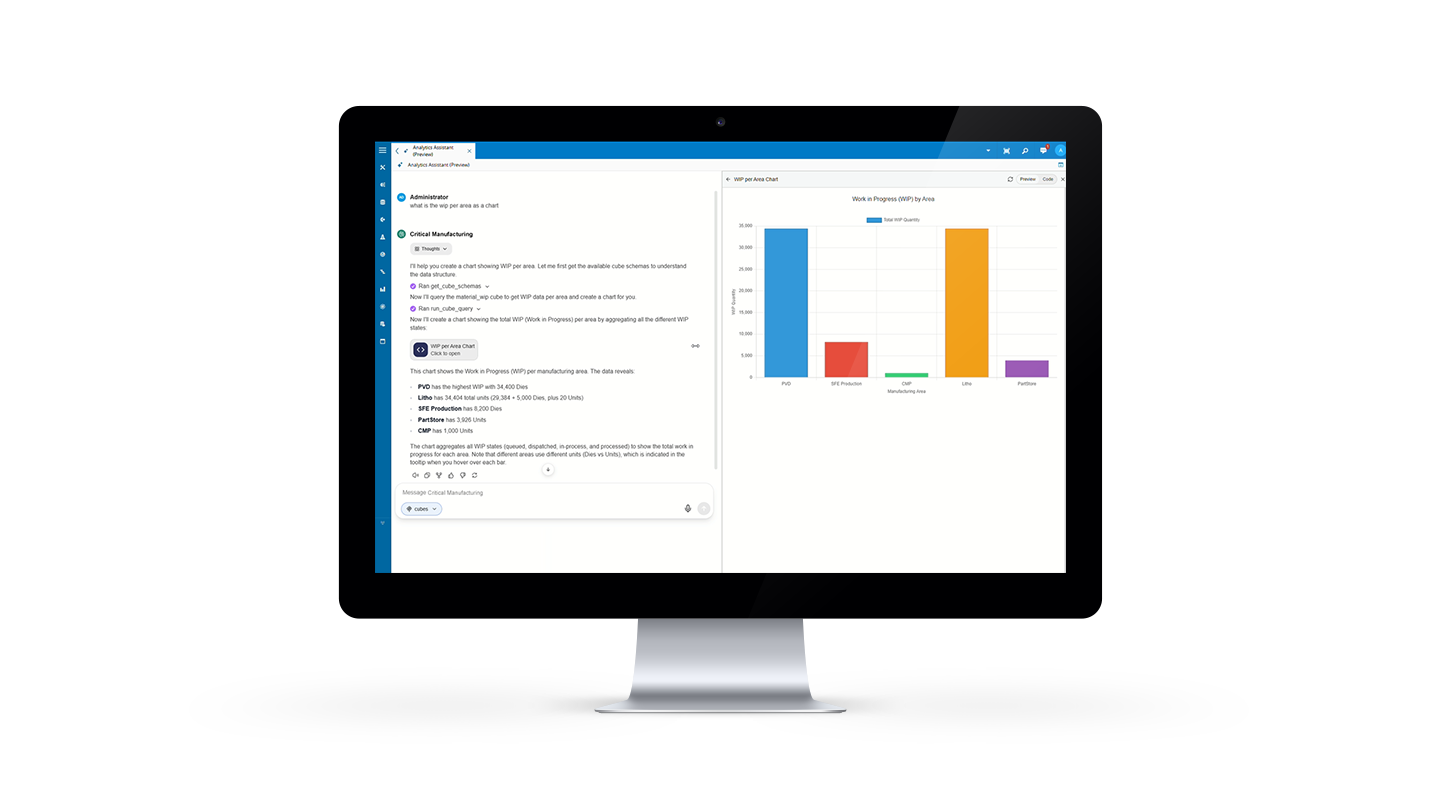
In electronics manufacturing, the most immediate impact of AI comes from its ability to reduce firefighting and bring greater stability to highly variable production environments. AI systems can analyse high-frequency operational data to detect early signs of process drift, quality risk, or equipment degradation long before they become visible. This shifts teams from reacting to issues to preventing them, reducing unplanned stops and the constant troubleshooting that typically consumes engineering resources.
AI also strengthens decision-making. Instead of relying solely on manual interpretation of dashboards or isolated machine signals, engineers receive contextualised insights that highlight the root causes behind performance variation. This improves response time, increases consistency in decisions, and reduces dependency on individual expertise.
Overall, the fastest impact of AI today is the move from reactive firefighting to proactive, intelligence-led operations. This leads to rapid improvements in process stability, equipment reliability, and the effectiveness of engineering teams by enabling earlier interventions and more informed decisions.
How do you ensure that the use of AI remains transparent and trustworthy, particularly when used for critical production decisions?
Ensuring transparency and trust in AI requires treating AI systems the same way manufacturers treat any other critical production asset: with clear boundaries, controlled inputs, and full traceability.
Instead of operating directly on raw operational datasets, AI should receive curated and contextualised information through controlled interfaces that provide structure and governance. This reduces ambiguity, improves consistency, and helps prevent misinterpretation while still giving AI access to the information it needs.
Explainability is equally important. For any recommendation that may influence production, engineers must be able to see which signals contributed to the outcome and understand the reasoning behind it. Guardrails, structured prompts, and domain-specific constraints help ensure that AI operates within validated logic and avoids unintended conclusions.
A final element is separating insight from execution. AI can support and accelerate decision-making, but actions that affect production flows should pass through governed systems such as MES or edge controllers, where business rules, permissions, and safety checks are enforced. This maintains compliance, traceability, and operational integrity.
In practice, trust is built not by the algorithm alone, but by the architecture around it: controlled data access, transparent reasoning, and a secure decision pathway that ensures AI behaves predictably and reliably in critical manufacturing environments.
Can you walk us through how your platform connects machines, materials, and people to create real-time visibility across production lines?
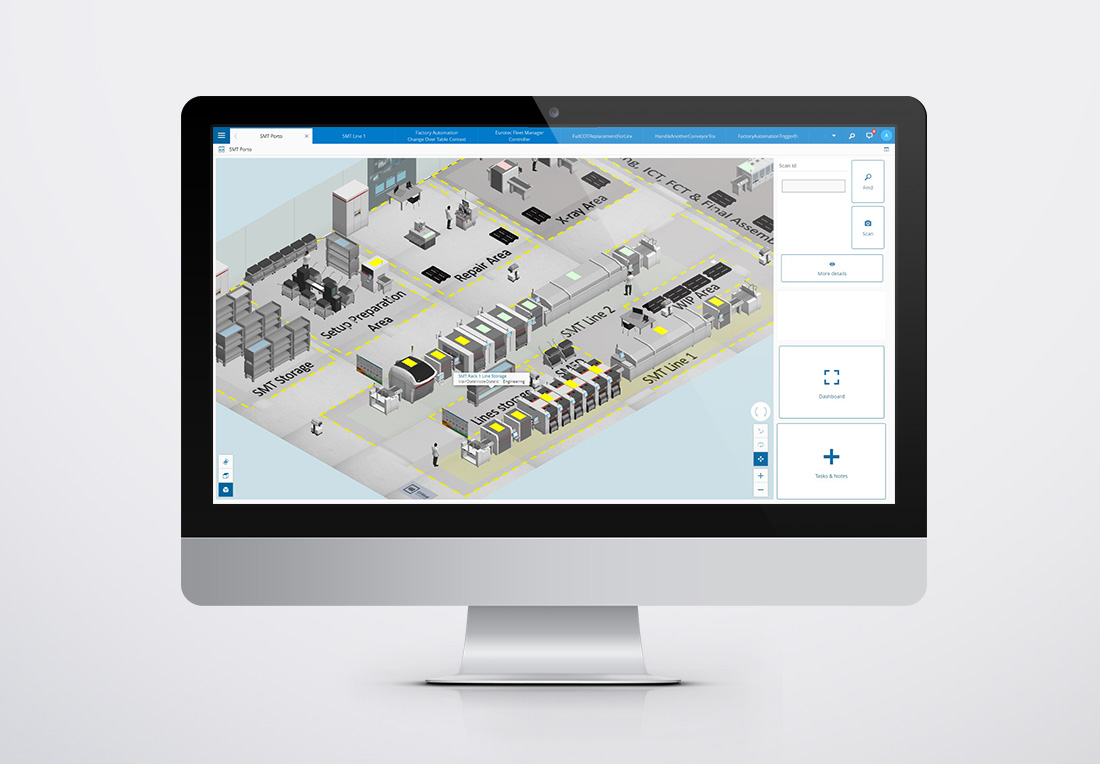
Real-time visibility is achieved by creating a single flow of information that connects machines, materials, and people. This relies on three components working together: IoT for data capture, MES for context, and the Data Platform for analysis and decision support.
Connect IoT handles the connection to equipment.
It collects machine signals in real time: process parameters, alarms, states, and telemetry and standardises them so that data from different machines can be used consistently. This is where raw machine data becomes reliable and time aligned.
MES provides the context.
Here, every signal from IoT is linked to what is actually happening in production: which product is being built, which materials and lots are being used, which recipe is active, and which machine or operator performed which action. MES tracks material movement, work-in-progress, and unit genealogy, allowing teams to understand not just the data, but its meaning.
The Data Platform brings everything together.
It combines real-time IoT data with MES context to generate dashboards, analytics, alerts, and recommendations. Teams gain a live view of line performance, deviations are detected as they happen, and insights can be sent back to MES or edge systems to guide or trigger actions.
When these three layers operate as one system, machines, materials, and people become part of a unified digital workflow. The result is immediate visibility into the state of production and the ability to make faster, more informed decisions on the shop floor.
In what ways does C-Alice differ from conventional machine vision systems currently used in inspection processes?
c-Alice is a tool agnostic system able to deal with all kinds of images and different use cases like classification, anomaly detection, OCR, pattern recognition.
The strength of the system is allowing recipe set up and monitoring in production by technicians and engineers without any AI knowledge making it a true production ready solution including recipe versioning and deployment.
c-Alice can also digest already existing AI methods and make those available to production giving the AI experts time to work new methods. It is the solution to unlock the value of every image in production and make the results available to the customer control and analysis systems.
How do you see the role of AI evolving within manufacturing operations over the next five years?
Over the next five years, AI will move from isolated applications to a distributed intelligence layer embedded across operations. Today we already see early benefits in monitoring and decision support, but the next phase will be defined by AI systems that operate continuously, interpreting context, comparing patterns, and proposing optimisations in real time.
A major step forward will be the use of AI agents that can coordinate tasks across equipment, MES, and planning systems. These agents will reason over contextual data, evaluate scenarios, and support decisions in areas such as quality containment, maintenance prioritisation, and material coordination, always within clear governance boundaries.
Rather than replacing people, AI will handle the analytical workload that scales poorly with complexity, allowing engineers to focus on validation, improvement, and strategic decisions. The result will be more stable, adaptive, and resilient operations, supported by intelligence that runs in the background and strengthens decision-making across the entire factory.