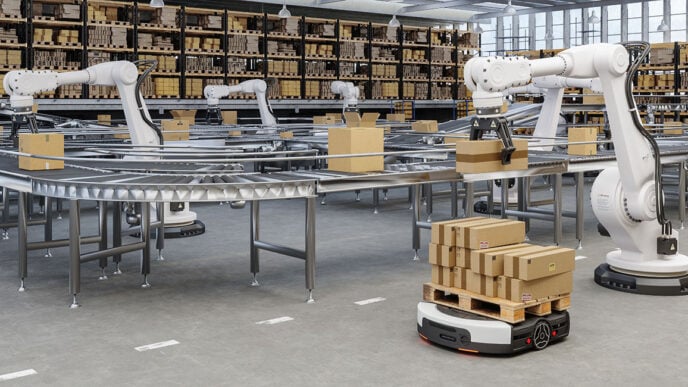
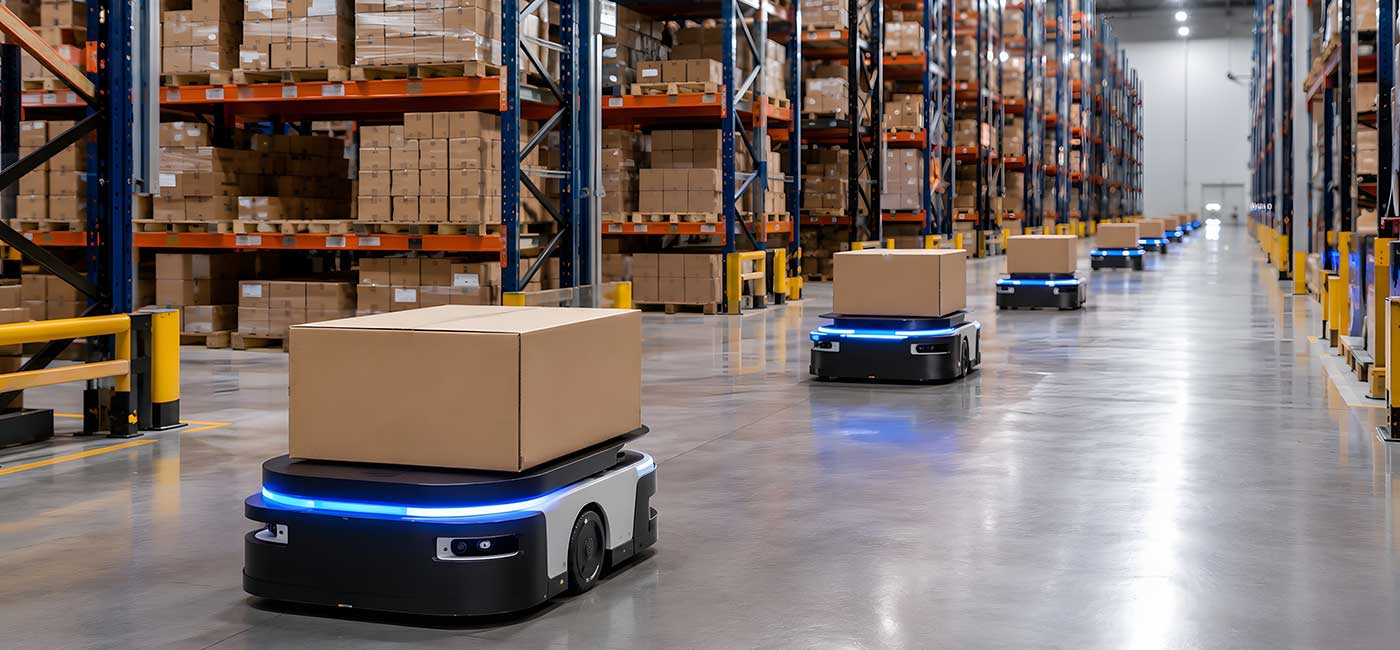

A new international standard aims to make it easier for industrial mobile robots (IMRs) from different manufacturers to operate alongside one another, addressing a longstanding challenge for businesses deploying mixed-vendor fleets.
The Association for Advancing Automation (A3) has announced the publication of ISO 21423:2026, which establishes common communication requirements for mobile robots, fleet management systems and other equipment operating in shared industrial environments.
Developed by ISO Technical Committee 299, the standard specifies how robots and fleet managers exchange information and request actions. This includes data on location, speed, direction, operating condition, task assignments and availability.
The aim is to reduce conflicts between robots, including instances where machines interfere with one another’s routes or path planning. By enabling equipment from different suppliers to communicate, the standard could improve fleet availability and overall system efficiency, while giving end users greater flexibility when selecting automation equipment.
“Companies want to choose the robots that fit their applications and have those robots work together on the same floor,” said Carole Franklin, Director of Standards Development, Robotics, at A3. “Many leading industrial users of mobile robots have asked for an interoperability standard for years. Now, ISO 21423 gives manufacturers and users a common basis for communication across fleets, no matter where in the world their facility is located.”
The standard extends beyond robot-to-robot communication. It also covers interactions with machines serviced by robots, enterprise resource planning (ERP) systems and building infrastructure, including lifts, automated doors and alarms. People using mobile devices can also exchange similar information, allowing their activities to be coordinated with robotic operations.
A3 said the adoption of an international standard could also encourage competition between suppliers and support innovation by reducing barriers to integrating equipment from different manufacturers.
The publication marks the first non-safety robotics standard that A3 has helped develop. The organisation has been involved in robotics standardisation through its work with industry and international standards bodies.