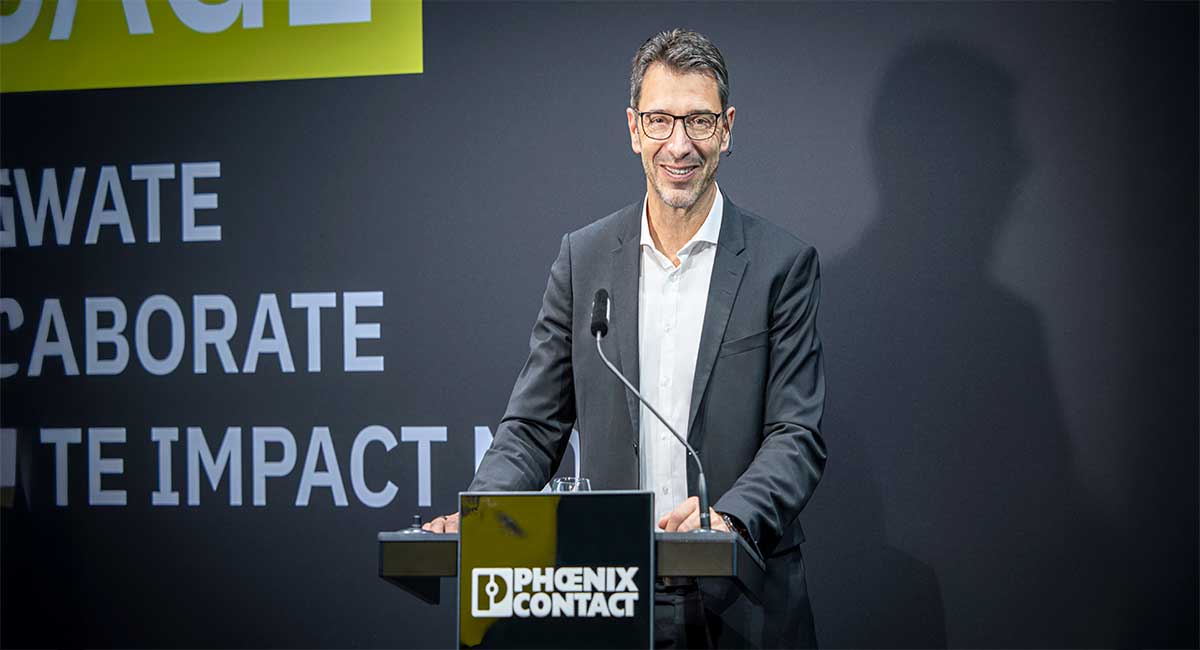

European hardware companies are wasting millions of pounds and years of development effort reinventing products that already exist. That was the message from Chinese manufacturing specialist and author Johan Philippe Stam at Hardware Pioneers Max, where he argued that Europe should develop its own version of China’s little-known “gongban” ecosystem.
A gongban – literally a “public board” – is a pre-developed electronics platform that can be adapted into multiple products. Rather than designing hardware from scratch, companies build on existing reference designs, modifying only the features that differentiate their product.
The model emerged from China’s wider “shanzhai” ecosystem, a manufacturing culture that evolved in Shenzhen during the rapid growth of the country’s consumer electronics sector.
While often characterised in the West as a source of copycat products, the shanzhai ecosystem also enabled rapid innovation, shared engineering resources, and the creation of modular hardware platforms that dramatically reduced development times and catered to underserved electronics markets, producing devices such as loud mobile phone speakers for use on construction sites, or affordable dual SIM mobile phones.
According to Stam, who has recently published a book on building hardware products in China, many Western startups still approach product development as a bespoke engineering exercise, often spending between £200,000 and £1 million and taking up to two years to bring a product to market.
By contrast, he said, China’s design-house ecosystem allows companies to build on platforms that already solve 80–90% of the technical challenge, leaving teams to focus on product differentiation rather than recreating established electronics architectures.
The approach is supported by a dense manufacturing network combining chip suppliers, specialist design houses, PCB manufacturers, assembly partners, tooling companies, and certification services within a tightly integrated ecosystem. It is used across devices including smart watches, IoT devices, GPS trackers, and smart home products.
“The whole ecosystem is there,” Stam told attendees. “When I go to China, I find product design houses that are already 90% of the way to the product I want. It’s a kind of open-source hardware ecosystem that exists in China that not many people in the West know about.”

He argues that, over time, this could form the basis of a European gongban ecosystem that combines the speed of Chinese hardware development with local engineering expertise, manufacturing capability, and regulatory compliance.
For Stam, the opportunity is not simply for European companies to source products from China, but to replicate aspects of the model locally.
“I believe it is possible to bring it to Europe because Chinese design houses want to be closer to the European market. They want to have an office here. So this is already happening, with or without our help, Chinese giant houses are doing this anyway.”
A Dutch national who built his experience working on Chinese factory production lines before overseeing production at a number of major Chinese manufacturers, Stam recalled the frenetic pace of innovation.
“You spend 16 hours a day in the factory, sleep in the factory, and you don’t have any weekends. And you’re just there with engineers, so close to the people making the decisions.”
Separately, Stam pointed to his experience working for a Chinese manufacturer as an example of the pressures involved in high-volume hardware production. He was involved in the development of the Beats by Dr Dre Pill XL speaker, which was later recalled by Apple in 2015 due to fire risks.
“We made 4 million speakers, and the biggest failure was we negotiated too much. We thought we knew what we were doing so of course we just pushed cheaper, cheaper, cheaper, cheaper. And then, of course, the big explosion. There was this big recall and we had to pay 17 million USD to Apple.”