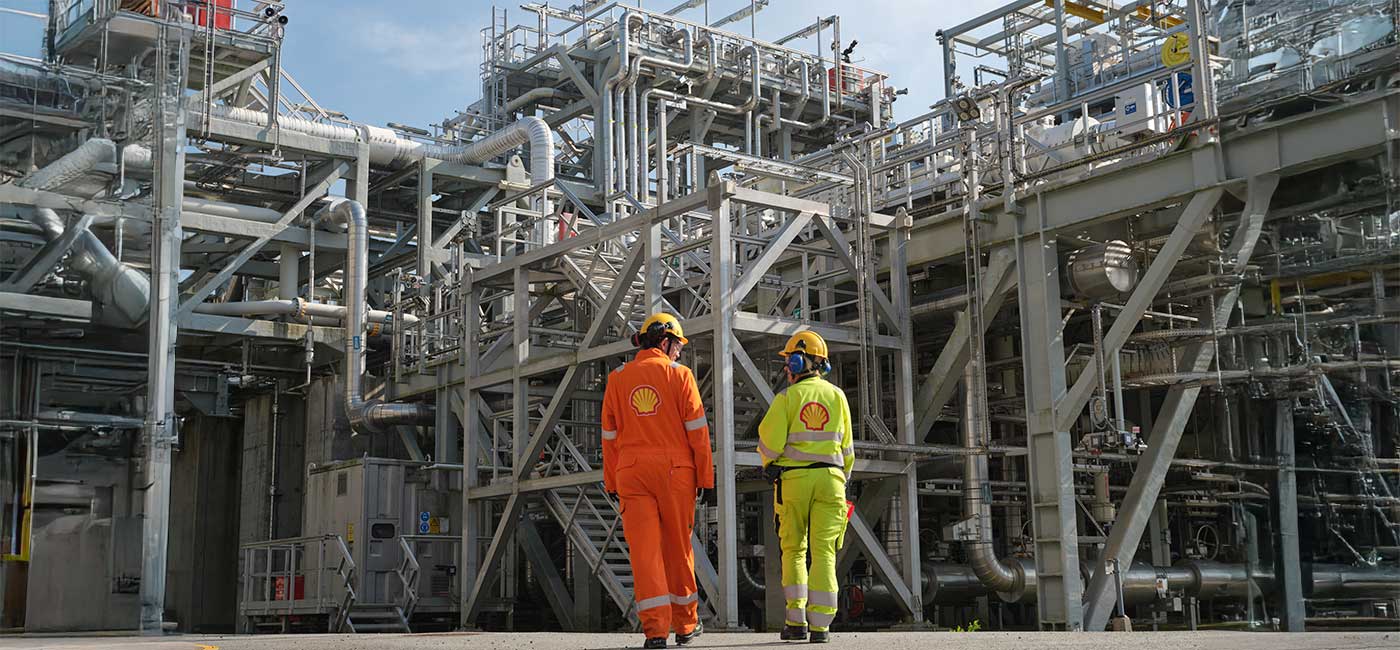

Shell has signed a new multi-year agreement with C3 AI to expand the deployment of artificial intelligence across the energy company’s global asset operations, extending one of the industry’s largest predictive maintenance programmes and introducing agentic AI capabilities for root cause analysis and remediation.
The collaboration, which began in 2018, currently monitors more than 13,000 pieces of equipment across Shell’s operations using C3 AI’s reliability platform. Under the new agreement, Shell will broaden the deployment beyond anomaly detection to include AI agent-based diagnostic and remediation capabilities designed to improve reliability and operational performance.
The move highlights the growing adoption of industrial AI systems that can move beyond identifying potential equipment failures to helping operators understand the causes of problems and determine corrective actions.
“C3 AI is the leader in industrial AI, and this expanded partnership with Shell proves what’s possible when Enterprise AI is fully operationalised at global scale for predictive maintenance — reducing unplanned downtime and delivering hundreds of millions of dollars in economic value,” said Stephen Ehikian, President of C3 AI.
“Shell has built mature AI predictive maintenance programmes on our platform, and together we’re now pushing into agentic AI, advancing how this technology can further transform reliability, safety, efficiency, and operational performance.”
According to the company, Shell’s predictive maintenance programme runs on C3 AI Reliability and the C3 Agentic AI Platform, deployed on Microsoft Azure.
The latest expansion comes as manufacturers, energy companies, and other asset-intensive industries increasingly seek to use AI to improve equipment uptime, reduce maintenance costs, and support operational decision-making. While predictive maintenance has become an established industrial AI use case, many organisations are now exploring agentic AI systems capable of carrying out more advanced diagnostic and decision-support functions.
Microsoft, whose Azure Cloud platform supports the deployment, said the project demonstrates the growing maturity of enterprise AI deployments.
“What Shell and C3 AI have built on Azure over the past several years is exactly what enterprise AI should look like — real applications, running in production, delivering measurable value at global scale,” said Sandy Gupta, Vice President, GISV, Software Development Companies, Microsoft.
“This deepened collaboration is a powerful proof point for what’s possible when world-class AI applications meet trusted, secure cloud infrastructure.”
Neither company disclosed the financial terms of the agreement. However, the expanded deployment suggests Shell sees continued value in applying AI to reliability and maintenance operations as industrial organisations seek to scale AI from pilot projects into core operational workflows.