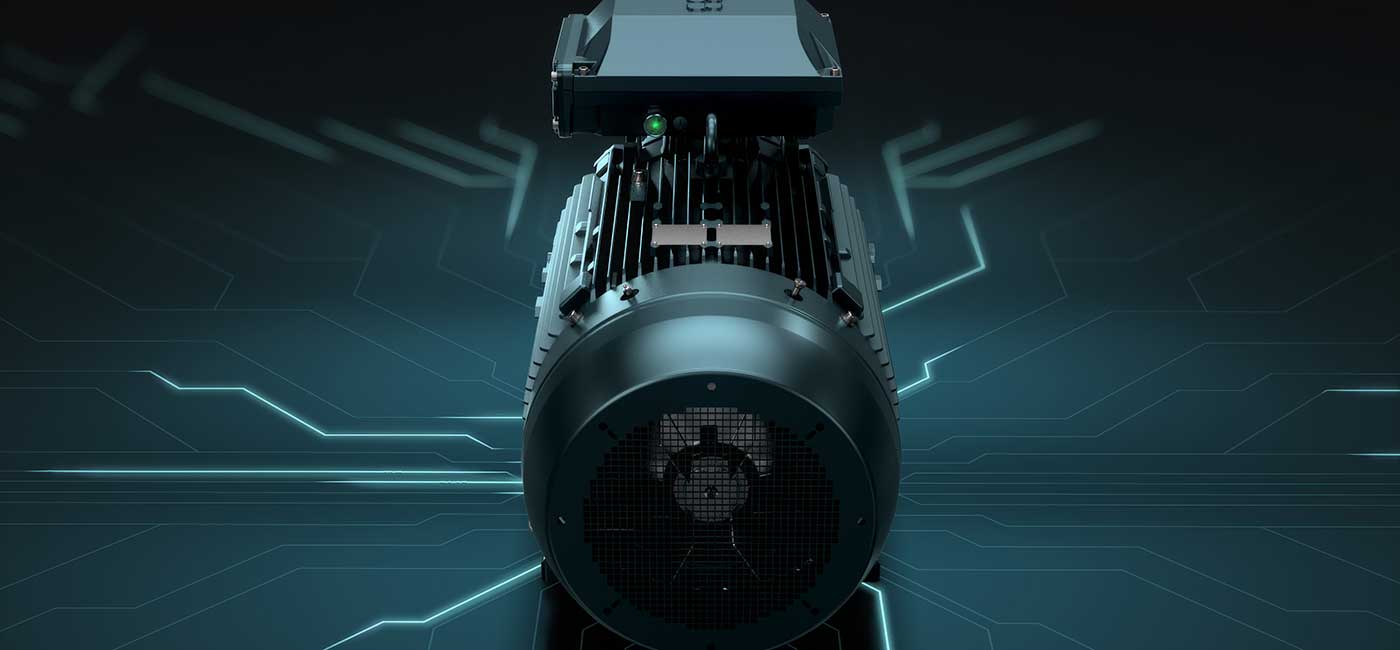

ABB has launched a low-voltage motor with integrated sensing and Edge computing, aiming to bring predictive maintenance capabilities to equipment that has traditionally operated with little visibility of its condition.
Unveiled at SPS in Nuremberg, the Intelleqt motor incorporates sensors that monitor vibration, temperature and operating conditions, with the aim of identifying developing faults before they lead to unplanned downtime. Unlike systems that require sensors to be installed separately, ABB’s technology is built into the motor and powered by energy harvested from its operation.
The launch reflects a broader push to bring digital monitoring into industrial equipment, although ABB is still at an early stage of validating the technology with customers. The company is entering a co-creation phase with original equipment manufacturers and end users, with wider availability planned for 2027.
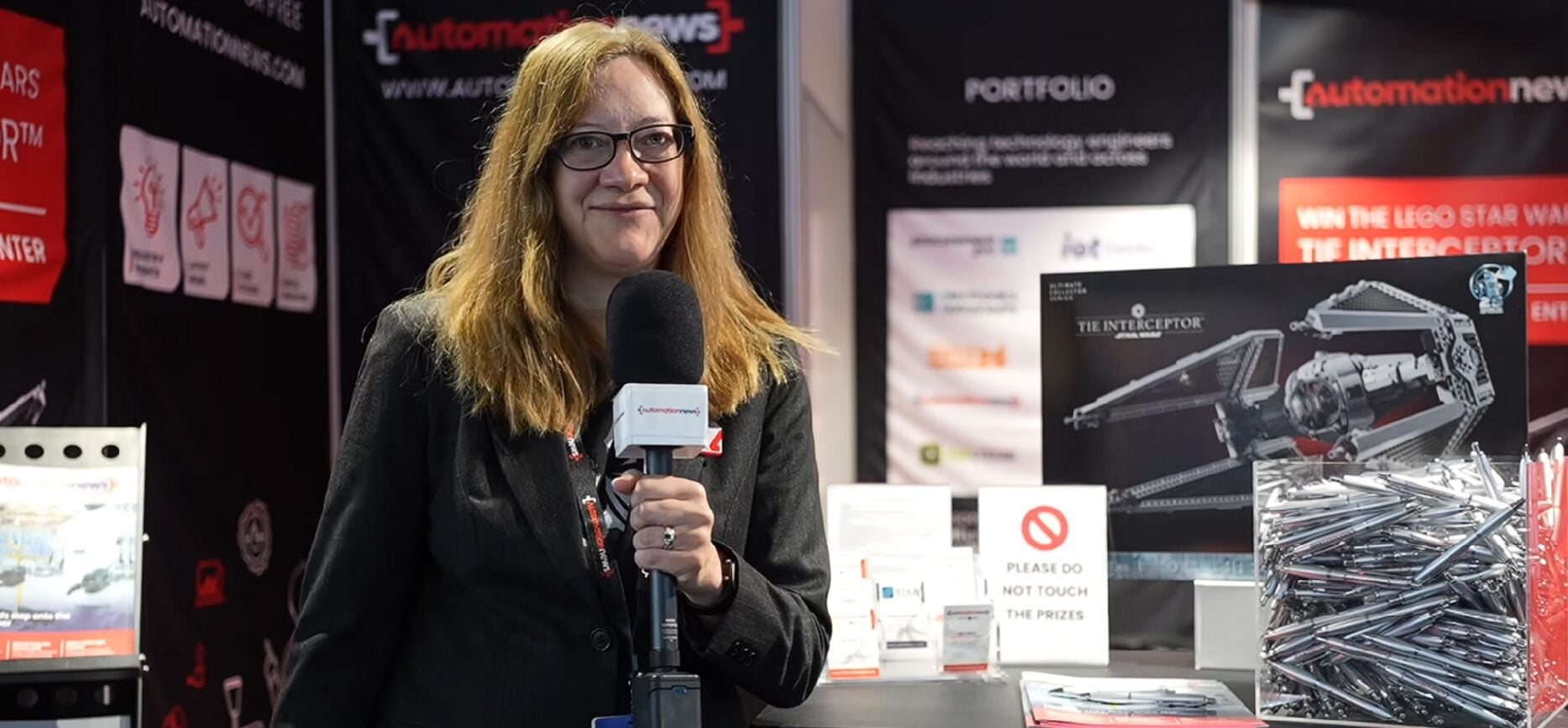
“The sensor is built in the motor, like the car,” Robert Chin, Global R&D Manager for ABB’s IEC Low Voltage Motors division told Automation News. “And another most important thing is, this is without a battery.”
The sensors use energy harvesting to generate power from the motor’s operation, avoiding the need for battery replacement or additional monitoring hardware. They measure vibration to assess bearing condition, while also monitoring overload and temperature. The system can indicate when bearings need regreasing, allowing maintenance teams to schedule work according to their condition rather than relying solely on fixed intervals.
Bearing problems account for more than 60% of typical low-voltage motor failures, according to Chin. ABB is therefore concentrating on identifying mechanical deterioration that can be detected early, rather than trying to predict every possible failure mode.
The technology processes information at the Edge and communicates the motor’s condition through a green, amber and red status system. An amber warning indicates that an issue needs attention but may not require immediate intervention; red signals that action should be taken within a shorter window to avoid a potential failure.
Customers can access the data through Wi-Fi and connect it to their own Cloud platforms or ABB’s digital infrastructure. Chin said the intention was to give customers flexibility over how they use the information, rather than requiring them to adopt a particular software environment.
The system is designed for monitoring rather than remote control of the motor. Chin said this was a deliberate decision, partly reflecting concerns about cybersecurity: even if someone gained access to the monitoring data, they would not be able to use the system to control the motor itself.
ABB says early fault detection could reduce unplanned downtime by up to 50%, but Chin was careful to distinguish this figure from results achieved by Intelleqt itself. He described it as an industrial benchmark for early fault detection, rather than a measured saving from customer installations. The co-creation phase is intended to establish how much value the technology can deliver in real operating environments.
So far, ABB has tested two Intelleqt-equipped motors in its own manufacturing facilities in northern Finland. One operates a press, while the other runs a pump. Both have been running for more than two years without a breakdown. ABB has also carried out accelerated laboratory tests, deliberately damaging bearings and varying lubrication levels to establish the vibration signatures associated with different conditions.
Chin said the company was targeting an additional technology cost of less than 1% of the motor’s total cost, although ABB has not yet announced pricing.
The aim, he said, is to make intelligence an increasingly standard part of the motor rather than a premium add-on. “You are still buying the best motor in the world, but by the way, you get extra benefits through that one,” he said.
Intelleqt is one part of ABB’s wider effort to improve the efficiency and performance of motor-driven systems. A separate strand of that work is focused on reducing the energy wasted by motors running at a fixed speed.
Tatu Järvenpää, Senior Vice President and Global Business Line Manager for Motors and Generators at ABB, said around 90% of medium-voltage motors operate at a fixed speed, even when the process they serve requires varying levels of output.
He compared the arrangement to driving a car with the accelerator pressed to the floor and controlling its speed by braking. In industrial applications, pumps, fans and compressors may need to deliver less output for much of their operating time, but a fixed-speed motor continues to run at full speed, with the process throttled back mechanically.
ABB’s MV Titanium combines a medium-voltage motor and variable-speed drive in an integrated unit, allowing the motor’s speed to be adjusted to match demand. The product is intended in part for existing industrial sites, where installing a conventional drive can be complicated by space constraints, cabling requirements and the need for lengthy shutdowns.
Järvenpää said applications involving pumps, fans and compressors could typically achieve energy savings of 20% to 50%, depending on the process and the equipment being replaced. He put typical payback periods at between one and three years.
He pointed to a project at a power plant in Finland, where a 1.3MW boiler blower motor equipped with the technology achieved reported energy savings of around 47%, equivalent to an annual reduction of 65 tonnes of carbon dioxide.
“The cleanest energy is the energy that you don’t use,” Järvenpää said.