
Motorsport has long been a proving ground for engineering principles that later find their way into industrial design. At speeds exceeding 300km/h and forces above 4G, a Formula 1 driver cannot afford to look down to confirm a setting change – every control must be identifiable by touch alone.
On the factory floor, however, the challenge is different. As industrial systems become more automated and complex, operators are often required to make frequent adjustments using interfaces that do not always provide tactile feedback.
Although industrial automation has delivered huge advances in digital interfaces, tactile feedback remains an important – and sometimes overlooked – part of effective machine design. In an era of increasing automation, this gap between digital flexibility and physical feedback can become a source of operator error.
The UK Health and Safety Executive’s guidance on human factors [¹] highlights poor interface design as a performance influencing factor. This is backed up by a study [²] by researchers at TU Dresden that found a significant increase in error rate when no tactile feedback was provided in an interface.
When an operator hesitates, misinterprets a control, or adjusts the wrong setting, the consequences can range from reduced efficiency to costly downtime and, in some environments, safety risks.
That is why there is a pressing need to treat tactile HMI as a core pillar of both industrial safety and manufacturing productivity.
This aligns with the growing focus on human-centric manufacturing, where automation is designed not to remove people from the process, but to help them work more safely and effectively alongside increasingly intelligent machines.
Engineering feedback into the hand
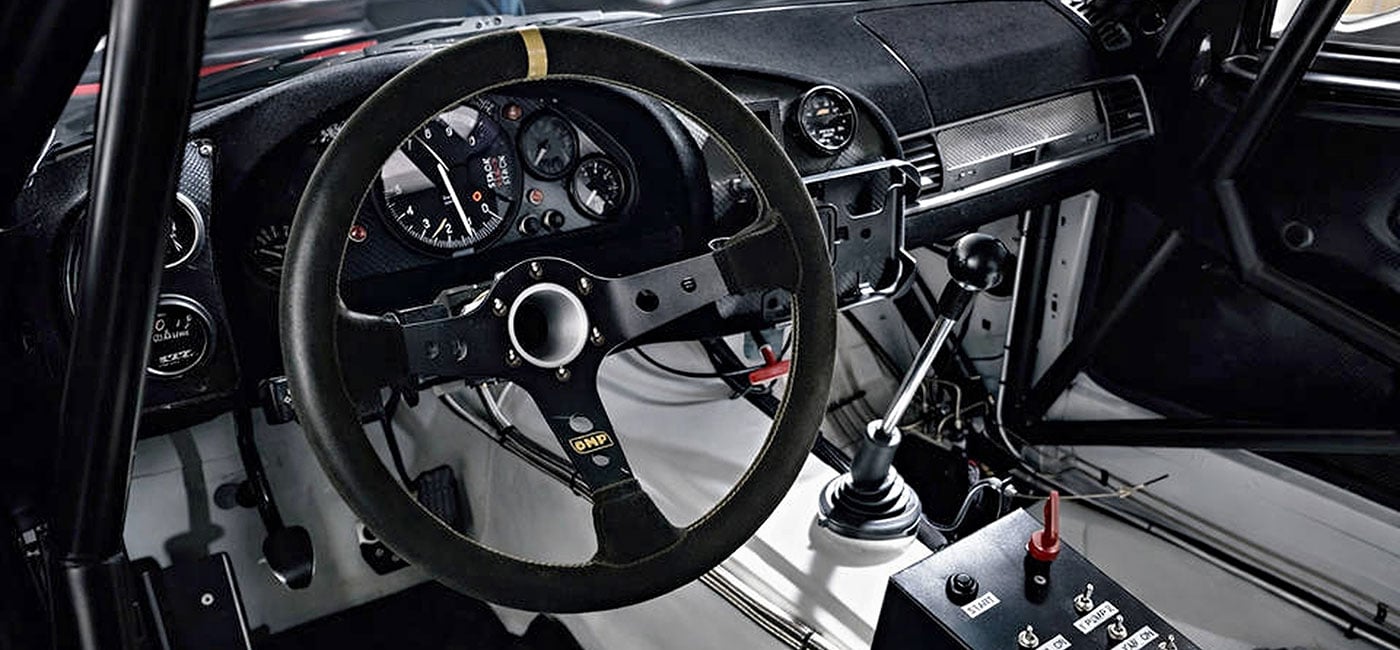
When visual confirmation is impossible or inefficient, tactile feedback becomes critical. F1 drivers’ steering wheels have dozens of buttons, toggles, and switches, but each has distinct shapes, textures, and resistance levels. This principle should be mirrored on the factory floor, where eliminating ambiguity and keeping production lines moving smoothly is crucial.
Consider a CNC machining centre: an operator adjusting feed rates may need to maintain visual attention on the machine itself. A control buried within touchscreen menus can force unnecessary attention away from a high speed cutting tool, creating an unnecessary safety risk.
Effective tactile interfaces rely on several principles familiar from motorsport. Controls should have distinct shapes, resistance levels, and positions so operators can identify them without looking.
Defined detents on rotary controls, different actuation forces for critical switches, and recessed high-risk buttons can all reduce accidental inputs and improve confidence during operation.
Material choice can also communicate function. Different textures, finishes, and temperatures can help operators distinguish between frequently used controls and those requiring deliberate action, providing another layer of feedback beyond visual interfaces.
When standard components need to be adapted
Standard components meet the needs of many applications, but there are situations where customised designs can improve usability, safety, and reliability. For example, harsh industrial environments such as food processing may require components that combine ergonomic design with resistance to contamination, cleaning processes, and repeated use.
Just as a professional motorsport team customises a steering wheel configuration around the physical geometry of a driver’s hands to extract every millisecond of performance, industrial manufacturers must be willing to tailor the physical touchpoints of their machinery to their operators and environment.
Balancing visual displays and tactile controls
Industrial automation has derived immense value from the rise of capacitive glass touchscreens. Digital panels allow for infinite flexibility, enabling operators to switch between complex machine recipes, view real-time diagnostics, and monitor system-wide KPIs on a single screen.
The problem arises when these screens are treated as a catch-all solution for execution. A flat glass panel demands absolute visual attention. An operator cannot locate a digital button by texture, nor can they feel a slider reach its limit. Touchscreens remain valuable tools for data visualisation, diagnostics, and machine configuration.
However, frequently used and safety-critical controls benefit from physical feedback. The solution lies in a hybrid HMI architecture which blends the flexibility of digital interfaces and physical feedback.
On an F1 steering wheel, engineers separate information display from mechanical execution. A central digital screen displays dense telemetry data, while leaving active commands assigned to physical switchgear surrounding it.
Mirroring this architecture in manufacturing requires an intentional division of labour between the screen and physical components.
Digital interfaces are best suited to tasks such as configuration, diagnostics, and KPI monitoring, where visual navigation is natural. Physical controls are better suited to frequent, urgent, or safety-critical actions, allowing operators to respond instinctively without searching through menus.
Some modern industrial designs combine both approaches by integrating physical rotary controls with digital displays, allowing screens to provide flexible information while operators retain tactile feedback.
Supporting industrial performance
Just as a racing driver consults a telemetry display while adjusting tactile switchgear to handle a vehicle at its limit, industrial operators deserve an interface that supports human cognitive bandwidth.
As modern manufacturing systems become increasingly complex, interconnected, and automated, the cognitive burden placed on operators continues to grow. The industry cannot rely solely on digital screens, nested menus, and warning lights to manage these systems safely and efficiently.
Visual fatigue and alarm desensitisation are real, growing hazards in modern factories, particularly as operators are asked to oversee increasingly autonomous systems.
The future of industrial HMI is therefore unlikely to be purely digital or purely physical. Instead, the most effective systems will combine the flexibility of software with the certainty of tactile interaction – creating interfaces that support both human decision making and industrial performance.
[¹] Managing human failures: Overview – HSE
[²] Microsoft Word – EASM_HAID09.doc
This article originally appeared in the September/October issue of Automation News.