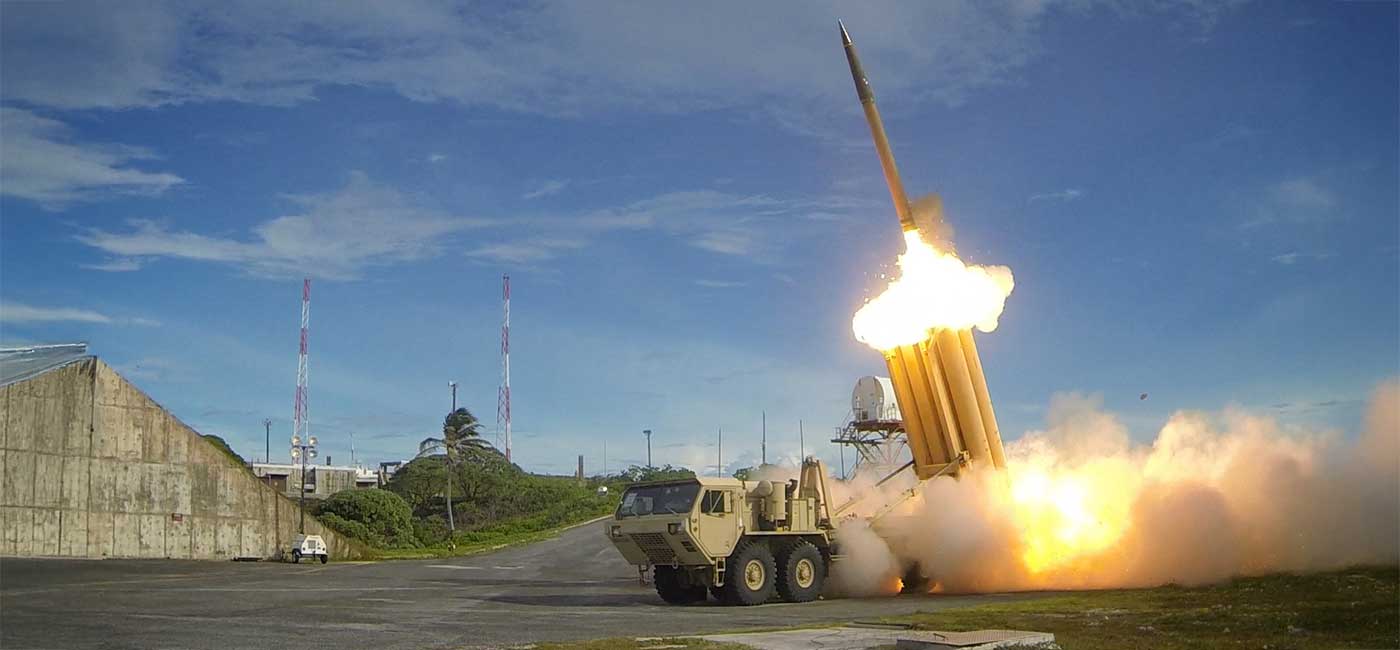

Leonardo DRS has secured a contract from BAE Systems to develop a next-generation infrared sensor for the US Terminal High Altitude Area Defense (THAAD) missile system, as the defence technology company expands manufacturing capacity to increase production of interceptor seekers.
The contract covers development of an infrared focal plane array (FPA), a key component of the missile’s seeker system, which uses infrared sensing to detect and track targets through their thermal signatures.
Development work is already under way at Leonardo DRS’s 200,000-square-foot foundry in Dallas, Texas. The company is also expanding capacity at the facility to support a programme objective of increasing THAAD seeker production to approximately four times historical levels.
The financial terms of the contract have not been disclosed.
The award builds on an existing relationship between Leonardo DRS and BAE Systems, as well as the former’s work developing cooled and uncooled infrared technologies for defence applications.
“Leonardo DRS is continuing to expand its role in the munitions seeker market through recent wins that leverage both cooled and uncooled solutions at the detector, sensor and subsystem levels,” said Jerry Hathaway, Senior Vice-President and General Manager of DRS Electro-Optical and Infrared Systems.
The next-generation sensor is intended to improve the THAAD interceptor’s ability to address increasingly complex threats. The system forms part of the US missile defence architecture, designed to intercept ballistic missiles during the final phase of flight.
The manufacturing expansion highlights the importance of production capacity alongside advances in sensing technology, as defence suppliers seek to scale output to meet programme requirements.
Leonardo DRS supplies infrared systems to the US government and allied nations, with capabilities spanning detectors, sensors and integrated subsystems. Its wider portfolio also includes network computing, force protection, and electric power and propulsion technologies.