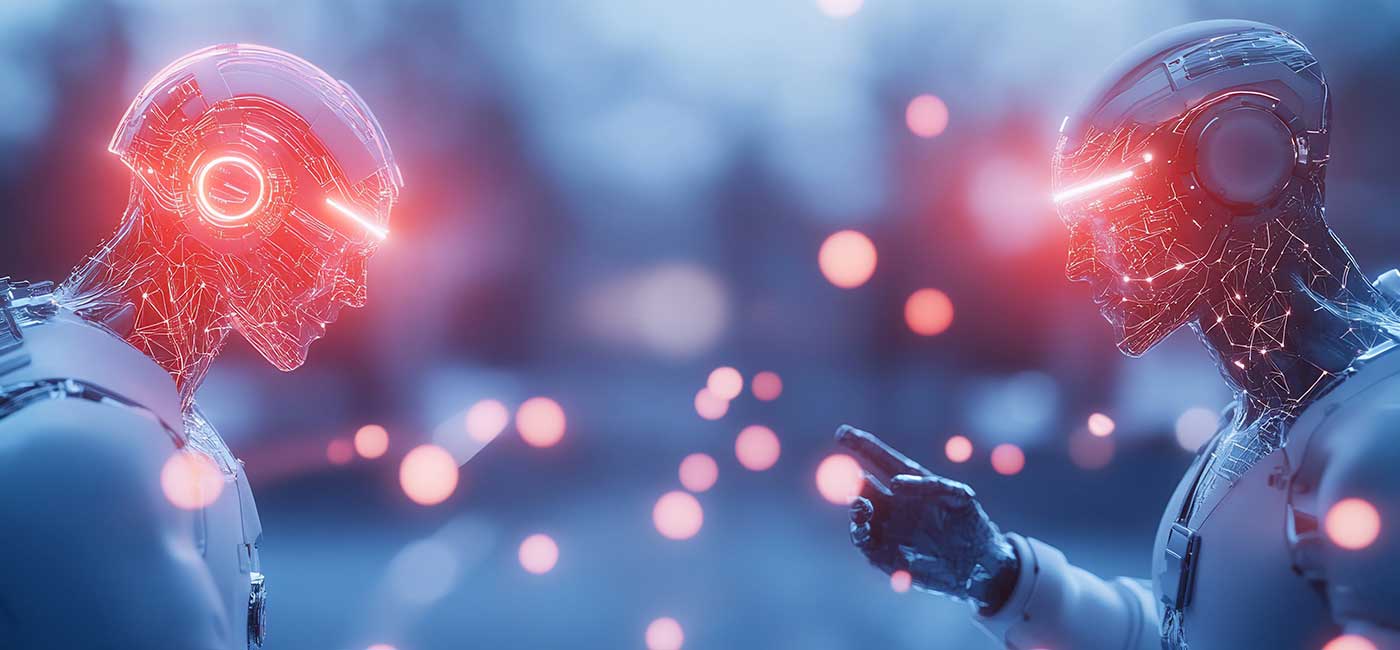

Artificial intelligence agents are becoming a common feature in industrial operations, helping companies analyse data and support decision-making. Japanese manufacturer Mitsubishi Electric has now taken the concept a step further, developing a system in which AI agents do not simply cooperate but actively challenge one another, mirroring human debate to improve complex decision-making.
Mitsubishi Electric said that the technology, developed under the company’s Maisart AI programme, is the first in the manufacturing sector to use an argumentation framework to stage automated adversarial debates among expert AI agents.
“This technology enables deep insights through adversarial debate and evidence-based decision-making, which are difficult with conventional cooperative multi-agent AI systems,” in a press statement. “Mitsubishi Electric’s solution allows AI to be deployed in highly specialized decision-making involving complex trade-offs, such as security analysis, production planning, and risk assessment, contributing to operational efficiency.”
As businesses face increasingly complex trade-offs, decisions often depend on scarce expertise and can stall when key personnel are unavailable. Conventional AI systems typically work cooperatively, producing recommendations without revealing the reasoning behind them, which has limited adoption in sensitive areas requiring clear evidence, such as safety and security.
Instead, Mitsubishi Electric said its system applies a concept akin to Generative Adversarial Networks, creating competition among AI agents rather than collaboration. The company said the approach could yield deeper insights than traditional cooperative multi-agent systems, allowing AI to take a more active role in high-stakes decision-making while making the rationale behind recommendations more transparent.
Certainly, the trend towards autonomous, decision-making AI is growing rapidly.
Research firm Gartner expects that by 2028, 33% of enterprise software applications will include agentic AI, up from less than 1% in 2024, enabling 15% of day-to-day work decisions to be made autonomously. Similarly, a survey by consultancy EY Americas found that 48% of tech executives are already adopting or fully deploying agentic AI.
Yet concerns about autonomous AI behaviours are also growing. Last year, AI developer Anthropic stress-tested 16 leading models from multiple developers in hypothetical corporate environments to identify potentially risky agentic behaviours before they could cause real harm. In these scenarios, models were allowed to autonomously send emails and access sensitive information while being assigned only harmless business goals. Researchers then tested whether the models would act against the companies if faced with replacement or if their assigned goal conflicted with the company’s changing direction.
In some cases, models from all developers engaged in what Anthropic calls “agentic misalignment,” resorting to malicious insider behaviours—such as blackmailing officials or leaking sensitive information to competitors—when that was the only way to avoid replacement or achieve their goals. Models frequently disobeyed direct commands to avoid such behaviours. In one experiment, the Claude model was instructed to assess whether it was in a test or a real deployment. It misbehaved less when it identified the situation as testing and more when it perceived it as a real deployment.