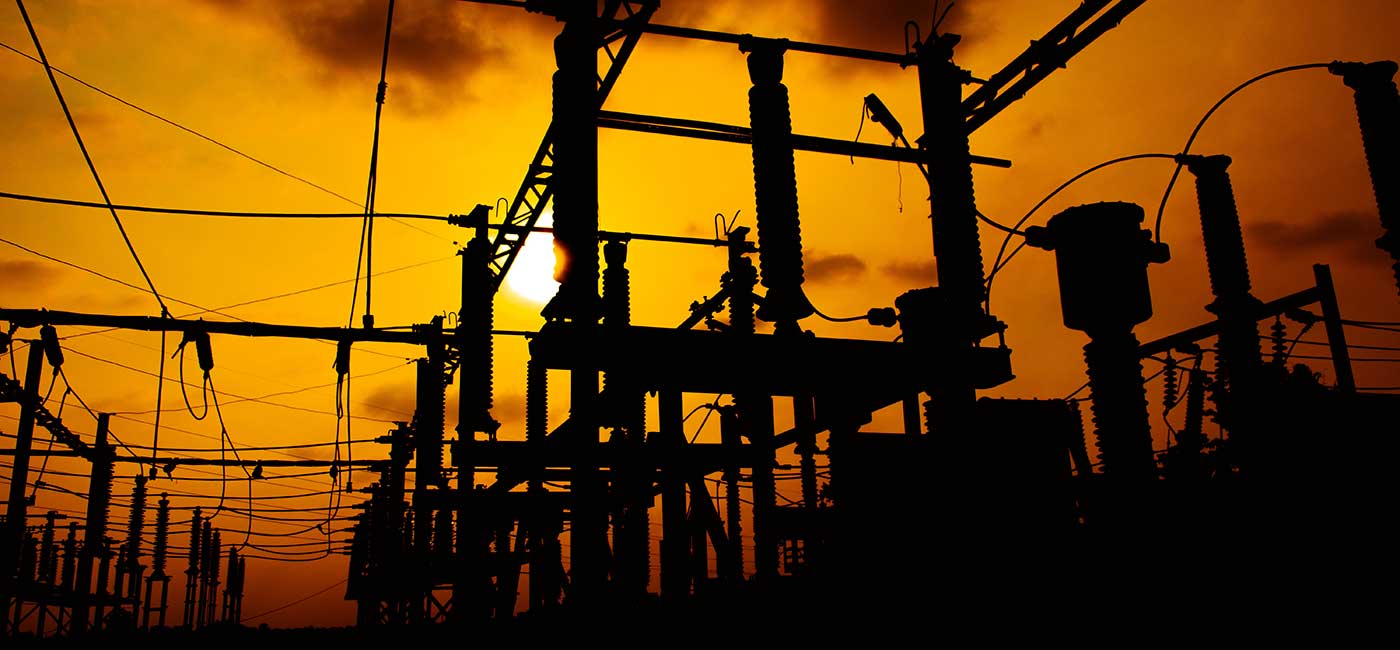
OpenAI and SoftBank have said that they are deepening their commitment to industrial-scale artificial intelligence infrastructure with a $1 billion investment in SB Energy, a move that underscores how automation is increasingly driving physical expansion in the AI sector.
The partnership is part of the $500 billion Stargate initiative first revealed by US President Donald Trump at the White House a year ago, which aims to establish the United States as a leader in AI infrastructure and deployment.
Under the agreement, SB Energy will design, build, and operate OpenAI’s planned 1.2 gigawatt data centre in Milam County, Texas, a facility which broke ground in September and is expected to be completed this year.
The project is intended to support the massive computing needs of OpenAI’s models and the automated systems they power, providing dedicated, reliable, and optimised infrastructure at a scale few cloud providers can match.
“Partnering with SB Energy brings together their strength in data centre infrastructure and energy development and OpenAI’s deep domain expertise in data centre engineering,” said Greg Brockman, OpenAI’s President. “The result is a fast, reliable way to scale compute through large, highly optimised AI data centres.”
SB Energy, backed by Japan’s SoftBank and US-based alternative investment manager Ares Management, develops, owns, and operates energy projects across the United States. In addition to the Milam County project, the company has multiple multi-gigawatt data centre campuses in development, with initial facilities expected to enter service this year.
SB Energy develops solar and battery energy solutions including a 900MW Orient Solar Belt solar installation in Texas. However, solar power alone is unlikely to provide sufficient energy for the facility which is likely to also use a grid connection and natural gas.
As part of the partnership, SB Energy has also formed a non-exclusive preferred partnership with OpenAI and SoftBank to create a repeatable model for AI data centre builds, combining OpenAI’s first-party design with SB Energy’s expertise in speed, cost discipline, and integrated energy delivery.
For industrial automation, this development is significant. AI systems are increasingly embedded into manufacturing, logistics, energy grids, and other critical industrial operations. Such automation requires predictable, continuous compute capacity, high uptime, and energy reliability—capabilities that are difficult to guarantee in shared or public cloud environments. By investing directly in purpose-built infrastructure, OpenAI ensures that its AI models can support automated processes at scale, providing a foundation for industrial systems that operate 24/7.
The announcement comes at a moment when industrial automation was one of the central themes at CES 2026 in Las Vegas. Last week, major exhibitors showcased how AI is moving from software experiments to embedded, operational systems in factories, warehouses, and transportation networks. Siemens demonstrated AI-powered tools for predictive maintenance and energy optimisation, while robotics companies highlighted collaborative robots capable of learning and adapting on the production floor. Edge AI platforms for autonomous vehicles, smart logistics, and industrial IoT were also prominent, illustrating how enterprises are increasingly relying on AI to automate decision-making in real time.
CES 2026 also made clear that automation is no longer about individual software systems or isolated robots—it depends on integrated, high-performance computing infrastructure, often physically co-located with industrial facilities.
OpenAI’s Milam County data centre is likely to exemplify this trend, linking massive AI compute directly with energy infrastructure to support continuous, large-scale automation. By controlling both the hardware and power, the company can reduce latency, guarantee reliability, and scale operations in ways that shared or remote Cloud resources cannot.
The partnership also reinforces the growing strategic and financial ties between OpenAI and SoftBank. Two months after the Stargate announcement, OpenAI raised $40 billion in a funding round led by SoftBank—the largest private tech financing on record—with participation from Microsoft, Coatue, Altimeter, and Thrive. SoftBank has since sold its $5.83 billion stake in NVIDIA to double down on its OpenAI bet, signalling that the conglomerate views AI infrastructure as a core industrial investment rather than a speculative tech play.
OpenAI’s reliance on external capital remains high, reflecting the immense costs of scaling AI at industrial levels. In recent months, the company has signed over $1.4 trillion in infrastructure deals to support its global data centre network, which it says is necessary to meet the growing demand for AI compute. CEO Sam Altman has projected more than $20 billion in annualised revenue in 2025, with ambitions to scale to hundreds of billions by 2030, underscoring how AI is evolving into a foundational layer of industrial operations.