
Robotics companies are demonstrating new AI-enabled automation systems, highlighting how machine learning and no-code software are reshaping industrial inspection, security, and manufacturing workflows.
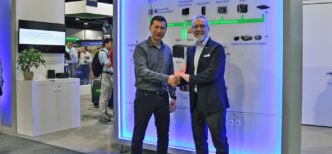
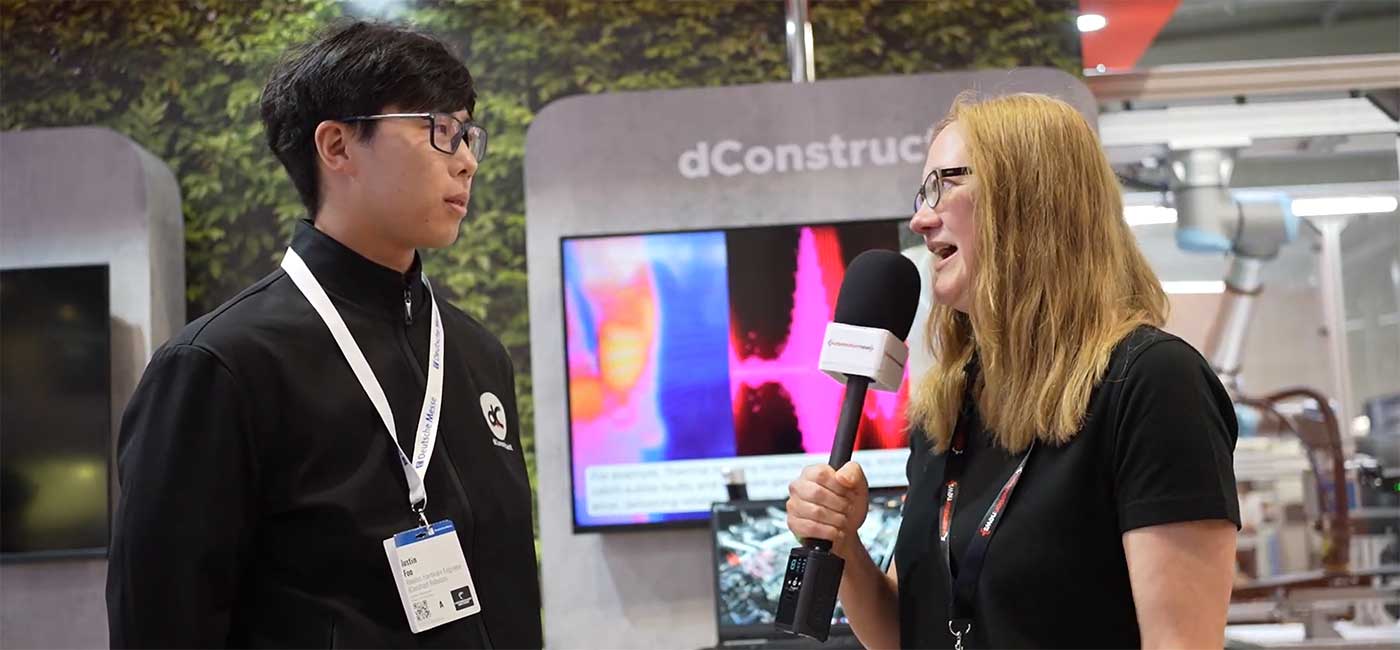
At the Singapore stand of the 2026 Hannover Messe, Justin Fu of dConstruct Robotics described how the company integrates the full robotics stack, from environmental scanning to deployment and fleet management software.
“We handle everything in the robotic stack,” Fu said. “We deploy robots for use cases such as inspection and surveillance. This helps alleviate manpower shortages in Singapore and augments the workforce, allowing people to move towards higher-level tasks.”
The firm’s systems are designed for security and monitoring applications, using machine learning to detect incidents such as fighting, smoking, or entry into restricted zones. Rather than replacing human security personnel entirely, the technology is positioned as a tool to reduce routine patrolling and expand situational awareness across larger sites.
Fu said the aim is to enable security teams to “have eyes on the ground everywhere at the same time”, centralising oversight of large facilities while freeing staff for supervisory and analytical roles.
In a separate demonstration, Nish Niranjan, Channel Sales Engineer at Augmentus Robotics outlined a “no-code” robotics approach that reduces the need for manual programming in industrial deployment.
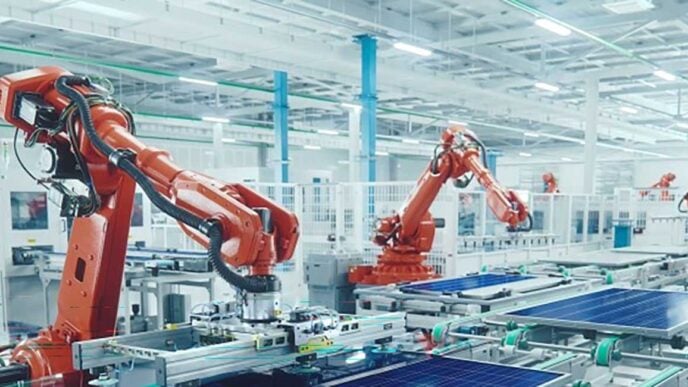
The system uses digital twin software to scan environments, generate toolpaths, and simulate tasks before sending instructions directly to robots. Once deployed, the machines can carry out applications such as inspection, sanding, and welding, depending on the use case and market.
“We cut down a lot of manual programming and hardware effort,” Niranjan said, adding that demand varies by region, with inspection work currently dominant in Singapore’s manufacturing sector.
The company said its approach is designed to make robotics more accessible by removing technical barriers traditionally associated with programming industrial machines.
Niranjan also pointed to growing integration of artificial intelligence in robotics systems, with the longer-term goal of fully autonomous machines capable of recognising parts and executing entire processes without manual instruction.
“We give the robot an eye so it knows what it is doing,” he said. “The end goal is a fully autonomous system.”
You can watch the full video interview here: https://youtu.be/IveSlu2x_U8