
A robotics prototype can prove that an AI model works. It does not prove that the final machine can be manufactured, updated, secured, and supported across years of operation.
For OEMs developing autonomous mobile robots, cobots, drones, and intelligent machines, this is where many projects become difficult. Local AI performance matters, but so does power efficiency, thermal constraints, sensor and camera integration, industrial connectivity, software stability, and long-term platform availability. These requirements must be considered together, because decisions made during prototyping can determine how easily a system can move into production and evolve in the field.
Closing this gap requires more than a processing module. It requires an embedded partner able to connect compute selection, software architecture, industrialisation, and lifecycle management.
SECO supports robotics manufacturers and system integrators across this complete journey. Its approach combines modular embedded computing, industrial software, Edge AI deployment capabilities, and engineering expertise within a single, scalable ecosystem. Customers can engage SECO for standard technology building blocks or for broader support in defining and industrialising an embedded platform.
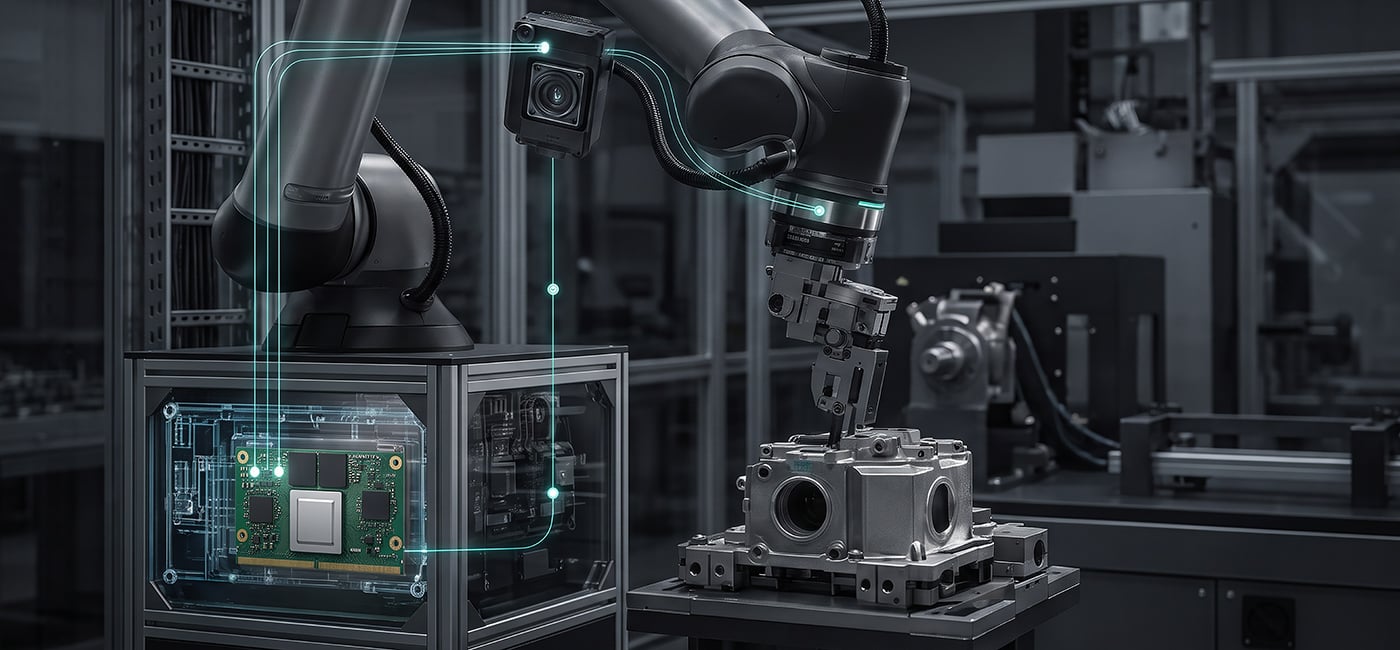
At the hardware level, SECO offers platforms based on established modular standards, including SMARC and COM Express. This gives engineering teams the flexibility to select an architecture around the real needs of the machine, from performance and energy consumption to interfaces, form factor, and operating environment. A modular approach also creates a clearer path for future platform evolution, reducing the impact of technology transitions on the wider system design.
SECO’s portfolio spans different processing architectures, including solutions based on Qualcomm Dragonwing IQ8 Series and IQ-X Series technologies, alongside high-performance x86 platforms such as the SOM-COMe-BT6-PTL, based on Intel Core Ultra Series 3 processors, formerly known by the codename Panther Lake. The objective is not to prescribe a single technology, but to help OEMs identify the most appropriate embedded foundation for each robotics and Physical AI workload.
Hardware, however, is only the starting point. Clea OS provides a common software foundation for secure, manageable, and updatable Edge devices. Together with the wider Clea framework, it supports remote monitoring, device and fleet management, data orchestration, and the controlled deployment of firmware and containerised applications.
This enables OEMs to improve software and AI workloads after machines have been deployed, without rebuilding the entire device stack. Updates can be organised through controlled campaigns, helping reduce disruption across distributed fleets and simplifying the introduction of new functionality over time.
The same lifecycle-first approach supports cybersecurity and compliance. Secure update mechanisms, vulnerability management, software traceability, and SBOM generation help manufacturers address resilience and regulatory requirements earlier, rather than treating them as issues to solve after the product architecture has already been fixed. This can reduce certification friction, support customer qualification, and strengthen long-term operational continuity.
From compute selection and software integration to platform customisation, manufacturing and lifecycle planning, SECO helps robotics OEMs move beyond the working prototype. The result is an embedded architecture designed not only to run AI locally, but to remain secure, manageable and adaptable throughout the operational life of the machine.
Explore how SECO supports robotics platforms from prototype to fleet-scale deployment.