
Chinese technology and electric vehicle manufacturer XPeng says it has begun production of its next-generation humanoid robot, marking a shift from prototype development to manufacturing as Chinese technology companies seek to commercialise so-called physical artificial intelligence.
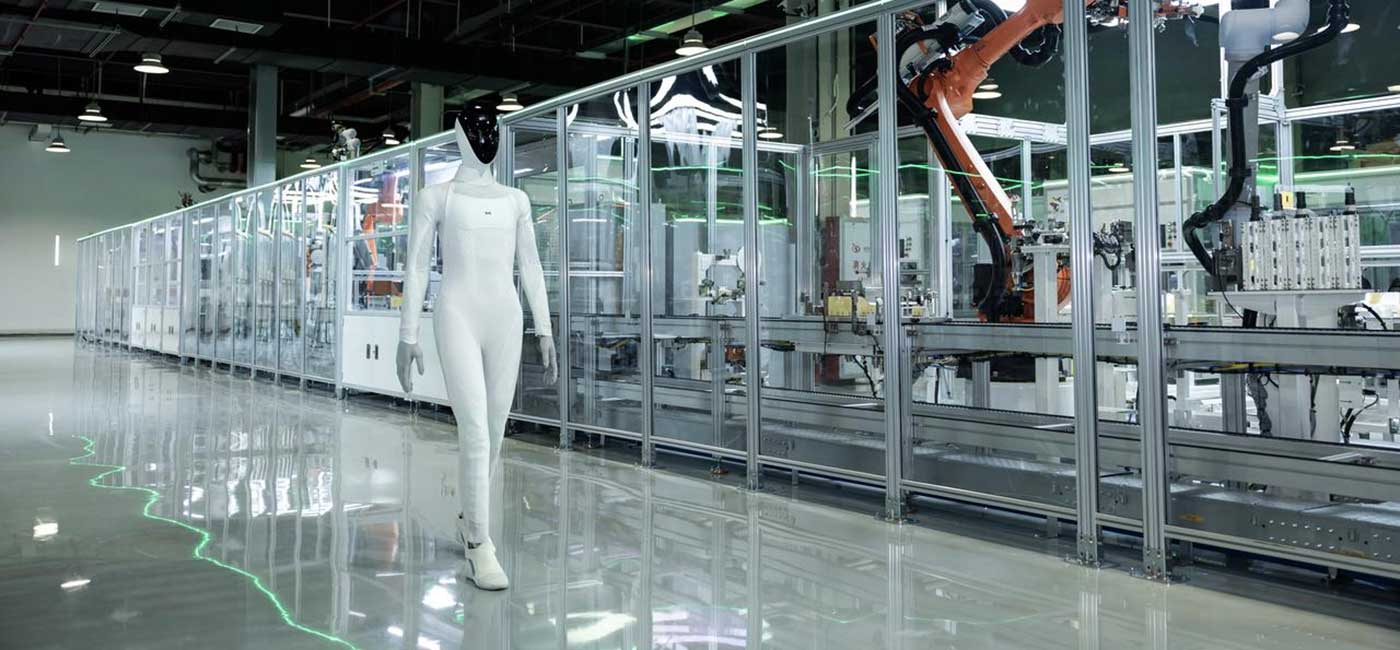
The Chinese electric vehicle maker announced yesterday that its new production line had become operational and that an IRON humanoid robot had autonomously walked off the line after completing production.
XPeng said more than 80% of the core processes on the production line are automated, with the system combining manufacturing and quality-control practices developed for the automotive industry with the precision requirements of humanoid robotics.
The company described the facility as the first automated production line designed for advanced general-purpose humanoid robots. Its emphasis on flexible, automated manufacturing is intended to allow production capacity to be expanded as demand develops.
“The production lines were created from scratch with no precedent to follow,” said He Xiaopeng, XPeng’s Chairman and Chief Executive. “Today’s step is small, but XPeng is building the production lines for an entirely new product category.”
The move comes as manufacturers and technology companies in China and elsewhere race to turn humanoid robots from research projects into commercially viable products. The challenge is not only developing robots capable of operating in unpredictable environments, but also manufacturing them at a cost and scale that can support widespread deployment.
XPeng said IRON has 76 degrees of freedom across its body, including 21 in each hand, allowing it to perform a range of movements and tasks. The robot is powered by three of the company’s Turing AI chips, providing up to 2,250 tera operations per second (TOPS) of computing capacity.
The company said this enables its physical AI model to run directly on the robot, allowing it to perform complex tasks without remote operation. Running the model on the device is also intended to reduce latency and improve data security.
XPeng is positioning IRON as a general-purpose platform rather than a robot designed for a single industrial application. The company said it is developing the system to learn and improve through interaction with the physical world.
The production milestone forms part of XPeng’s broader strategy to build a business around physical AI, alongside its electric vehicle operations. The company expects its robots to enter mass production by the end of 2026, initially for use in its own stores and campuses.
Commercial deliveries in China and overseas markets are planned for 2027.
XPeng’s push into robotics is also attracting significant investment. In August, its robotics business agreed share purchases with multiple investors that raised more than $900m at a post-money valuation of more than $6.3bn, according to the company. XPeng said this represented the largest single-round private funding raise in China’s embodied AI industry.