The accelerating shift towards connected manufacturing came under sharp focus yesterday as industry leaders argued that the Industrial Internet of Things is rapidly becoming a defining force in global production.
Speaking at an Automation News webinar, now available to view on demand, senior figures from Schneider Electric, Corvina, and Turck Banner said that real-time data, predictive maintenance, and interoperable systems are beginning to redraw the contours of industrial efficiency, energy use, and operational resilience.
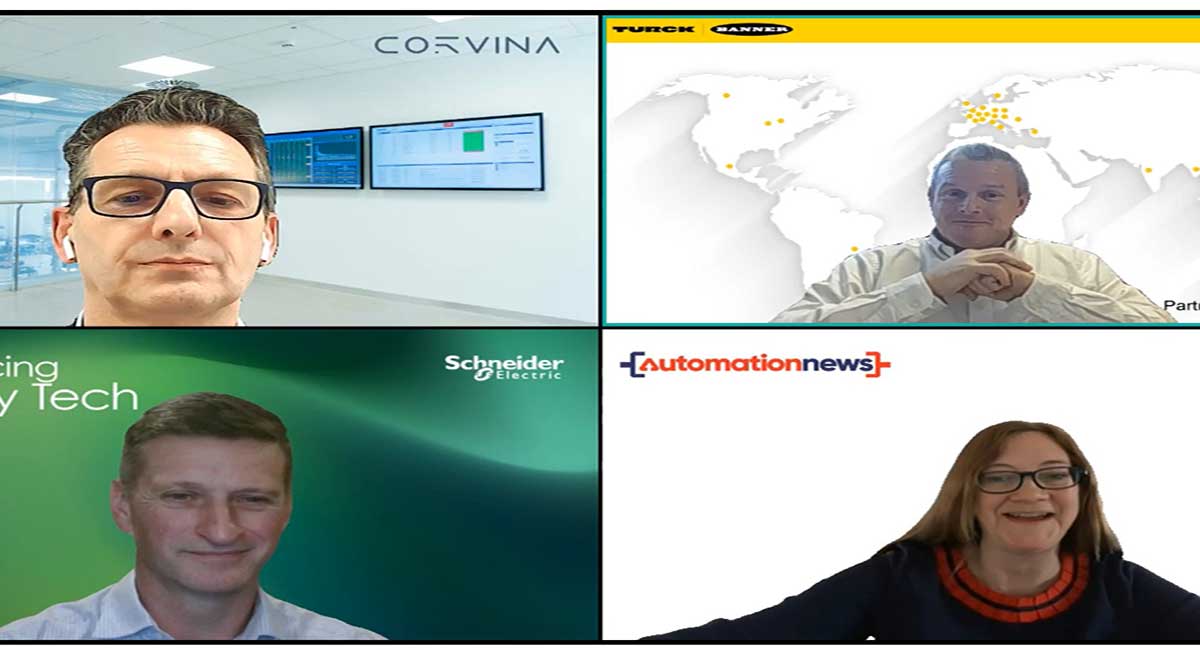
The event examined how IIoT technologies are reshaping factory operations and supply chains by providing greater visibility into machine performance and production flows. Presenters said the proliferation of connected sensors and cloud-linked platforms is allowing manufacturers to make faster, evidence-based decisions, reduce downtime, and stabilise output in an increasingly complex environment.
Stefano Isella, Chief Sales Officer at Corvina, described IIoT as a practical vehicle for digital transformation rather than a distant strategic ambition. He argued that improvements in system interoperability, combined with more capable Edge–Cloud integration, are helping firms modernise older plants without costly overhauls. This, he said, is enabling new data-driven business models while maintaining the reliability and security demanded by industrial users.
Neil Smith, Segment President for Consumer Packaged Goods at Schneider Electric, highlighted the role of connected automation in mitigating operational risk. Drawing on experience across Asia Pacific and Europe, he said predictive maintenance is reducing costly shutdowns by identifying early signs of equipment failure, while integrated software environments are helping global producers respond more quickly to supply-chain pressures and energy volatility.
Tony Coghlan, Managing Director at Turck Banner, emphasised the uptake of IoT applications among UK manufacturers, noting that the combination of improved industrial networking and sensor-level intelligence is making adoption more straightforward. He said companies are increasingly looking for complete digital solutions that support long-term operational efficiency, including smarter monitoring tools and automated maintenance workflows.
Despite the momentum behind connected systems, presenters also acknowledged obstacles. Integration between legacy equipment and modern architectures remains a persistent challenge, particularly in older plants with limited digital infrastructure. Cybersecurity risks were another recurring theme, with speakers stressing that robust, well-governed data environments are essential for protecting increasingly interconnected operations.
Nevertheless, the session conveyed a clear trajectory: IIoT is evolving from a niche technology into a central pillar of industrial strategy. As manufacturers face rising energy costs, labour constraints, and pressure to reduce emissions, the ability to extract, analyse, and act on real-time operational data is emerging as a critical differentiator.