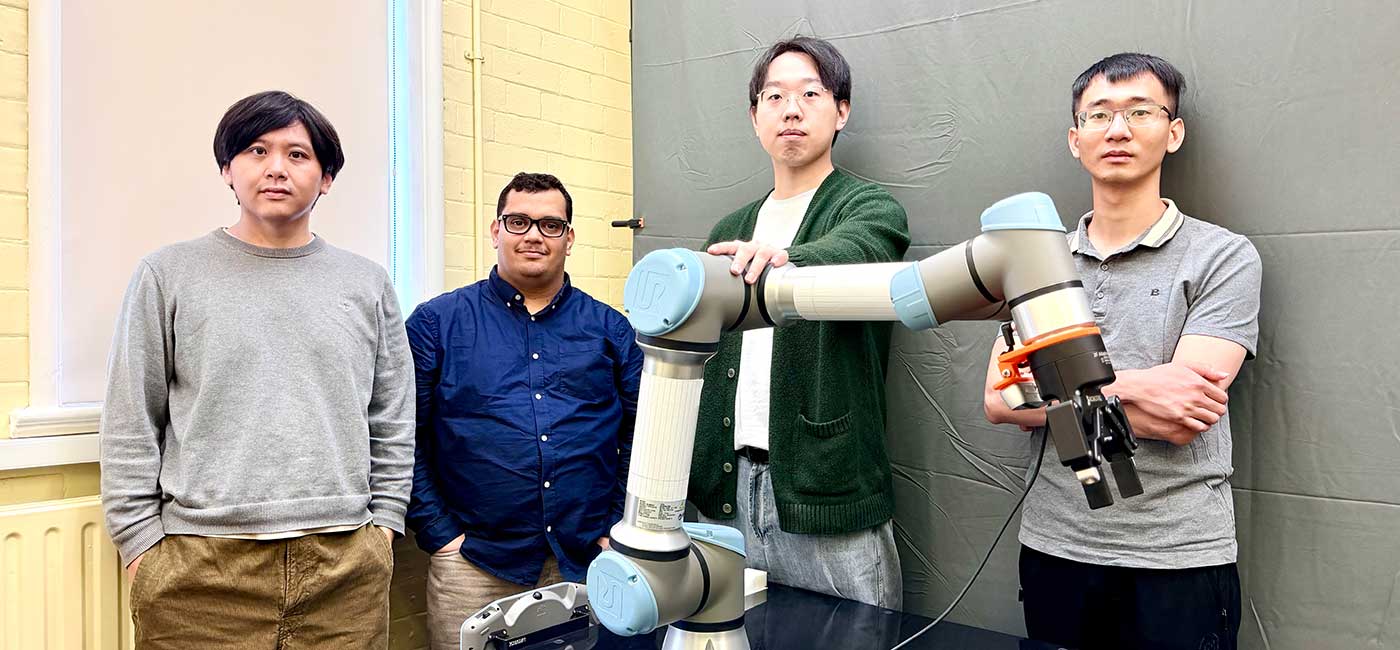

Computer scientists at the University of Leicester have developed a diagnostic technique designed to reveal when AI-powered robots are being misled by irrelevant visual cues in their environment, in research aimed at improving the reliability of automation systems in real-world settings.
The work, which will be presented at the International Conference on Machine Learning 2026 in Seoul, South Korea, addresses a growing concern in robotics and industrial automation: that systems can appear to perform tasks successfully while relying on incidental features such as lighting, shadows, or background textures rather than task-relevant information.
The researchers, based in the university’s Dynamics, Astronautics and Neural Intelligence Lab, have created what they describe as a “sense check” for Vision-Language-Action models, an emerging class of AI systems that link visual perception, natural language instructions, and physical robot actions.
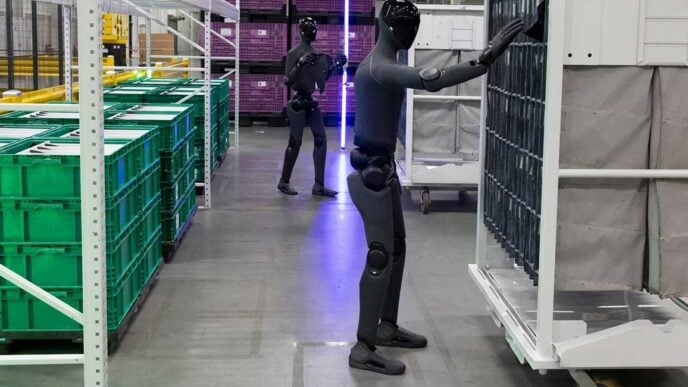
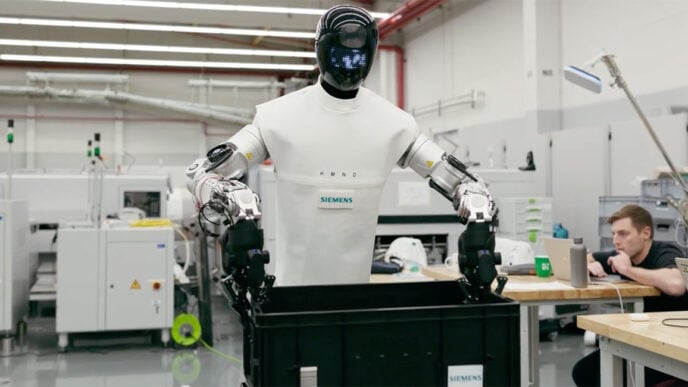
These models are seen as a key building block for next-generation autonomous systems in sectors such as warehousing, manufacturing, and logistics. However, their internal decision-making processes are often opaque, making it difficult to determine whether a robot has genuinely learned a task or is exploiting spurious correlations in its training environment.
The Leicester method analyses which regions of an input image most strongly influence a robot’s actions, allowing researchers to test whether behaviour is grounded in relevant task information or driven by visual distractions. In experiments described by the team, the approach can expose cases where apparently successful performance breaks down when environmental conditions change.
Hanxin Zhang, a PhD researcher who led the work under the supervision of Dr Daniel Z. Hao, said the aim was to move beyond simple success rates as a measure of performance. “A model may appear to perform well while relying on visual shortcuts that fail when the environment changes,” he said.
Dr Hao added that interpretability was becoming central to the deployment of robotics systems outside controlled laboratory conditions. “Robot learning is advancing quickly, but success rate alone does not tell us whether a robot has learned the right behaviour for the right reason,” he said.
The research paper, Embodied Interpretability: Linking Causal Understanding to Generalisation in Vision-Language-Action Models, argues that greater transparency in robot perception is essential if embodied AI systems are to be safely deployed in unpredictable real-world environments.
The work reflects a broader push within artificial intelligence research to improve the robustness and explainability of models ahead of wider commercial deployment in automation-heavy industries, where failures can carry operational and financial risk.