

Manufacturers have spent years automating production to improve speed, quality, and efficiency. The next challenge is different: proving exactly how products were made.
As Digital Product Passport (DPP) requirements develop in Europe, factories will need to capture reliable, structured production data without adding friction to operations.
This pressure is arriving at a time when investment in digital manufacturing continues to accelerate. According to Make UK, 60 per cent of manufacturers are increasing investment in digital technology, AI and automation.
At the same time, regulatory expectations are tightening. According to the European Environmental Bureau, “in 2026 the European Commission is set to adopt several implementing legislations that will form the basis for Digital Product Passports across multiple regulations.”
While timelines will vary by product category, manufacturers supplying European markets will need to start preparing now.
At its simplest, a Digital Product Passport is a digital record containing information about a product’s materials, manufacture, use and end-of-life journey. For manufacturers, this means production data that has historically stayed within factory systems may need to become accessible across supply chains.
Alongside this, standardisation work is being formalised across Europe to ensure interoperability of product data systems, setting clearer expectations for how manufacturing information must be structured and shared.
Why traceability is becoming a production requirement
The shift is particularly significant for industries where product history is already closely linked to safety and compliance. Automotive manufacturers, aerospace companies, medical device producers and electronics suppliers increasingly need to demonstrate not only where components came from, but also how they were assembled, tested and verified.
Traceability is no longer just a reporting function that sits at the edge of manufacturing. It is increasingly shaping how decisions are made on the shop floor in real time, from production control to quality assurance. Regulators, OEMs and end customers increasingly expect a complete and consistent record of how a product was built.
This includes who performed each operation, when it was completed, what tools were used and which parameters were applied. In principle, this sounds straightforward, but in practice it exposes a gap between what factories can physically produce and what they can prove after the fact.
Many manufacturing environments still rely on systems where data is captured across separate tools, stations, and software layers. That data may exist, but it is often fragmented or difficult to align when audits or reporting are required. The result is a growing gap between production reality and production evidence, making it difficult to use that information at scale.
Capturing the right data at the point of work
A passport-ready approach starts at the station. Many shop-floor assets are capable of recording data to their own internal systems, but to fully ensure data integrity its vital to compile this data in real time, in a single source, at the station level.
This is where structured digital process control systems are becoming increasingly important.
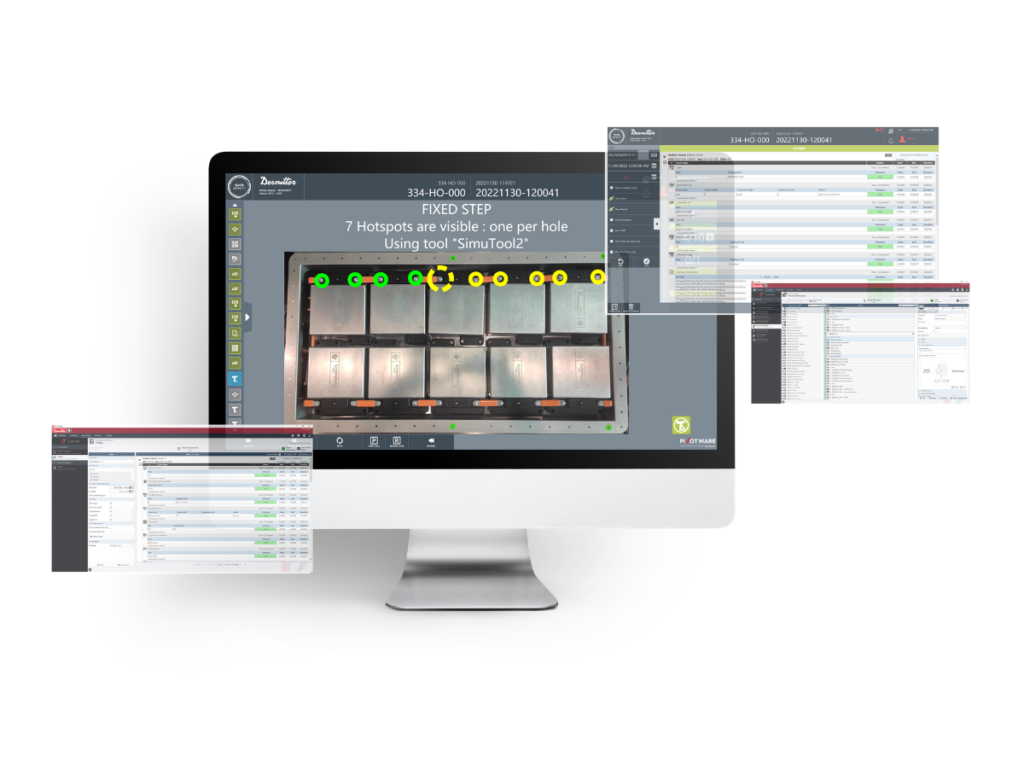
Desoutter’s Pivotware platform, for example, embeds traceability into the production sequence itself. Operators are guided through each step and required inputs are validated as the work progresses. This means traceability becomes a direct output of performing the operation correctly.
It connects tooling, scanners, printers, sensors, and testers into a single controlled environment. By capturing information at the point of assembly, manufacturers can create a “digital birth certificate” for every product, recording key information such as tools used, processes completed and quality checks performed.
As DPP frameworks evolve, the expectation is not only that data exists but that it is trustworthy. This places greater emphasis on how each step in production is controlled and validated.
With process control systems, each stage of production is defined within a controlled workflow. Operators cannot proceed until required steps are completed and validated, ensuring that traceability reflects actual execution rather than retrospective interpretation.
Making traceability meaningful through verified execution
This is particularly important in environments where multiple systems interact. In many factories, tightening tools, fixtures, scanners and software platforms all contribute to a single product. Without structured control, inconsistencies can emerge between systems even when individual components are functioning correctly.
One of the most common concerns around DPP is the risk of generating excessive data without clear structure or purpose. Without alignment, traceability systems can quickly become complex to manage and difficult to scale.
Avoiding data overload through structured information
To scale this beyond individual stations, standardisation becomes important. European standardisation efforts are also underway to define how digital product data should be structured and shared across industries.
The direction of travel is clear. Data will need to be interoperable, structured and consistent across systems and suppliers. This means manufacturers must avoid building isolated data silos at station level. Instead, information must be captured in a structured way that can flow into higher level systems such as MES, ERP and data analytics platforms without rework or translation layers.
When this structure is in place, traceability shifts from being a storage problem to an integration layer that supports production flow.
A passport-ready system should not only support compliance. It should improve how manufacturing operates day to day. When traceability is fully integrated into production, it enables a complete and accessible product history.
This creates a single structured record of how a product was built, tested and verified. This also supports wider operational improvements. The same data used for compliance can be used to identify process variation, support continuous improvement and reduce the effort required for audits and reporting.
Turning traceability into operational value
Digital process control systems can support this by connecting station-level traceability with higher-level analytics platforms. Data generated at each station can feed into a central view of production, where trends can be analysed, alerts raised and issues resolved as they occur.
When combined with connected tightening tools and other production technologies, it creates a consistent data layer that supports both real time control and longer-term analysis.
DPPs are often framed as a regulatory requirement. They are actually becoming a test of how well manufacturing systems are designed to handle complexity.
Factories that treat traceability as a byproduct of production will struggle to scale it without adding friction. Those that embed it into workflow design will be able to expand capability without increasing administrative burden.
From compliance pressure to production capability
The difference is architectural, not procedural. It sits in how data is captured, how processes are controlled and how systems are connected across the shop floor.
For manufacturers preparing for passport-ready production, the goal is not more data, but better structured data that is created as part of the work itself. By embedding traceability into production workflows, factories can turn regulatory pressure into a foundation for better quality, efficiency and decision-making.
This article originally appeared in the September/October issue of Automation News.