
The next time you buy a punnet of strawberries, the person who picked them may not have been a person at all.
Across farms around the world, robots are learning to navigate fields, identify ripe fruit, detect crop disease, and collect the data once gathered by human workers.
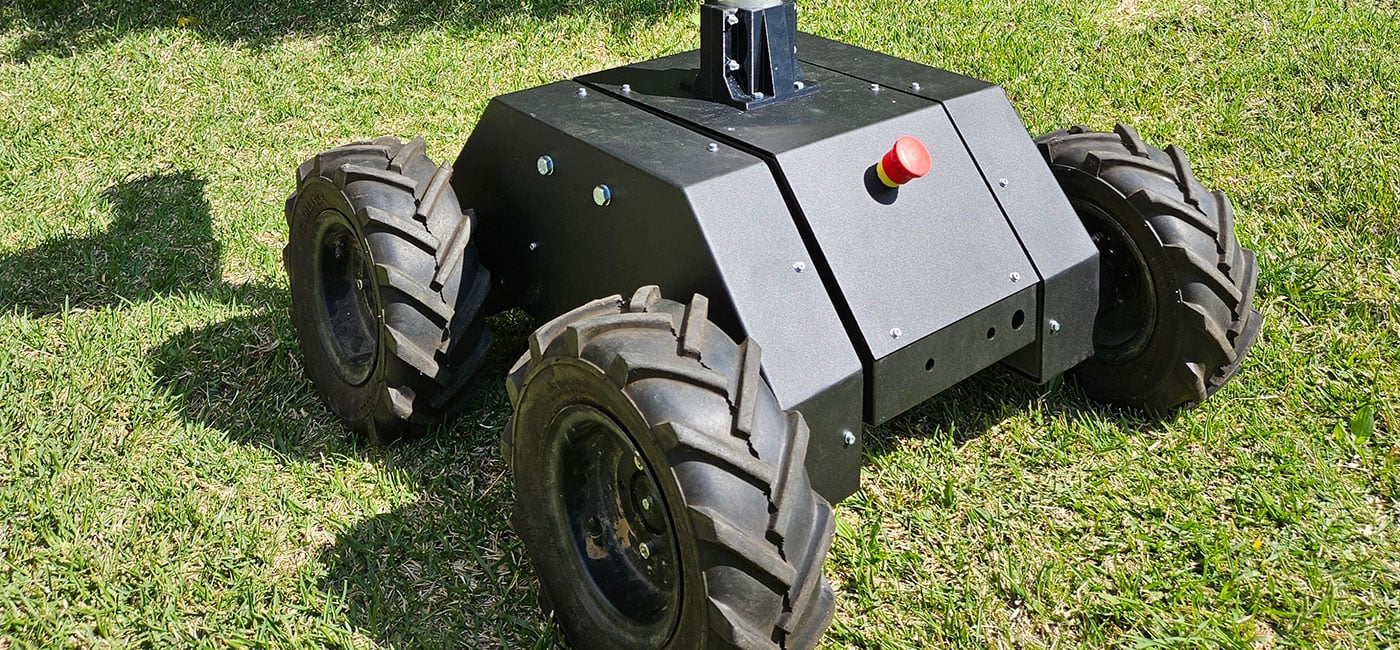
André Aguiar, a researcher at Portuguese technology organisation, the Institute for Systems and Computer Engineering, Technology and Science (INESC TEC), points proudly at a machine which looks a bit like a large version of a child’s
remote control toy car and which is busily trundling along a line of currant bushes.
Known as Orioos, the electric autonomous robot uses cameras and other sensors to move between rows of permanent crops, collecting close-range data on plant health and crop conditions.
Designed to pootle along lines of plants at around a slow walking pace without compacting or damaging the soil, Aguiar says Orioos, which is being commercialised through INESC spin-off company ViField, uses robotics to help European
farmers tackle rising costs, climate change and labour shortages.
“Agriculture is facing a combination of labour shortages, rising input costs, climate variability and increasing pressure to reduce environmental impact. At the same time, growers are expected to make more precise decisions using less water, fewer agrochemicals, and fewer human resources,” he says.
Orioos is part of a growing generation of agricultural robots using AI, computer vision and autonomous navigation to tackle tasks that have traditionally depended on human labour.
For fruit growers, Aguiar says, current conditions mean that it often just isn’t feasible to go and check on how crops are actually growing on a regular basis. Instead farmers often rely on samples covering around 10% of the crop, combined with their previous experience, to decide when to spray pesticides or estimate how much fruit they will harvest.
But with robotics, the picture changes dramatically.
“The biggest opportunity for robotics is transforming data collection,” he says. “Today, most farms still rely on manual scouting, which is expensive and only covers a small percentage of the crop. Autonomous robots can continuously
monitor every row, every tree, and every plant, generating objective data that allows growers to detect problems earlier and act more precisely.
“For us, robotics is not primarily about replacing people; it is about giving growers and agronomists better information so they can make better decisions.”
Each robot includes two embedded lightweight compute modules which use computer vision architectures adapted specifically for Edge operation.
The modules are paired with a rugged smartphone that handles manual and joystick control, while AI models developed at INESC TEC over the last four years interpret crop conditions and estimate farm productivity.
Moreover, Aguiar points out, the dataset includes not only images of diseased plants, but information about canopy structure and how plants reflect light – indicators that can help assess crop health and productivity.
“Our current R&D focus is on improving data efficiency,” he says. “Through active sample selection we can reduce the amount of data that requires processing by 60-70% while retaining more than 90% of the agronomically relevant information. We are also implementing continual learning approaches that allow models to evolve incrementally as new field observations become available.”
And ViField is far from the only robotics company looking to tap into growing demand across Europe for agricultural robots which is being fuelled by technical developments in physical AI and connectivity, as well as rising input costs and labour shortages.
According to the OECD, agricultural robots are already being tested and used across Europe in four main categories: aerial robots, used for mapping, crop monitoring, disease detection, spraying, and livestock monitoring; field robots, used for seeding, weeding, spraying, harvesting, and data collection; horticultural robots, used for transplanting, patrolling, pruning, irrigation and fruit and vegetable picking; and livestock robots, used for feeding, milking,
environmental monitoring and egg collection.
It cites research putting the European agricultural robotics market at €6.37 billion in 2025 and predicting it will double to €12.77 billion by 2030.
And with governments under increasing pressure to ensure food security and protect against climate change, increasing amounts of public funding are being spent in the sector.
The EU is investing heavily in agricultural robots through Horizon Europe, its research and innovation programme for 2021-27. The UK government has been investing too. In August it launched a £20 million funding programme to accelerate the development of agricultural robots and automation systems aimed at supporting collaborations between agri-tech companies, researchers and farmers developing automated systems.
“Farmers work incredibly hard to put food on our tables, often battling to find enough seasonal workers when the pressure is on,” said Farming Minister Stephen Morgan. “This funding will help put cutting-edge robots and technology into their hands, easing that burden while boosting yields and profits.”
One company which has already benefitted from UK government grant funding is Fieldwork Robotics, which has created a berry picking robot designed to automate one of the most labour-intensive tasks in horticulture.
The company, a spinout from the University of Plymouth, has been deploying its robots as a service to growers to harvest raspberries for sale in British and European supermarkets since 2022, using 3D-printed plastic arms to harvest the fruit that can be notoriously difficult to pick without squashing.
The company says its sensing technology allows the robot to detach fruit without damaging it while determining whether individual berries are ripe enough to harvest.
In April, the company was awarded the Innovate UK Farm ADOPT grant and in June 2026 raised £2.5 million in a Seed+ funding round backed by British businessman Jim Mellon for further commercialisation and international expansion.
“Fieldwork is a UK company which epitomises how AI and robots can solve a very real-life problem,” Mellon said. “Up to 30% of soft fruit is lost due to a shortage of pickers, which affects not only growers’ profitability, but also the costs passed on to consumers. Fieldwork’s berry picking robot offers an innovative and scalable solution to this problem.”
As agricultural robots become more commercially viable, the number of connected devices on farms is likely to grow rapidly.
“So, in any given farm, there’s going to be robots. There’s going to be hundreds and thousands of other pieces of electronic equipment,” says Alper Yegin, CEO of the LoRa Alliance.
“Within three to four years, we expect to see several farms leveraging such automation, and I would say in seven years or eight years, we’ll see widespread adoption of this level of automation,” he says. “They wouldn’t be like the dark factories where there’s no one in the farm. It’s not like you leave the farm and come back six months later and see everything is all in good shape. It’s not going to be like that, but still a major reduction in labour and major savings in resources.”