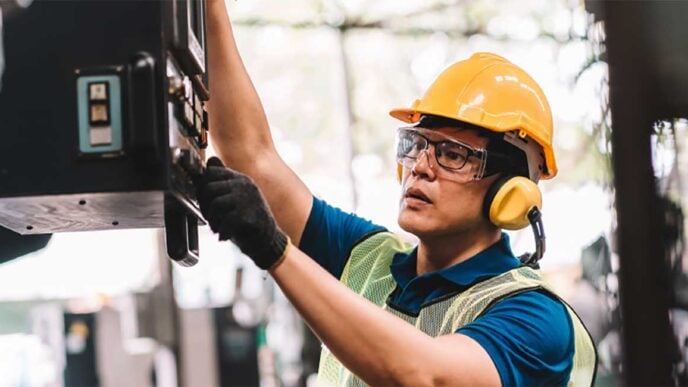


Relay and Celona have partnered to extend wireless coverage across industrial sites, aiming to improve frontline worker safety and capture operational information that can be lost when communications fail.
The partnership combines Celona’s private 5G and Wi-Fi platform with Relay’s push-to-talk radios and software, which records workers’ spoken observations and converts them into actions in existing enterprise systems.
The companies said their systems are already being used together at customer sites in the food manufacturing sector, although they did not disclose the customers or quantify the benefits.
Industrial environments can pose challenges for wireless networks. Large facilities, outdoor yards and dense metal structures can obstruct radio signals, leaving gaps in public cellular and Wi-Fi coverage. These gaps can affect workers who move around sites on forklifts or operate in remote areas, where reliable communications are important for safety and coordinating work.
Traditional two-way radios remain widely used in industrial facilities, but coverage limitations can leave workers unable to communicate reliably across a site. For manufacturers adopting connected-worker technologies, unreliable connectivity can also prevent information from reaching the systems used to manage operations.
Celona’s Orion platform combines private 5G and Wi-Fi within an organisation’s network. Relay uses the connection to allow workers to record observations and instructions by speaking into ruggedised, push-to-talk radios, rather than entering information through digital applications.
“Reliable connectivity is foundational to worker safety and productivity, particularly across large industrial environments where traditional wireless technologies can struggle,” said Puneet Shetty, Senior Vice-President of Product and Field Engineering at Celona.
The companies said the system also supports real-time translation across 35 languages, using AI models designed for manufacturing environments. Panic alerts and location information are intended to help workers request assistance and enable responders to identify where help is needed.
Relay said the technology captures observations, handovers and decisions made during shifts, creating an operational record that can be used beyond the immediate exchange over the radio.