
STADLER Group has supplied an automated sorting line for an Italian textile recycling plant designed to turn discarded clothing and industrial textiles into material suitable for reuse in spinning.
The facility, operated by IGERS in San Pietro Mosezzo, near Novara in northern Italy, combines optical sorting, material handling and digital traceability to prepare textile waste for mechanical recycling. The plant was inaugurated on 21 September and is designed to process up to 19,200 tonnes of textile waste a year.
STADLER, a German plant engineering company specialising in sorting systems, worked with IGERS to integrate equipment from multiple suppliers into a single production line. The project included designing the plant layout around an existing building, configuring material handling systems and supplying the automated sorting equipment.
The facility represents an investment of about €8 million, including €1.3 million in co-financing from Italy’s National Recovery and Resilience Plan.
Textile recycling presents a particular challenge for automated processing because waste streams can contain different fibre types, blended fabrics, accessories and contaminants. Materials also vary considerably in shape, size and condition, making consistent feeding and separation difficult.
IGERS has developed a patented process covering the treatment stages from initial buffering and sanitisation through sorting, tearing and final material output. The system is intended to produce high-quality textile flakes and opened fibres for the spinning industry, while tracking materials throughout the process.
“The distinctive value of our process lies in the integration of impurity separation, technology-based material sorting, mechanical regeneration and digital traceability,” said Gian Luca Miceli, Chief Executive of IGERS. “We do not consider these stages as isolated activities: they are parts of a single system that enables more accurate decisions to be made about the destination of each material stream.”
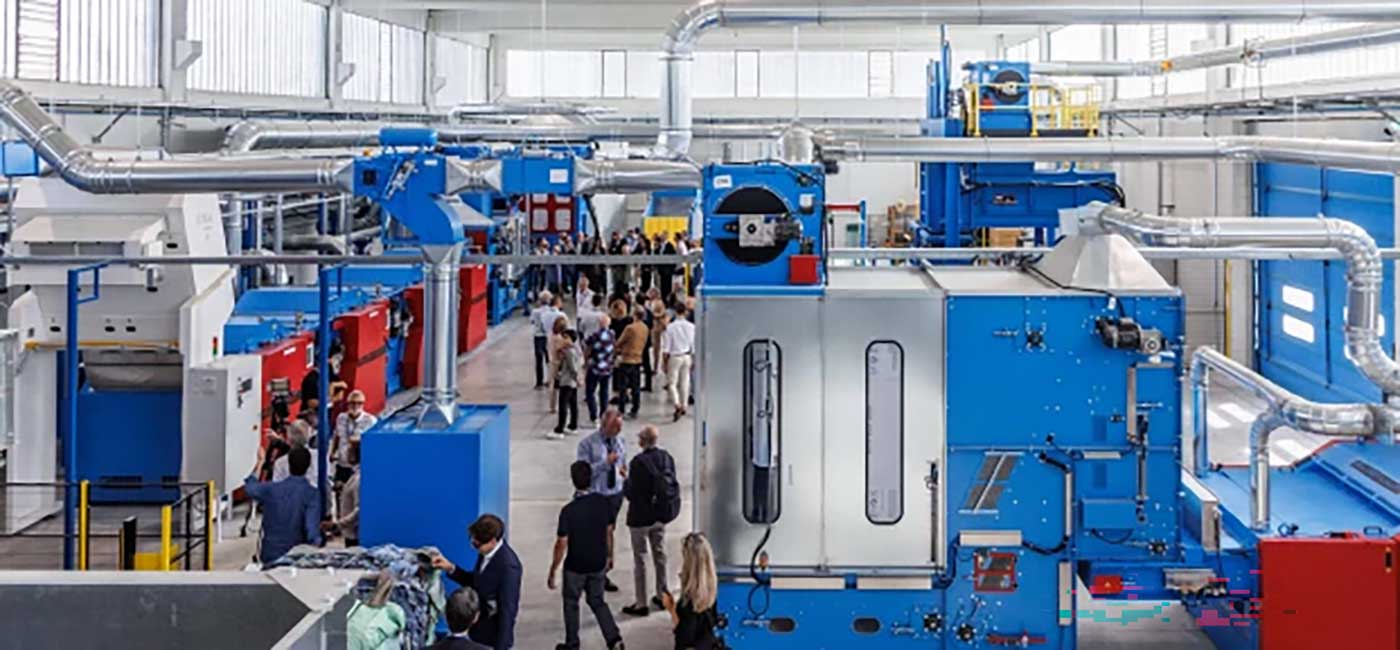
The STADLER line comprises two dosing units, two near-infrared (NIR) optical sorters supplied by Tomra and 16 conveyors. The equipment is designed to maintain a consistent flow of material while separating textiles according to composition and removing non-conforming items.
During the first sorting stage, an NIR sorter identifies pure textile fractions, including 100% cotton and 100% wool, separating them from blended fabrics and impurities. The pure fractions are held in a buffer before being recirculated through the sorting equipment for further separation by fibre type.
A second NIR sorter processes the mixed textile stream, removing contaminants such as pieces of coat hangers and leather. The system’s configuration allows material to be directed to different destinations, including storage containers, a baler, recirculation buffers or the fibre-opening process.