
Murata Manufacturing is looking to extend its expertise in high-performance MEMS gyroscopes into industrial robotics, with a new inertial measurement platform designed to make precise motion sensing easier to integrate into autonomous machinery.
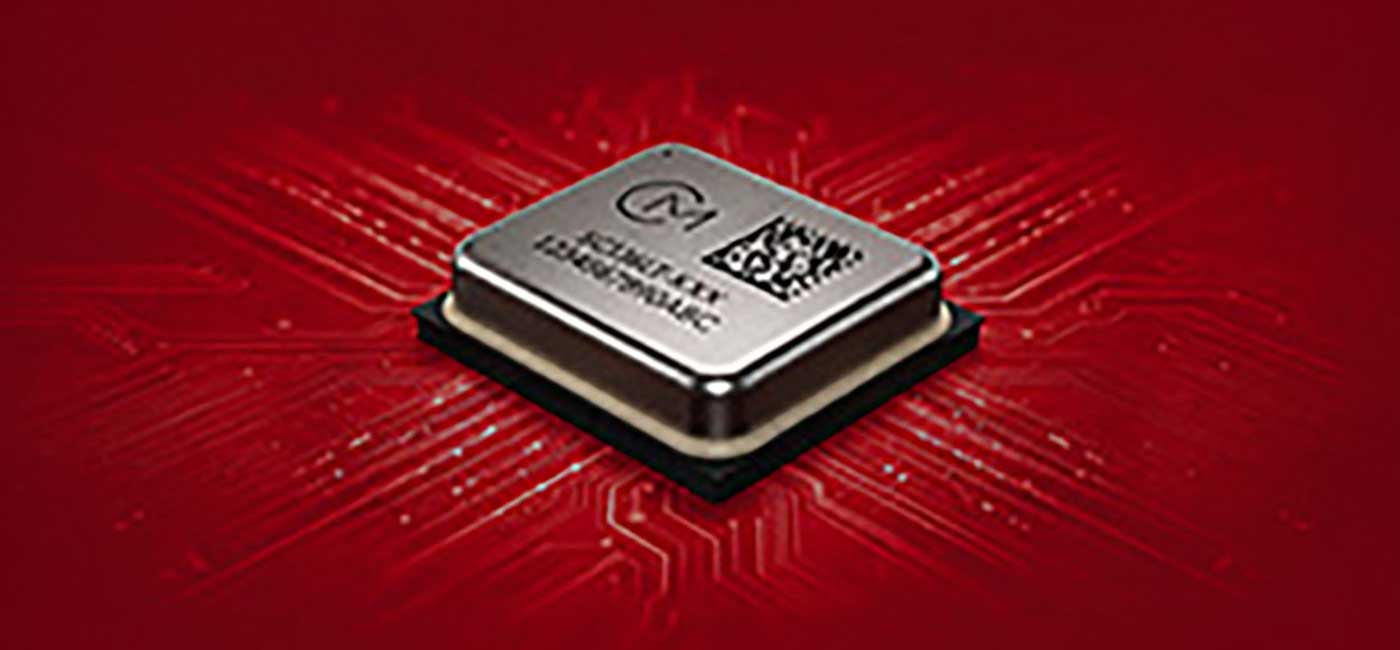
The Japanese electronics manufacturer is building on the success of its SC-16T series, which Tomi Komulainen, Product Manager at Murata Electronics, describes as the world’s lowest-noise MEMS gyroscope. Its latest SCI36LT Intelligent Series platform combines inertial sensing with onboard processing, power regulation and capacitors, allowing customers to perform calculations directly within the sensor package.
The move reflects growing demand for smaller, more capable motion-sensing components as robots and industrial machines become increasingly autonomous. Accurate information about orientation, movement and acceleration is essential to maintaining stability, coordinating mechanical movements and navigating environments where external positioning signals may be unreliable.
“With this intelligent platform, we are making a further step towards integrating more of the necessary components for the customer into the same package,” Komulainen told Automation News at electronica 2026 in Munich.
The SCI36LT builds on the sensing capabilities of Murata’s existing SC-16T technology, which combines a MEMS gyroscope and accelerometer. While conventional inertial measurement units provide raw acceleration and angular velocity data that must be interpreted by an external processor, the new platform incorporates processing capabilities to perform calculations closer to the source.
One of its principal features is dynamic inclination measurement. By combining gyroscope and accelerometer readings, the onboard processor can distinguish rotational movement from the effects of gravity, providing more accurate orientation information when machinery is moving.
This is particularly important in applications such as excavators, where conventional inclination measurements can become unreliable as the machine and its components move.
Murata is targeting the technology at construction machinery, where multiple sensors mounted at different points along an excavator arm could be used to calculate the position of its bucket or attachment.
By measuring the relative angles between sections of the arm, the system can help determine the precise location of the digging tool. Combined with satellite positioning data from the excavator itself, this could allow operators to dig to specified depths and positions without repeatedly checking or correcting the excavation.
For construction companies, the potential benefit is greater precision and less time spent correcting work. Komulainen said the technology could enable centimetre-level accuracy in applications such as preparing foundations, where digging to the correct depth first time can save considerable time.
The same principle could also support the development of autonomous excavators and agricultural machinery, where accurate motion information is needed to control equipment without relying entirely on an operator’s visual judgement.
However, Murata sees opportunities beyond large industrial machines. The smaller footprint of the SCI36LT is intended to make high-performance inertial sensing accessible to manufacturers developing more compact robotic systems, including humanoid robots.
“Humanoids are very much growing up. No one knows the exact requirements right now, but our sensors enable the most stable levelling of any MEMS sensor on the market right now,” Komulainen said.
In humanoid robots, inertial sensors could be positioned in the torso to monitor the orientation of the main body, helping the machine understand its movement and maintain balance. They could also be incorporated into the head or camera assembly to improve camera stabilisation and maintain a level image as the robot moves.
Another potential application is robotic joint monitoring. While rotary encoders are commonly used to measure the position of robotic joints, inertial sensing could provide an additional source of movement information. Komulainen suggested this could offer a safety benefit if an encoder fails, helping prevent uncontrolled movement that could damage the robot or its surroundings.
The number of sensors required will depend on the robot’s architecture and the level of integration. Although Murata would like to see its technology deployed across multiple joints, Komulainen identified the torso and camera systems as good starting points.