

New research from Hexagon suggests adults and children are broadly open to robots in the workplace, particularly for physical and repetitive tasks, but remain resistant to their use in roles requiring empathy or accountability.
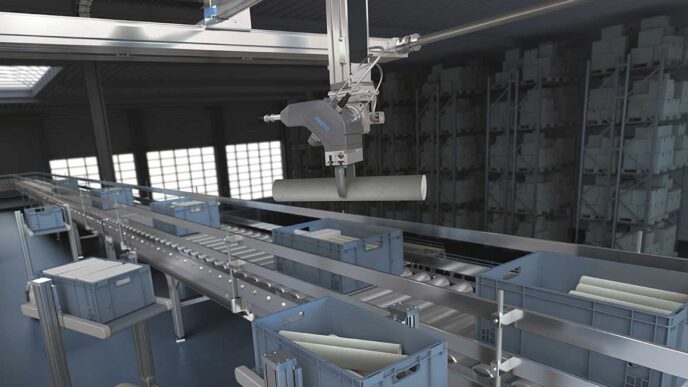
The global Robot Generation study, which surveyed 9,000 adults and 9,000 children aged 8–18 across the US, UK, Germany, Switzerland, Japan, South Korea, China, Brazil and India, found consistent preferences for automation in hazardous or labour-intensive work. Among adults, 68% preferred robots for lifting and transporting heavy items, 54% for carrying and delivering, and 52% for monitoring hazards. Children showed an even stronger inclination, with 69% preferring robots for heavy lifting and 59% for delivery tasks.
However, the pattern sharply reverses in caregiving roles. A clear majority rejected robot involvement in care for the sick, elderly or children, with 71% of adults and 67% of children preferring humans. Robot preference in this context fell to 16% and 12% respectively, the lowest across all tasks tested.
“There’s real potential for robots in areas like elderly care or classrooms, but as assistive devices, not as replacements for that essential human role,” said Jim Everett.
Blay Whitby added that attitudes were highly sensitive to framing. “Ask people if they want to be cared for by a robot, and most say no. Ask if technology should help them remain independent in their own home for longer, and most say yes. It’s the same technology, just framed differently.”
The study points to what it calls a “robot assistant era”, in which both adults and children favour practical, bounded uses of automation. Adults prioritise measurement capture and simple research tasks (53%), administrative support (38%), and workplace safety monitoring (34%). Children emphasise educational support, with 60% wanting robots to help them understand lessons and 48% wanting help generating ideas.
Yet views diverge on how integrated robots should become. Only 21% of adults said robots should be considered full colleagues, while just 14% would want them in charge. Children were around 50% more likely to view robots as full colleagues, suggesting a generational shift in expectations.
Public sentiment remains ambivalent. While 40% of adults described the idea of a robot colleague as exciting, 38% said it was frightening, underscoring what the report describes as a “curious but cautious” stance.
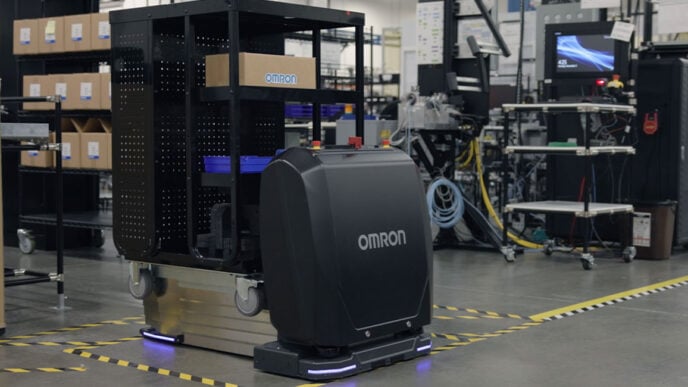
Attitudes also vary by setting. Adults are most comfortable with robots operating in factories and warehouses (63%), compared with hospitals and clinics (45%), and classrooms (39%). Familiarity appears to play a role: in China, where 75% of respondents have encountered robots in real life, 63% said they would be comfortable with robots in the home. In the UK, where exposure is lower, that figure falls to 32%.
Design preferences skew towards function over form, with 28% favouring machine-like robots compared with 22% preferring human-like designs.
Despite openness in specific contexts, the study highlights strong demands for governance. A total of 86% of adults said clear rules defining what robots can and cannot do are essential, while concerns were raised around security (51%), reliability (21%) and trust (26%).
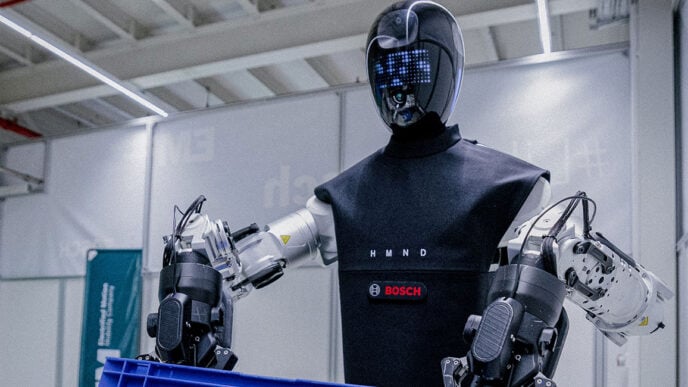
“People are telling us exactly where robots belong and where they don’t, and their instincts are remarkably consistent across markets,” said Burkhard Boeckem. “Industrial environments are where the tasks for robots are most defined, the safety cases are mature, and governance is in public view. That is where people feel most comfortable working alongside humanoids, and it is precisely where our technologies already operate.”
Hexagon said the findings suggest that industrial settings will remain the primary entry point for robotics adoption, as public acceptance continues to hinge on clear use cases, visible safety frameworks, and well-defined human oversight.