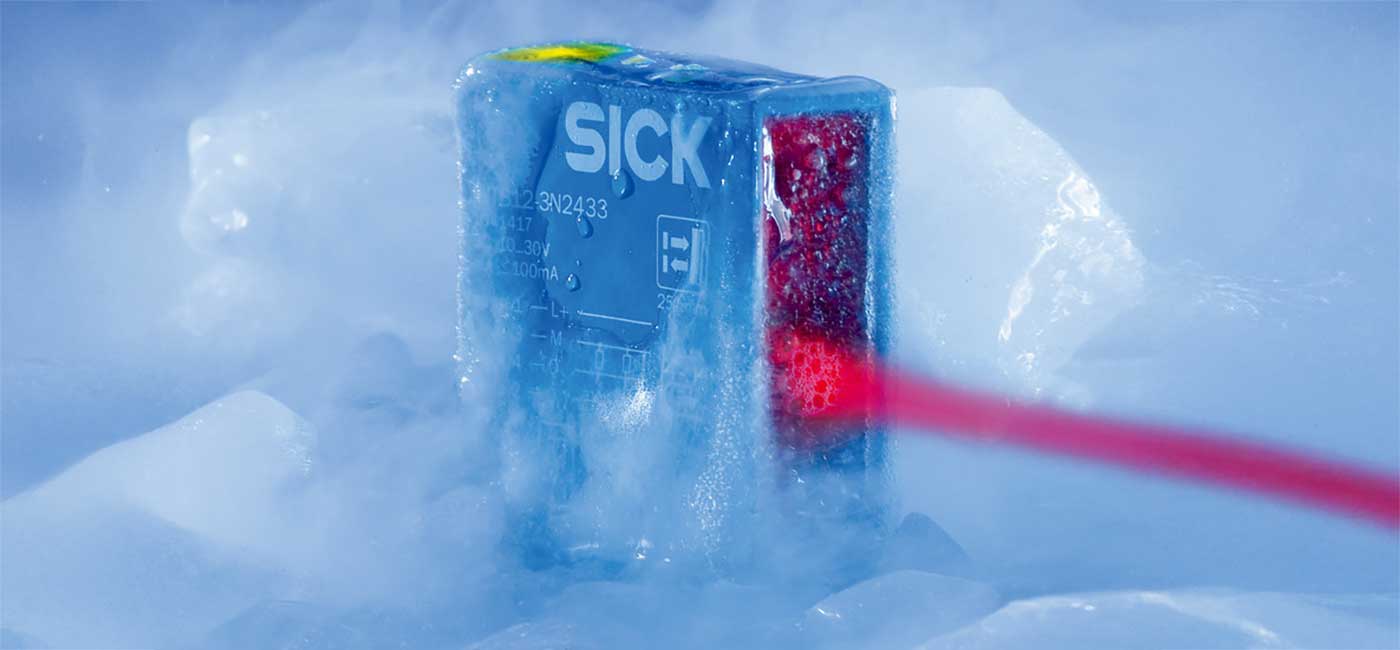

Germany’s SICK has launched a new generation of photoelectric sensors as the company seeks to strengthen its position in high-performance industrial automation, introducing a more accurate and resilient device designed to cope with increasingly complex factory conditions.
The W12NextGen range, an update to the long-running and widely used W12 series, adds improved detection capabilities, greater processing power, and a suite of new features intended to enhance precision and repeatability across a range of industrial applications. Housed in a rugged metal casing, the sensors are built for harsh environments, including high ambient light, shock, vibration, and extreme temperatures.
SICK has positioned the W12NextGen as a universal detection solution, combining upgraded proprietary algorithms with what the company describes as its first true digital twin for a photoelectric sensor. The model also debuts Hybrid LED technology designed to improve positioning, alongside upgraded spot-size recognition for retro-reflective variants.
The group said the device’s optical improvements allow it to identify demanding objects at high speed, including very dark, shiny, flat, uneven, perforated, or transparent surfaces. Features such as ClearSens and LineSpot are intended to support operation in difficult conditions, while a revamped teach-in process and AutoAdapt functionality enable faster commissioning and adjustment on the factory floor.
Despite the technical upgrades, SICK emphasised ease of use. The BluePilot interface incorporates a push-turn control for quick parameter setting, and the company’s SOPAS software, used via IO-Link, provides more granular configuration. IO-Link connectivity also exposes diagnostic and process data – including temperature, distance, receiver level, alarm status, and teach quality – supporting predictive maintenance and digitisation efforts.
SICK highlights a broad range of potential uses, from detecting water bottles in shrink wrapping and monitoring filled containers in wet environments, to avoiding conveyor jams by identifying objects at varying distances. The digital twin capability, meanwhile, allows OEMs and end users to model production lines and carry out virtual commissioning alongside PLC systems.
David Hannaby, SICK’s Portfolio Sales Manager for Presence Detection, said the W12 family had “led the market for decades”. The new edition, he added, applies the company’s accumulated experience “to set new benchmarks in precision and reliability, and deliver uncompromising performance to the most challenging applications”.
The W12NextGen line includes diffuse proximity, retro-reflective, and through-beam sensors, as well as multi-mode variants designed to reduce inventory by covering multiple use-cases with a single device. The ApplicationSelect mode is intended to extend ranges on low-remission objects and at wide detection angles.
SICK expects the upgraded product to appeal across sectors including consumer goods, machine building, material handling, and the automotive supply chain, as manufacturers continue to automate and digitise their production systems.