
Hitachi and industrial robotics group FANUC are partnering to develop and commercialise Physical AI systems designed to automate manufacturing tasks that still rely on human judgement.
The companies said yesterday that they will combine Hitachi’s AI technologies, including its HMAX Industry platform, with FANUC’s industrial robots and AI capabilities. The partnership will initially focus on validating the technology in Hitachi’s own factories before deploying solutions to customers from fiscal 2027.
Hitachi’s manufacturing facilities in Japan’s Ibaraki region will serve as “Customer Zero”, allowing the companies to test Physical AI in live production environments rather than relying solely on simulation or digital twins.
The initial applications will include picking parts of different shapes and changing production lines when manufacturers switch between products. The companies will assess factors including recognition accuracy, robot movement, takt time and quality.
The partnership will also test Hitachi’s Edge AI semiconductor technology with FANUC’s industrial robots. The companies said this could allow AI systems to continuously learn from production data and adapt individual processes, production lines and factories to changing conditions.
The move comes as manufacturers face persistent labour shortages while many production tasks remain difficult to automate. Parts handling, machine loading, assembly, material transfer and production changeovers often require workers to respond to variations in workpieces and production conditions.
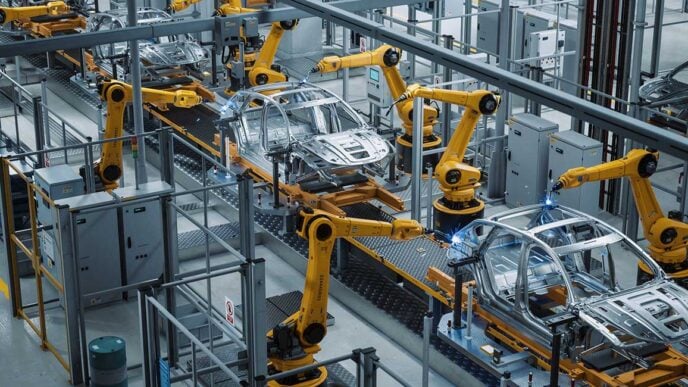
Hitachi and FANUC said their approach is intended to move beyond conventional automation, in which robots repeatedly perform predefined tasks under fixed conditions, towards systems capable of perceiving changes, making decisions and adapting their actions.
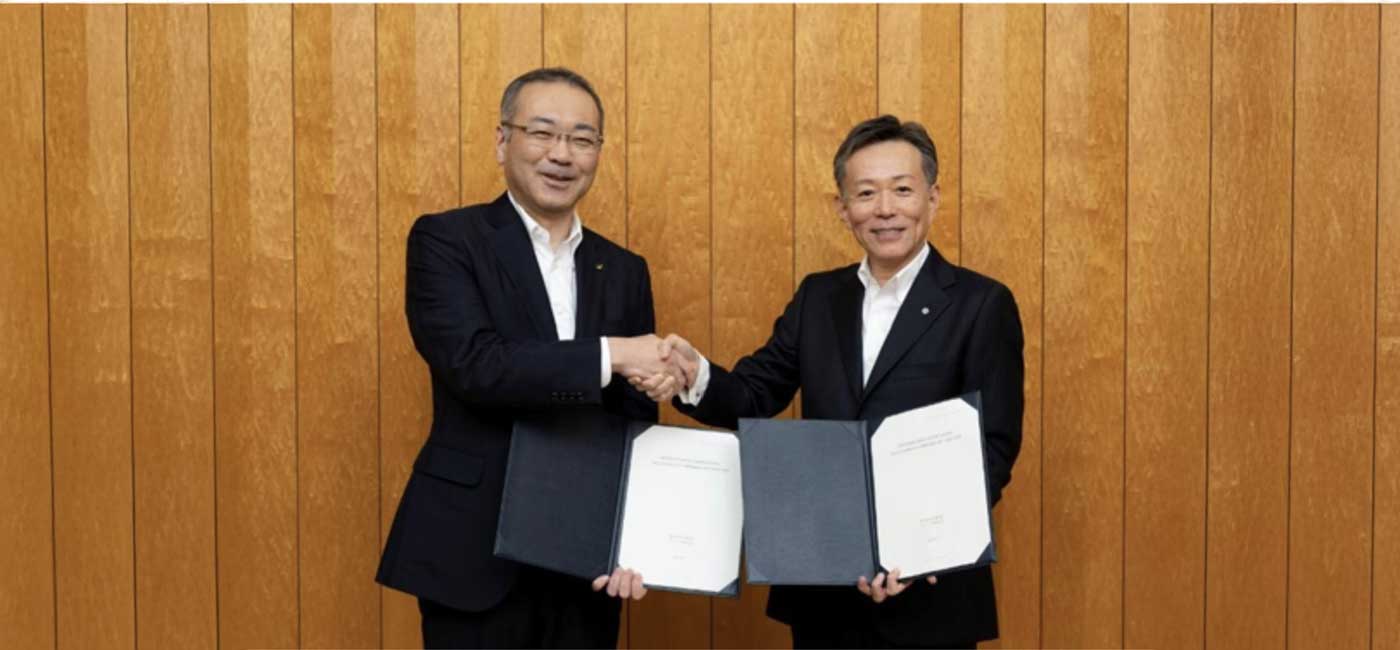
“By combining FANUC’s world-class advanced industrial robotics technologies with Hitachi’s manufacturing expertise, production-line engineering capabilities, and digital technologies, we will accelerate the implementation of Physical AI at manufacturing sites,” said Toshiaki Tokunaga, President and CEO of Hitachi.
FANUC President and CEO Kenji Yamaguchi said the partnership would combine Hitachi’s AI technologies with FANUC’s robotics, control and AI expertise to develop systems capable of operating in real production environments.
The companies plan to use the experience gained through the Customer Zero programme to develop solutions for industries including semiconductors, pharmaceuticals, healthcare, advanced materials, automotive, logistics, food, shipbuilding and agriculture.
Hitachi said its experience in manufacturing and operational technology across sites in 190 countries and regions would provide the domain knowledge needed to train and deploy Physical AI systems. FANUC, meanwhile, has been developing AI-enabled industrial robots and open platforms intended to give developers greater control over robotic systems.
The companies said their aim is to enable people and robots to work alongside one another, with Physical AI taking on tasks that are currently dependent on manual labour and experienced workers.
Commercial deployment is expected to begin in fiscal 2027, using the companies’ existing global customer and installed bases.