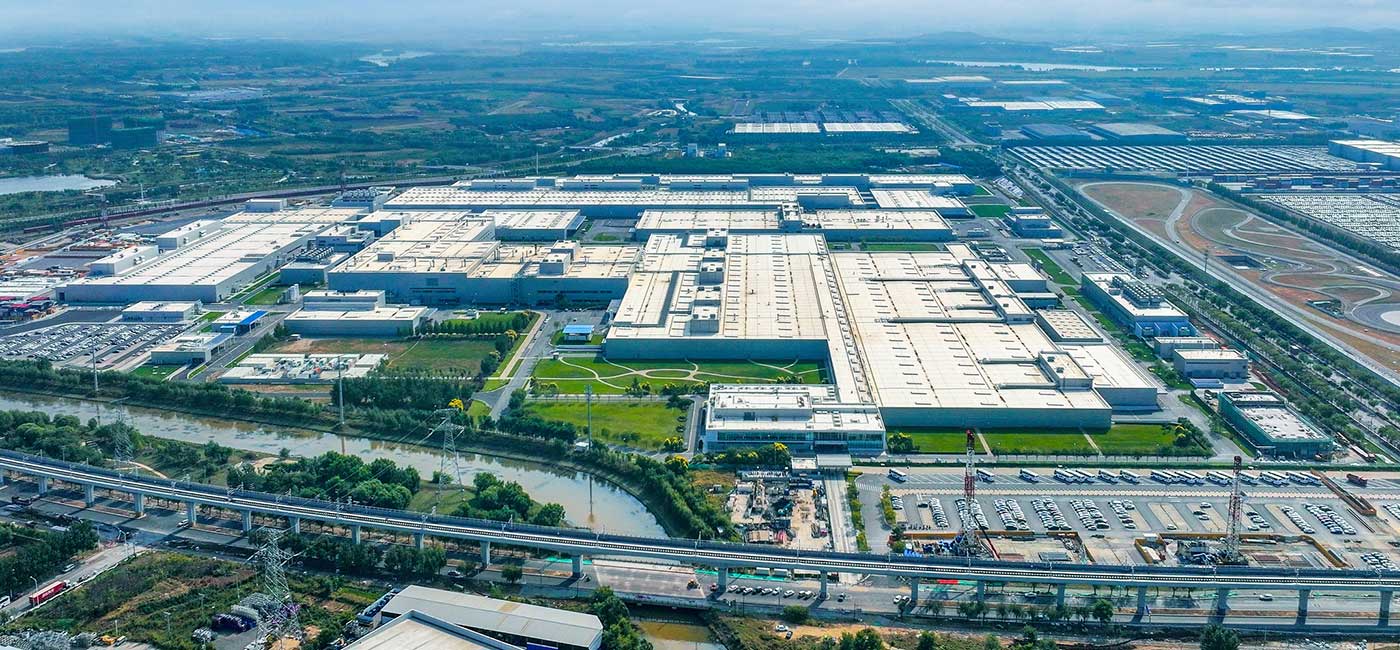

BMW has begun series production of its sixth-generation high-voltage batteries in Shenyang, China, as the carmaker expands manufacturing capacity for its next generation of electric vehicles.
The plant is the third in BMW’s global Gen6 battery production network, following facilities in Debrecen, Hungary, and Irlbach-Straßkirchen, Germany. Further production sites in Woodruff, US, and San Luis Potosí, Mexico, are due to begin series production in the coming months.
Batteries manufactured in Shenyang will supply future models built in China under BMW’s Neue Klasse programme, supporting the company’s strategy of producing key components close to vehicle assembly plants.
“The start of Gen6 battery production in China demonstrates how quickly and systematically we are industrialising our latest technology across our global production network,” said Raymond Wittmann, BMW’s Board Member responsible for production.
The approach is intended to shorten transport routes, strengthen supply chain resilience and apply consistent production, quality and safety standards across different markets.
BMW’s Gen6 battery technology uses newly developed cylindrical cells that offer more than 20% higher energy density than the previous generation, according to the company. Charging speed and vehicle range are both expected to improve by up to 30%.
The batteries use a cell-to-pack design, integrating cylindrical cells directly into the battery housing rather than assembling them into conventional modules. The approach makes more efficient use of available space and allows the battery to be adapted to different vehicle designs.
A central control unit, called the Energy Master, sits directly on the battery and consolidates power supply and battery management functions.
The manufacturing process combines precision assembly with digital quality monitoring. Cells are inspected before being joined with cooling units to form clusters. Laser welding connects the clusters to the cell contact system, while a specialised foaming process bonds components into a single mechanical structure.
The battery housing is then sealed and riveted before the Energy Master is installed. Each battery undergoes end-of-line testing to verify its quality, safety and functionality.
BMW also uses production data, digital twins, data analytics and AI-supported inspection to identify potential defects during manufacturing. Inline inspection systems monitor parameters including laser-welded joints in real time, while digital records support traceability throughout the production process.
The expansion of Gen6 production comes as carmakers seek to scale electric vehicle manufacturing while managing costs, supply chain risks and differences between regional markets. BMW’s strategy combines a common global technology platform with local manufacturing, although the company has not disclosed production volumes or the investment associated with the Shenyang launch.