
A pilot project in the North Sea has demonstrated how autonomous, renewable-powered control centres could transform the development of remote offshore oil and gas fields, potentially reducing costs, cutting emissions, and extending the economic viability of resources that are currently difficult to commercialise.
The project, an offshore energy initiative led by an unnamed major multinational oil and gas company, focused on developing a Floating Normally Unattended Installation (NUI) – a smart offshore buoy designed to autonomously power and control subsea systems without the need for permanent personnel or long-distance umbilical connections.
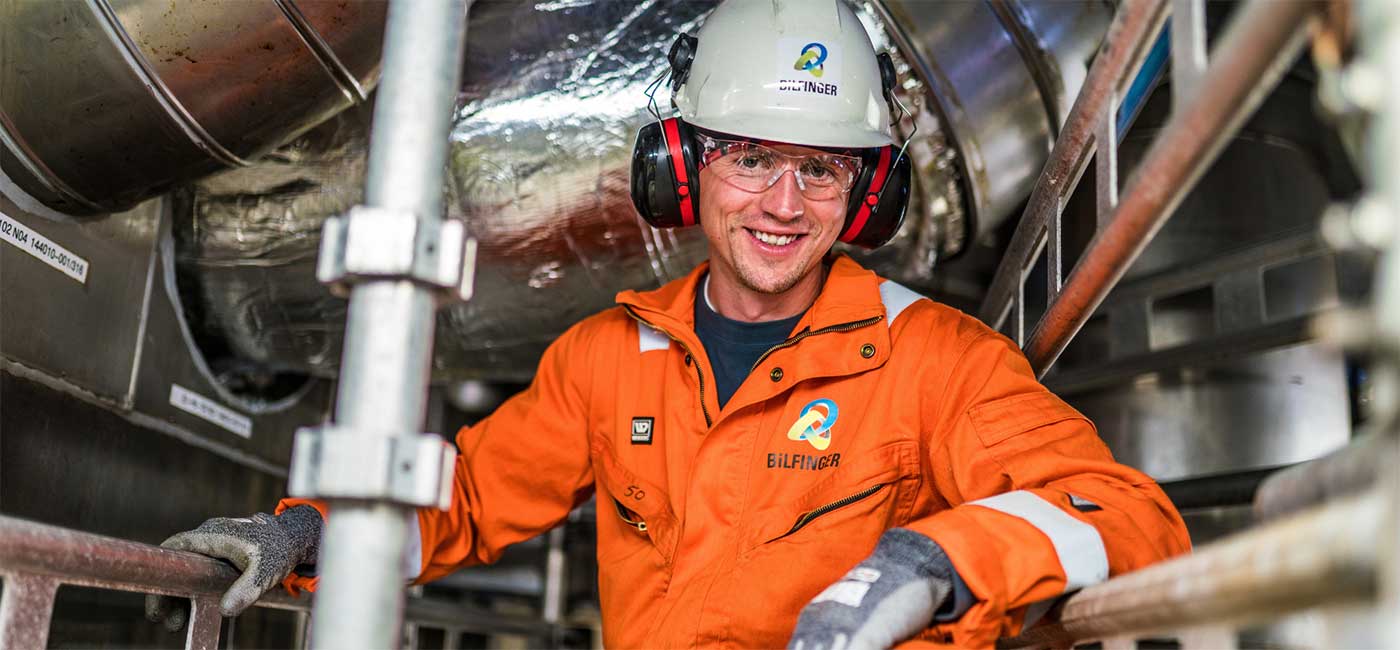
Developed in collaboration with Buoyant Production Technologies (BPT), a subsidiary of Crondall Energy, the control system for the demonstrator was designed and integrated by industrial services company Bilfinger, while Schneider Electric’s EcoStruxure Automation Expert software platform was used to enable autonomous operations in one of the world’s most challenging offshore environments.
The companies said that the buoy completed 1,000 hours of autonomous operation after being deployed in the North Sea in late 2025, meeting all project objectives and achieving technology qualification within 10 months.
As offshore oil and gas producers increasingly target smaller and more remote reservoirs, the cost of connecting subsea wells to existing production infrastructure has become a major barrier to development. Traditional subsea tie-backs typically require long static umbilicals that deliver power, communications, and control signals from a host platform, often over many kilometres.
These systems are expensive to install, difficult to maintain, and can become commercially prohibitive for marginal fields. In some cases, the cost of the supporting infrastructure outweighs the value of the resource being developed.
The Floating NUI concept offers a different approach. Instead of relying on a distant platform for power and control, the buoy generates and manages its own energy using an onboard renewable microgrid while locally controlling subsea production equipment. By eliminating the need for long static umbilicals and reducing the requirement for offshore personnel, the concept aims to lower both capital and operating costs while reducing associated emissions.
“Traditional automation architectures make customisation very difficult, especially for first-of-its-kind projects,” said Steven Parkinson, Automation, Production and Service Director at Bilfinger UK. “This approach simplified integration between renewable power generation, remote operation, and autonomous control, while overcoming the long lead times, high capital costs, and limited flexibility associated with traditional infrastructure.”
If adopted commercially, the technology could unlock remote oil and gas developments that might otherwise remain stranded, providing operators with a more flexible and cost-effective way to bring smaller offshore resources into production.
“This project proves a new operating model for offshore assets and supports our mission to decarbonize hard-to-abate industries,” said Devan Pillay, President of Heavy Industries at Schneider Electric. “Our close collaboration with Bilfinger and the adoption of open, software-defined automation were critical to a successful and timely delivery. The real opportunity now lies in replicating and scaling this approach across future assets to enable a lower-carbon offshore industry.”
Industry participants estimate that widespread adoption of autonomous offshore infrastructure could reduce capital expenditure by as much as 50% compared with conventional development models. Beyond oil and gas, similar systems could eventually support offshore carbon capture, hydrogen production, and other energy-transition projects requiring reliable infrastructure in remote marine environments.
The buoy’s control architecture incorporates Schneider Electric’s Modicon M580 controller, renewable energy microgrid management systems, and AVEVA software for visualisation, data management, and analytics. Communications are maintained through 5G and Starlink connectivity, while onboard fire, gas, and smoke detection systems are supported by a layered cybersecurity framework.