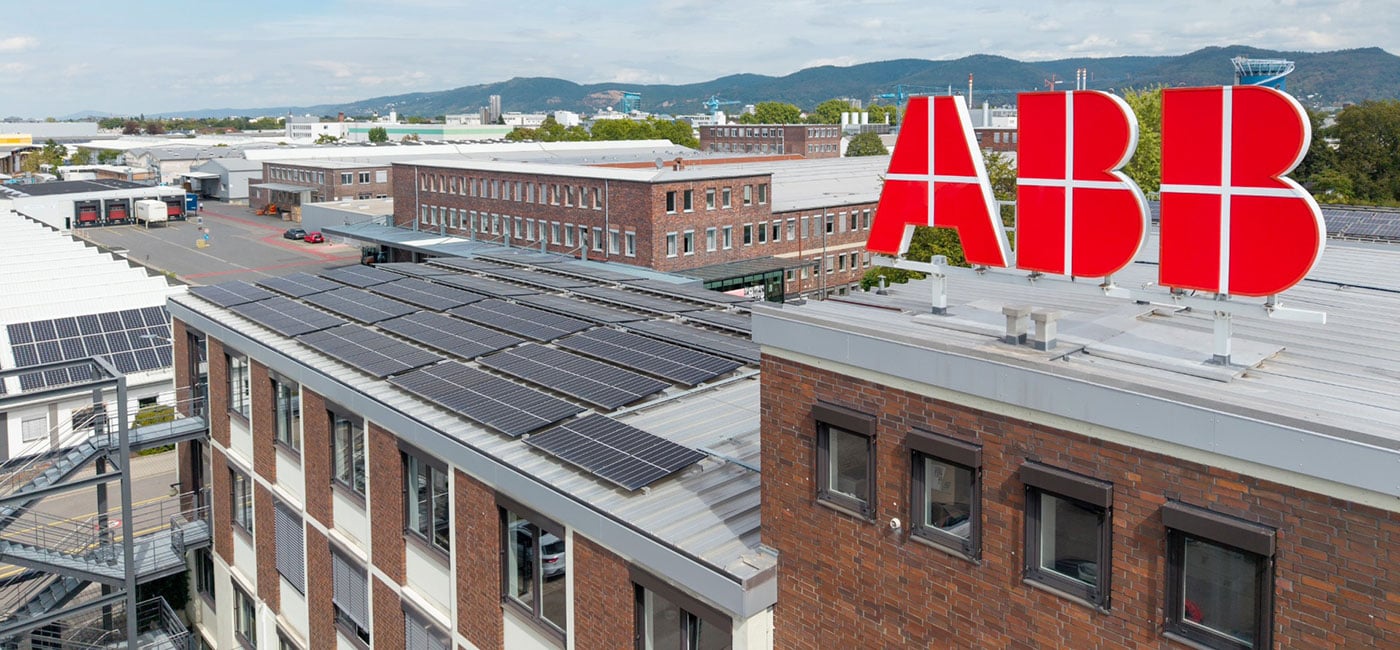

ABB’s site in Heidelberg, Germany, has joined ABB’s Mission to Zero programme, showing how an existing industrial site can be transformed without building from scratch. Through the systematic retrofit of this 1940s site, electricity consumption per unit produced has fallen by 23.3% since 2019, from 0.41 to 0.31kWh.
In absolute terms, annual electricity consumption dropped from 19.7GWh in 2019 to 16.5GWh in 2025, a reduction of 3.2GWh, even though output rose by 8%, from 48 million to more than 52 million products.
For two consecutive years, the site has held Platinum Zero-Waste-to-Landfill certification (UL 2799), the standard’s highest tier, confirming that 100% of solid waste generated at the site is diverted from landfill. Heidelberg is among more than 40 Mission to Zero sites worldwide.
For more than 80 years, Heidelberg has produced components for safe electrical distribution – a site whose history traces back to the invention of the Miniature Circuit Breaker (MCB), still manufactured there today, alongside motor protection solutions, deployed worldwide in buildings, industrial plants, and infrastructure. The site’s transformation was built on that continuity: existing structures were expanded, modernised, and networked rather than replaced. This makes Heidelberg a directly relevant reference for industrial sites worldwide facing the same challenge: how to decarbonise and improve efficiency without the option of starting over.
Its energy management foundation was laid early. Heidelberg has held ISO 50001 energy management certification since 2015, predating both the Mission to Zero programme and Germany’s Energy Efficiency Act (EnEfG), which has required structured energy management of large enterprises since 2023.
“Most of the world’s industrial sites already exist, and they will not be rebuilt from scratch. Heidelberg shows they do not need to be,” said Mike Mustapha, Division President, ABB Electrification’s Smart Buildings Division. “An 80-year-old site comes with unique conditions, and every one of them pushed us to find a better solution. By using less energy while increasing output, our team has created a blueprint other industrial sites can follow.”
ABB Heidelberg facilities run on 100% renewable electricity, partly generated by on-site solar systems. The transformation began with transparency: more than 100 ABB energy meters track consumption in real time, showing where energy is used and saved. This visibility helped target the largest efficiency opportunities. A structured shutdown plan for non-operating days saves around 339MWh per year at no additional cost, while LED lighting saves more than 1,405MWh annually. Compressed-air leaks are continuously monitored with a smart system, allowing them to be repaired quickly. District heating is the site’s largest source of CO₂e emissions. Consumption has been reduced by using air-to-air heat pumps to warm rooms in winter and by optimising the system’s operation. Compressor waste heat now heats social and washroom spaces, as well as the canteen, with plans to extend the approach to other rooms. Together, these actions reduce emissions by 234 tons of CO₂e per year.
Heidelberg also serves as a living reference for ABB’s own solutions, deployed across offices and production. ABB protection devices, including Moulded Case Circuit Breakers (MCCBs), Air Circuit Breakers (ACB), Miniature Circuit Breakers (MCBs) and Residual Current Devices (RCDs) form the backbone of the electrical infrastructure, while ABB i-bus KNX building automation controls lighting, blinds and temperature. The InSite energy management system with its SCU200 control unit provides granular energy data across the site, while Building Pro Edge securely connects devices to Cloud-based platforms. ABB Ability BuildingPro Suites and ABB Nsight turn this data into actionable insight, and Sensorfact monitors energy use on the production floor. Each one works alongside the systems already in place, so the site didn’t need to be rebuilt to accommodate them.
The site currently has an electric truck for internal logistics, and 26 EV charging points with more to come. Further next steps are already mapped out: compressor waste heat will be integrated into the wider building heating system.
As part of ABB’s global Mission to Zero programme, Heidelberg follows a data-led decarbonisation roadmap focused on energy efficiency, renewable electricity, and smart energy management. The program aims to significantly reduce operational emissions across ABB’s global footprint, and Heidelberg shows what can be achieved within an existing operating site.