
Industrial automation is evolving rapidly as AI, sensors, Edge computing, and digital twins transform manufacturing into smarter, more efficient factories. Yet, while these technologies improve speed, visibility, and predictive maintenance, manufacturers must still overcome challenges including system integration, data quality, cybersecurity risks, ageing infrastructure, and an increasingly complex and uncertain global landscape.
There is geopolitical uncertainty to navigate, as well as ageing infrastructure and shifting compliance requirements to consider. And while technology is making more possible, the landscape in which manufacturers operate has never been more complex.
While there are hurdles to overcome, there are real opportunities. Manufacturers have more ways to improve performance and increase efficiency, and the industry is starting to catch up.
More complex systems
Around the world, manufacturers are adopting new and emerging technologies across the manufacturing process. Artificial intelligence (AI), sensors, connected devices, and Edge computing are already becoming part of more and more modern systems. Not only are manufacturers integrating this technology into their systems, but they’re also figuring out how everything needs to work together.
These new technologies may make things more complex, but they’re also making it possible to catch troublesome issues earlier, respond faster when something goes wrong and run better operations overall.
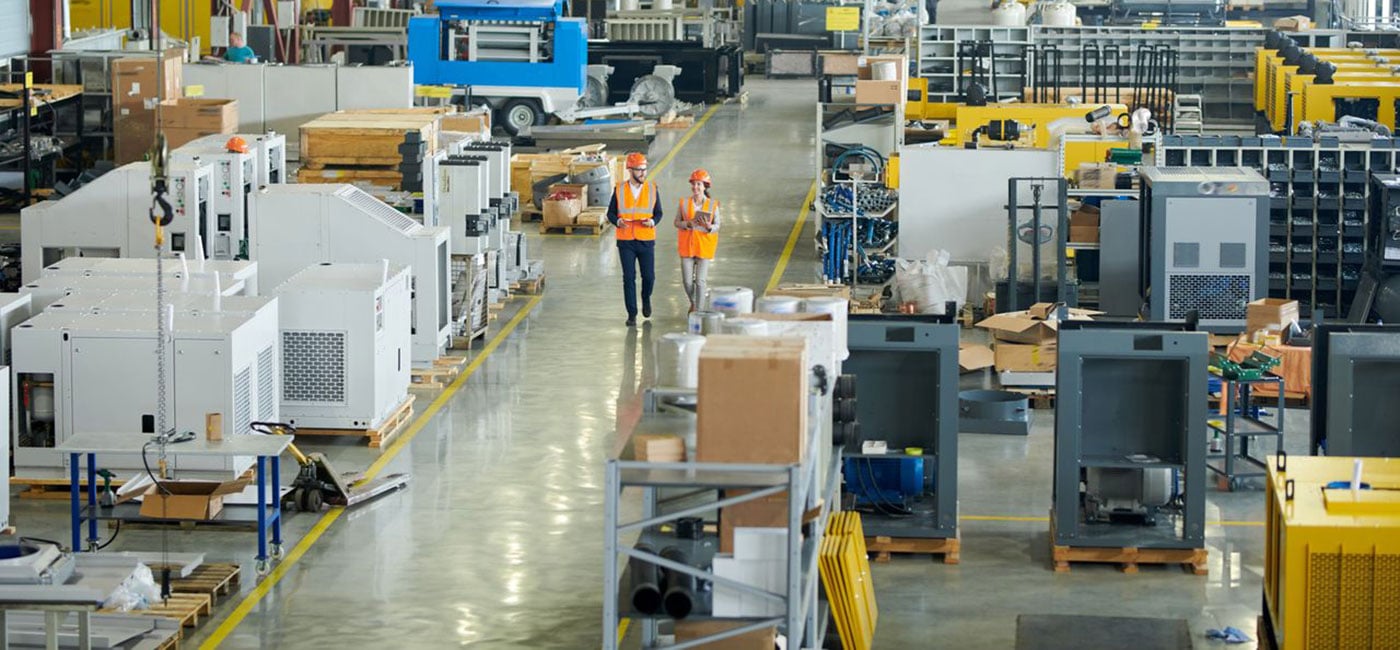
An efficient factory floor
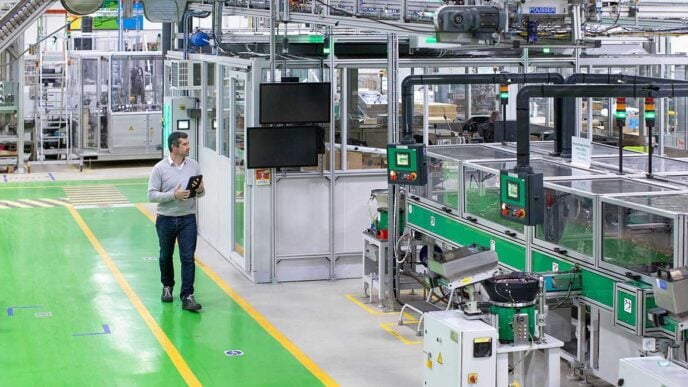
Production processes that once relied on manual oversight are now being improved through more data and better quality control. Previously, most issues were caught after the fact, but with AI, we can now predict issues. In some cases, AI is used to program machines, and robots then do the work directly, reducing the need for additional people and resources to keep operations running smoothly.
The result of these new technologies is a factory with better visibility. Decisions can be made in real time, systems are more efficient and small issues don’t become big problems that could shut down machines.
Modern sensors are helping enable all of this. They can continuously monitor equipment and flag early warning signs of wear before a breakdown occurs. For factories, any stop in work can cause serious problems, so these advancements are making a meaningful difference.
Digital twins and Edge AI in manufacturing
Modelling and simulations are changing how planning and maintenance is approached in manufacturing. Digital twin technology, or when manufacturers create a model of an entire system in a simulated environment, is becoming more common with the use of AI.
Engineers can now evaluate how changing a single factor will affect real-world production without making any actual changes to equipment. The information engineers are using to make these decisions is more accurate because of AI and the entire system becomes more efficient. Manufacturers can now proactively test and fix systems before anything actually breaks down.
Another improvement to modern manufacturing is the use of Edge AI. Artificial intelligence is being used directly within a device, rather than relying on an off-site data centre or the Cloud. The biggest advantage of this is speed. Since Edge AI processes data at the Edge, it doesn’t depend on network latency, making it ideal when timing is critical. On the factory floor, for example, Edge AI can help identify a defective product and trigger a response faster than if that data had to travel. It also reduces the need for constant Internet connectivity.
A secure production environment
Modern machines, sensors, and systems are more connected than ever. This means they’re sharing more data, which also entails greater security risks. To counter this, security controls are now built into components rather than added through software.
Much of the actual cybersecurity functionality now originates within the components. While these security controls originate with manufacturers, distributors like DigiKey are making this information easily accessible and searchable for customers. When security information is available and searchable, engineers can make better decisions, verify compliance when choosing products, and confirm what they’re purchasing. This additional transparency is more important than ever.
Challenges for manufacturers
While the automation market and new technologies are rapidly changing how factories operate in many exciting ways, manufacturers still face real challenges.
- Integration with existing equipment: many production facilities have outdated or older systems. This isn’t unique to any one market or region. The newer the technology, the harder it is to plug into what’s already there. These machines and systems weren’t designed to support modern data and AI driven technologies. Bridging that gap takes real work and can take valuable time
- Data quality: AI is only as good as the data it runs on. Factories need enough historical data to establish a baseline before a system can reliably flag if something is different or off. Without a baseline, you can’t get ahead of a problem. In many instances, building that foundation takes time and resources that aren’t always available
- Cybersecurity considerations: more connected devices mean more exposure to risk. It’s an area that requires ongoing attention as systems become more integrated
- Geopolitical landscape are all real hurdles that modern factories will need to overcome. But even with these uncertainty: changing tariffs, trade policies, and product availability can make buying components more complicated. Customers need complete information about a product’s country of origin to make informed decisions and understand alternative options
The technology to build smarter, more efficient factories exists today, but fully implementing all these elements takes time and resources. Legacy infrastructure, data limitations, cybersecurity concerns, and an ever-changing compliance challenge, the potential is there. AI is already being used to predict equipment failures before they happen, digital twins are giving manufacturers a way to test ideas before making actual changes, and Edge computing is putting real time intelligence directly on the factory floor. The tools and momentum are real. Now it’s a matter of bringing it all together.
This article originally appeared in the June issue of Automation News.