
As building automation systems become more connected, compact, and energy efficient, the reliability of human-machine interface (HMI) components has taken on greater importance. Devices such as smart meters, access control panels, HVAC controllers, and environmental monitors increasingly rely on low-voltage, low-current electronics that must operate consistently over many years – often in environments exposed to humidity, temperature cycling, and airborne contaminants.
In these conditions, tactile switch performance is strongly influenced by contact material selection, particularly under dry circuit conditions where oxidation and corrosion can affect signal integrity.
This article examines why gold-plated tactile switches are frequently specified in building automation HMIs and explains how contact material choice influences reliability, lifecycle cost, and system performance in modern smart building applications.
Why gold-plating matters in modern building systems
Every tactile switch operates through momentary metal-to-metal contact. Over time, environmental exposure – humidity, pollutants, or airborne chemicals – can create oxide films that increase contact resistance or lead to intermittent switching. The plating material determines how resilient those contacts are against these factors.
Tin is inexpensive but prone to oxidation in humid environments. Silver offers high conductivity but can tarnish in sulphur containing atmospheres. Gold is more chemically stable and maintains low contact resistance over time, making it suitable for low-current switching applications commonly found in building automation systems.
Applications where gold excels
Gold plating provides the greatest value in building automation and control systems where environmental exposure, long duty cycles, and low operating currents converge.
1. Smart electricity, gas, and water meters
Meters are typically installed in outdoor or semi exposed locations, where humidity, temperature swings, and atmospheric pollutants can compromise standard materials. Inside these enclosures, tactile switches are used for configuration, calibration, and maintenance interfaces.
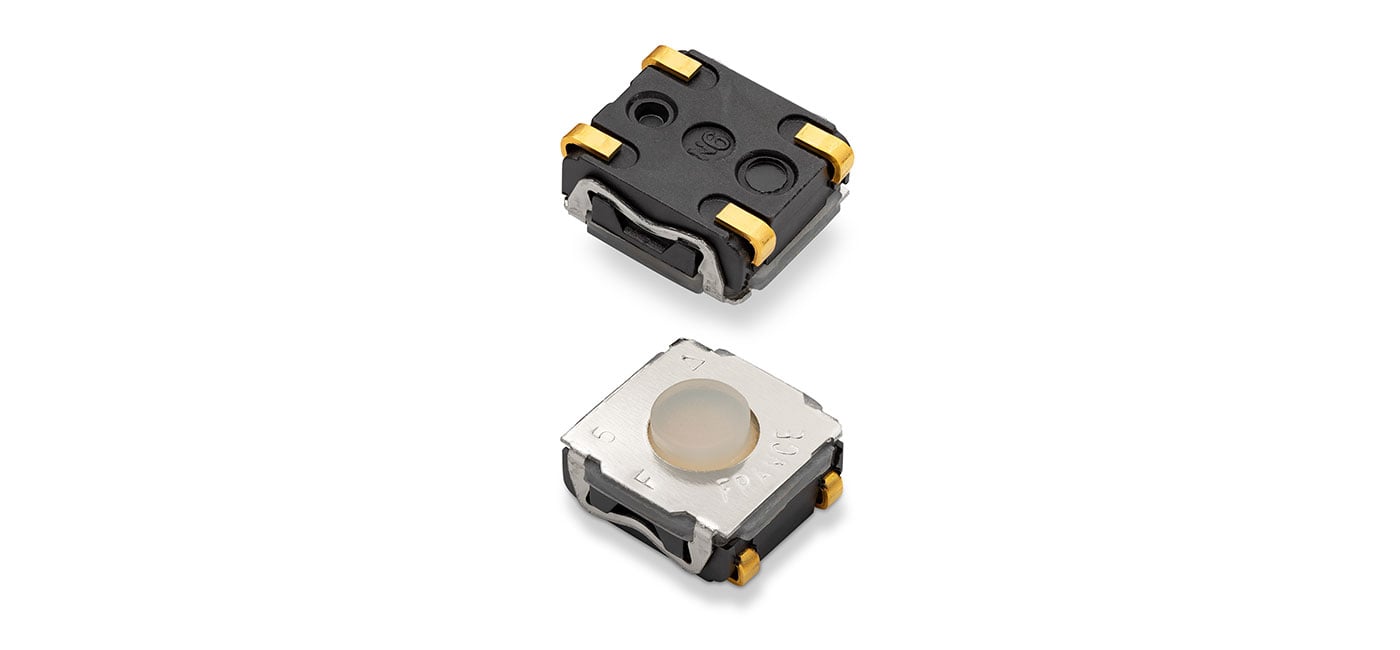
Gold-plated contacts ensure stable electrical performance over decades, resisting corrosion that might otherwise alter calibration or interrupt communication. Sealed tactile switches with gold plated contacts are often used in utility metering systems because they combine environmental protection with stable long term electrical performance.
2. Access control and security devices
From smart locks and keypad panels to badge readers and alarm systems, access-control electronics operate in variable temperature and humidity conditions, often near doorways or exterior walls. Gold plating ensures that signal paths remain clean and noise-free, even after years of exposure to moisture and contaminants.
Compact gold-plated switches are commonly specified in security interfaces where long mechanical life and stable signal performance are required.
3. Smart HVAC and environmental controls
Thermostats, air-quality monitors, and lighting control panels are increasingly connected to building management systems. These devices often rely on microamp level switching in their user interfaces and sensor circuits. Gold’s oxide free surface guarantees consistent conduction even at very low currents, eliminating false triggers, and erratic readings that can occur with oxidised or tarnished contacts.
Engineering advantages of gold-plated contacts
Electrical reliability
In low-current IoT control systems, oxide films on conventional contact materials can increase resistance and introduce signal instability. Gold plated contacts reduce this risk by maintaining a clean conductive surface over time. They can also help minimise contact bounce and electrical noise in switching circuits.
Environmental durability
Building automation equipment may be exposed to temperature cycling, vibration, humidity, and airborne contaminants. Gold-plated contacts are more resistant to corrosion and fretting than many alternative materials, helping maintain switch performance over extended operating lifetimes.
Design considerations and lifecycle economics
Although gold plating increases component cost, it can reduce maintenance and replacement costs in applications where field access is limited or downtime is disruptive. This is particularly relevant in utility metering and building-control systems designed for long service intervals.
Balancing cost, performance, and application needs
While gold plating is not justified in every product, it becomes essential when reliability, environmental resilience, or long lifecycle operation is required.
Engineers should evaluate:
- Current level: for dry-circuit or signal-level switching (<100 mA), gold plating is recommended
- Operating environment: high humidity, temperature extremes, or pollutant exposure make gold advantageous
- Lifecycle expectations: long-life meters or access controls with minimal maintenance justify the premium
- Tactile feel and consistency: gold’s smooth contact surfaces maintain the crisp actuation response users expect
Designing for performance over the full product lifecycle
In building automation systems, long-term HMI reliability depends heavily on operating environment, switching current, and expected service life. Gold-plated tactile switches can provide advantages in low-current and high-reliability applications by maintaining stable contact resistance and resisting environmental degradation over time. While not necessary in every design, they are often specified where maintenance access is limited or system reliability is critical.
Sidebar: when to specify gold-plated tactile switches
- Smart meters (electricity, gas, water): long field life and moisture exposure demand corrosion-proof reliability
- Access controls and security panels: low-current keypads and badge readers require stable, noise-free contact signals
- HVAC and environmental controls: continuous operation and low-voltage logic control benefit from gold’s oxide-free surface. Wide temperature and humidity variation calls for thermally stable materials
This article originally appeared in the June issue of Automation News.