
Samsung is testing AI-enabled 5G networks with industrial robots at a South Korean shipyard and petrochemical plant as operators explore how AI RAN could support autonomous machines in demanding environments.
The projects with KT and SK Telecom form part of South Korea’s Ministry of Science and ICT’s Hyper AI Network initiative, which aims to accelerate the development of AI RAN, physical AI and autonomous operations ahead of the transition to 6G.
The trials are due to begin in October and will use 5G standalone (SA) private networks at HD Hyundai Samho’s Yeongam shipyard and SK Incheon Petrochem.
Samsung is the sole global vendor for KT’s project and the main vendor for SK Telecom’s, making it the only network supplier involved in both projects.
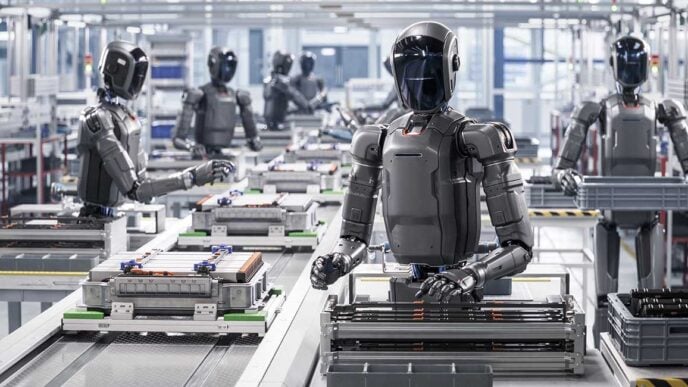
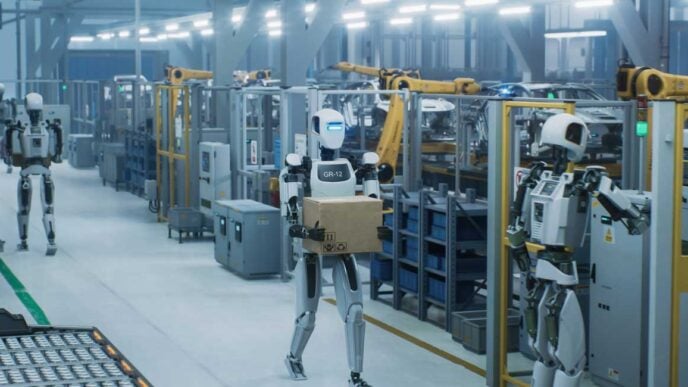
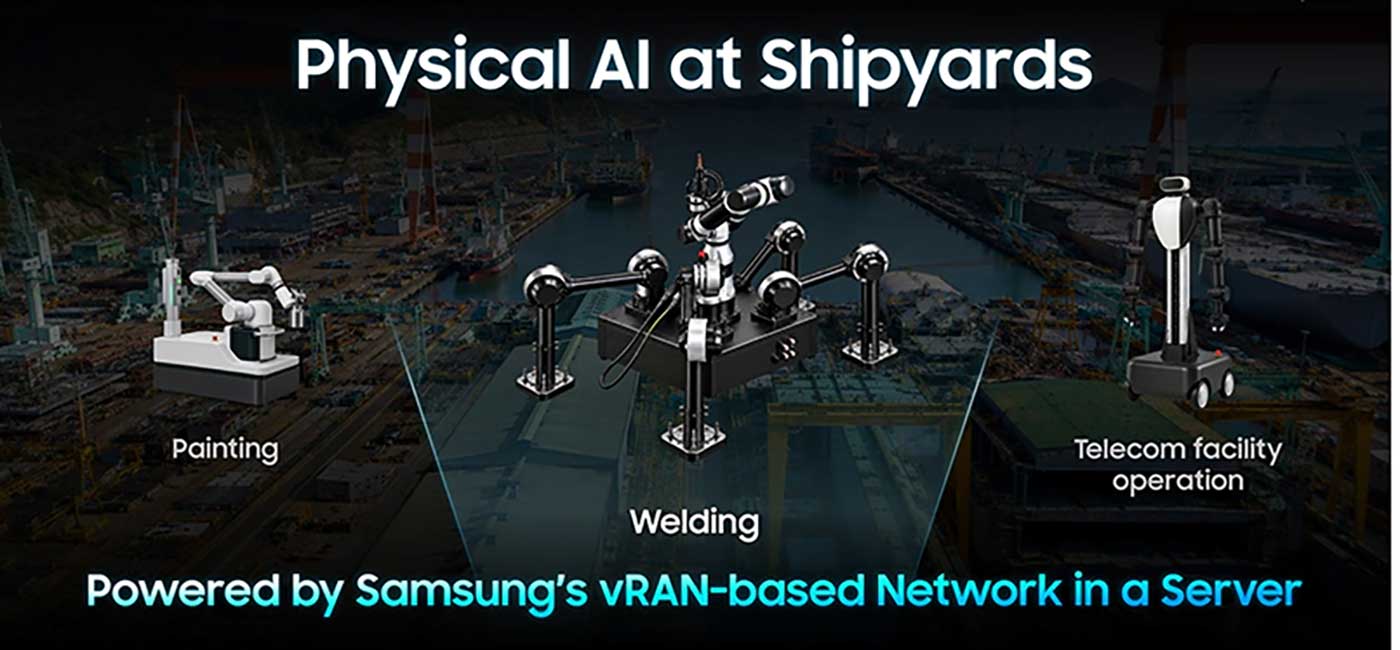
At the shipyard, KT will test Physical AI applications including welding and painting robots. One trial will use a quadruped robot capable of autonomously carrying out welding tasks.
Samsung is supplying its Network in a Server (NIS) platform, which combines virtualised radio access network (vRAN) technology, an AI core and AI applications. The platform will also be integrated with Samsung’s CognitiV Network Operations Suite for network automation.
The aim is to provide the low latency, reliability and consistent throughput needed for real-time robotic control. NIS is designed to process network and AI workloads locally, bringing computing closer to the machines and other equipment generating the data.
At SK Incheon Petrochem, SK Telecom will test an autonomous patrol robot designed to operate in hazardous areas. The robot will transmit high-definition video while moving through the site, with AI analysing the footage to identify potential hazards and support monitoring.
Samsung will again provide NIS for the project, with the companies examining how AI-enabled connectivity can be used to improve safety and operational efficiency in an environment where chemical processes require continuous monitoring.
“Networks are becoming platforms that connect a new generation of intelligent machines, including humanoids and autonomous vehicles,” said June Moon, Executive Vice-President and head of R&D at Samsung’s Networks Business.
Samsung said its AI RAN technology is also being developed for applications including network anomaly detection, throughput optimisation and energy efficiency.